This article may contain affiliate links. If you buy through them we may earn a commission at no extra cost to you.
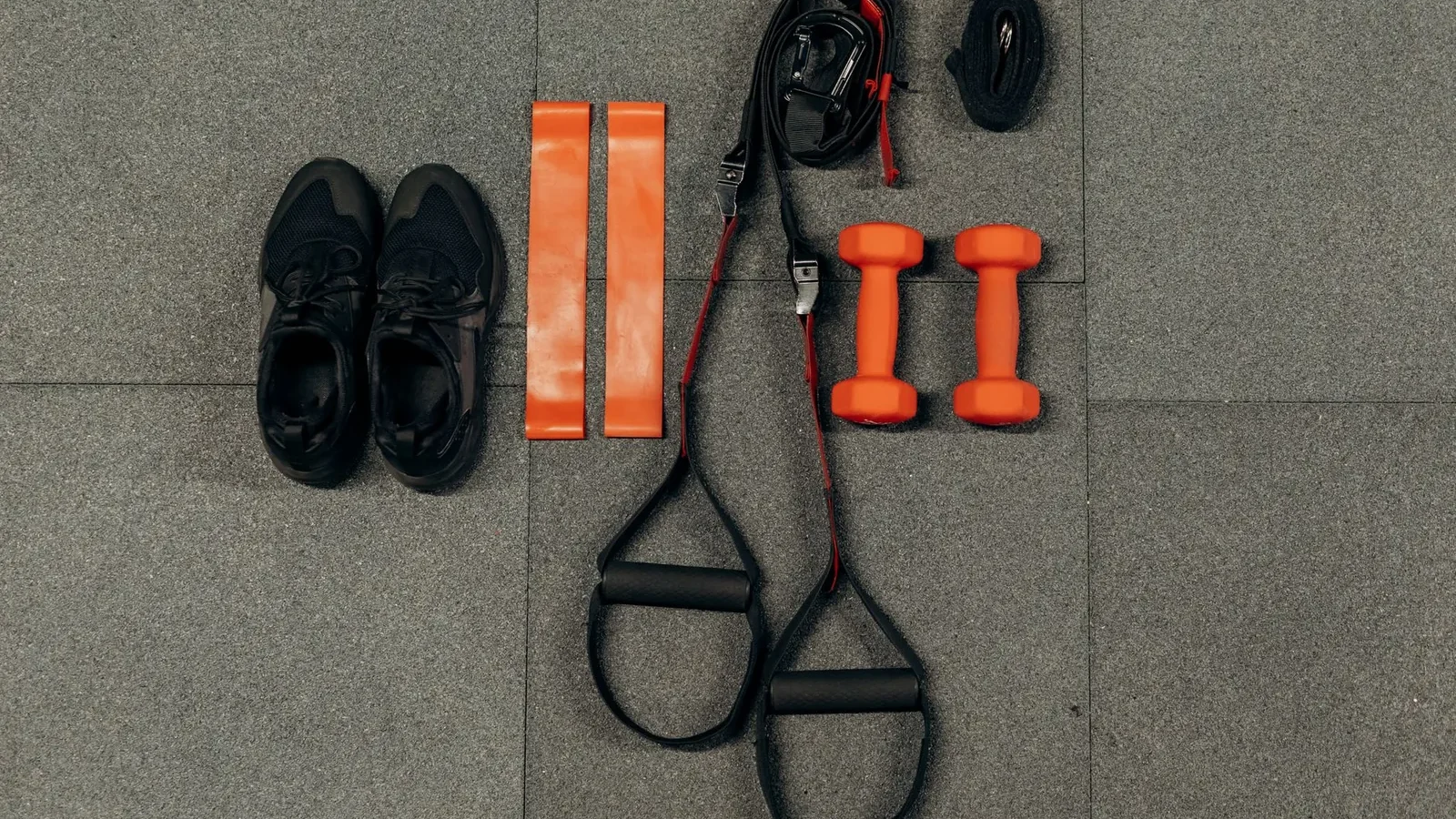
Bands or dumbbells? Buy bands first if you’re on a tight budget, short on space, or rehabbing a joint. Buy dumbbells first if building maximum strength or muscle is your primary goal and you have $300+ and a dedicated corner to store them. Neither tool is wasted—they solve different problems.
How They Work Differently
A 30-pound dumbbell delivers 30 pounds of resistance at every point of a curl—bottom, middle, top. Your weakest position (the bottom, where your joints are most vulnerable) faces the same load as your strongest position.
Bands flip that equation. Resistance is lowest when the band is slack (the start of most movements) and peaks when it’s fully stretched (the end). That matches your natural strength curve—you’re mechanically stronger at lockout, so the band gets harder there too.
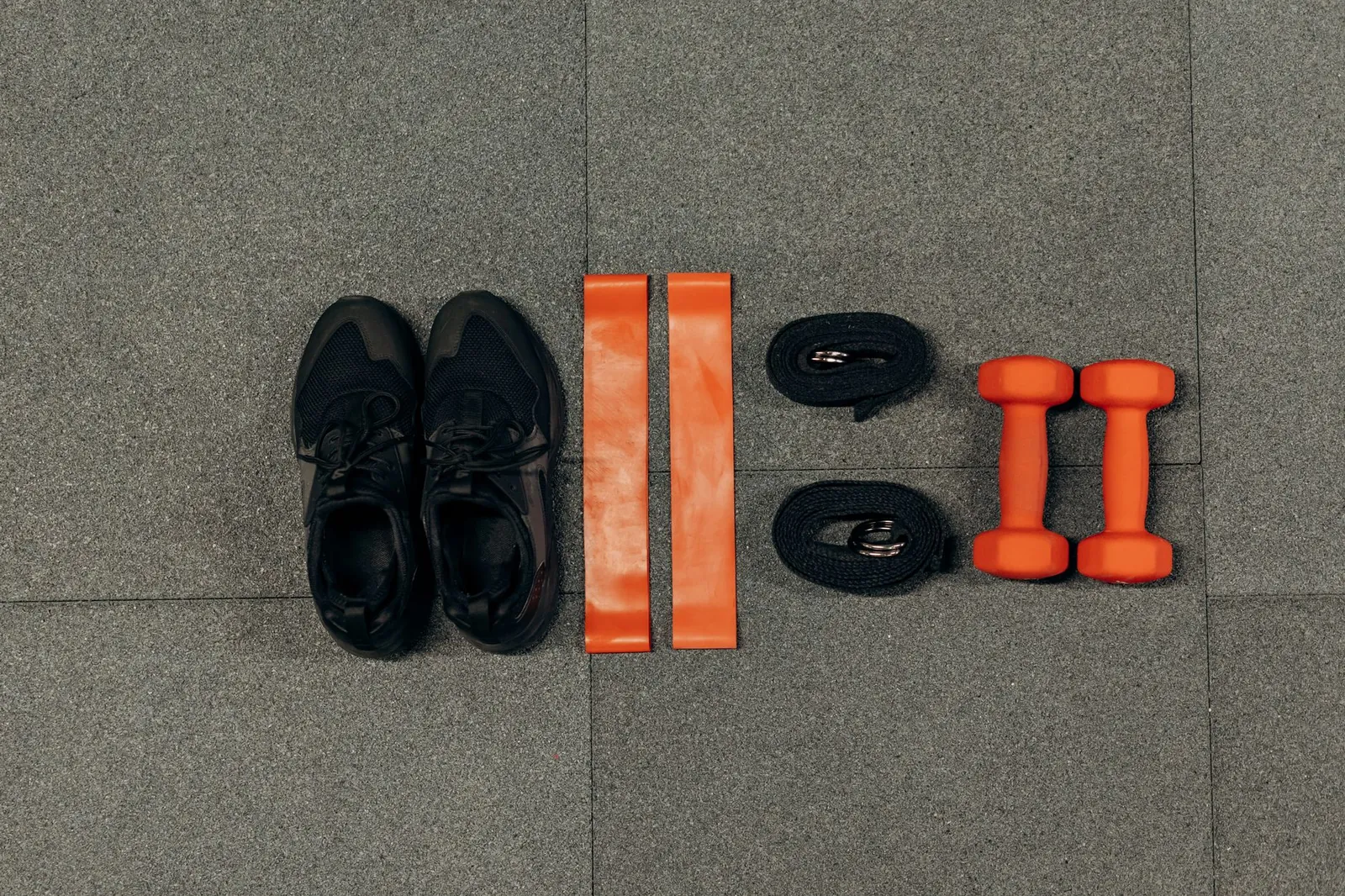
Physical therapists prescribe bands for rehab precisely because of that bottom-position relief. Dumbbells challenge you through the full range, which drives more muscle fiber recruitment from rep one—a meaningful edge for hypertrophy.
Strength Gains and Muscle Building
Dumbbells win for progressive overload. You can jump from 25 to 30 pounds in a single purchase. Band progression means stacking bands or buying a stiffer one—jumps are often 10–20% of total resistance and harder to calibrate precisely.
Bands do build muscle. Train to near failure, keep volume high (10–20 sets per muscle group per week), and hypertrophy happens. The gap versus dumbbells is most noticeable above intermediate level—beginners see comparable early gains with either tool.
Joint Safety and Injury Risk
Bands reduce load at the bottom of a movement—exactly where your shoulder is most exposed in a press and your knee is most stressed in a squat. That makes them the safer starting point for anyone with chronic joint pain or coming back from injury.
Dumbbells demand more control. A heavy dumbbell at the bottom of a chest fly puts real torque on the shoulder capsule. That’s manageable with good form and sensible load selection—millions of people train safely with dumbbells every day—but it’s a real risk if you rush the weight up or skip warm-ups.
Recovering from a rotator cuff strain or knee issue? Start with bands. Transition to light dumbbells once you’re pain-free through a full range of motion.
Cost and Space
| Factor | Resistance Bands | Dumbbells |
|---|---|---|
| Entry cost | $20–60 for a set | $50–150 per pair (light to moderate) |
| Full range (light to heavy) | $80–200 | $300–1,000+ |
| Space required | Minimal (fits in a bag) | Significant (rack, storage) |
| Durability | 3–5 years typical | Indefinite with care |
| Portability | Excellent | Poor (heavy, bulky) |
Five loop bands covering light through ultra-heavy resistance weigh under 2 pounds and fit in a gallon zip-lock. A modest dumbbell set—5 to 50 pounds—runs $300–600 and needs a rack or at least a dedicated corner. Bands degrade in UV and heat; store them in a cool, dry bag and expect 3–5 years of regular use. Dumbbells, barring excessive drops, last decades.
For a small apartment setup, see our guide to best home gym equipment for beginners to see how both fit into a minimal footprint.
Versatility and Exercise Selection
Dumbbells handle heavy compound work cleanly: goblet squats, farmer carries, Turkish get-ups, unilateral rows. Single-arm dumbbell work is particularly effective for correcting left-right strength imbalances.
Bands cover different ground. They’re the tool for:
- Assisted pull-ups (loop under your knee, shave 20–80 pounds of bodyweight)
- Accommodating resistance on deadlifts (add band tension at lockout without changing bottom-position load)
- Low-stress isolation—face pulls, lateral raises, pull-aparts—where joint comfort matters more than load
- Band-resisted sprints and throws in athletic conditioning programs
Use bands where joints are weak and dumbbells where you need to build absolute strength.
Real-World Scenarios
You’re a beginner with no equipment
Start with bands ($40–80). They’re forgiving, teach movement patterns without heavy load, and leave room to fail safely. After 6–8 weeks of consistent training, add dumbbells if you want heavier loading. See best adjustable dumbbells for home for space-saving options.
You have limited space
Bands only. Five loop bands cover more exercise variety than two pairs of dumbbells and occupy a fraction of the space.
You’re training for strength or muscle size
Dumbbells first. Progressive overload is cleaner, loads are heavier, and you’ll hit meaningful strength benchmarks faster. Add bands for accessory and recovery work.
You travel frequently or train outdoors
Bands. Under 2 pounds, carry-on legal, functional in a hotel room, park, or beach with nothing but an anchor point.
You’re recovering from injury
Bands. Variable resistance reduces pain at the weakest joint positions. Move to light dumbbells once you’re pain-free through full range.
Using Both Together
Most advanced lifters run a hybrid setup: dumbbells for main lifts, bands for assistance and isolation. You get heavy loading for strength and joint-friendly options for volume work and active recovery.
A practical three-day split:
- Monday: Dumbbell bench press 4 sets × 6–8 reps, then band chest flyes 3 sets × 12–15 reps
- Wednesday: Band-assisted pull-ups 5 sets, then dumbbell rows 4 sets × 8–10 reps
- Friday: Dumbbell goblet squats 4 sets × 8–10 reps, then band leg curls 3 sets × 12–15 reps
Our verdict
Space-limited or budget-conscious? Buy bands. Chasing strength or muscle size with room to store gear? Buy dumbbells. Serious about long-term fitness? Own both—start with whichever fits your situation right now and add the other within 6–12 months.
Frequently asked questions
Can you build muscle with resistance bands alone?
Yes—if you train close to failure and hit 10–20 sets per muscle group per week. Progression is less precise than with dumbbells, and you’ll likely hit a ceiling faster at advanced levels, but hypertrophy is well within reach for beginners and intermediates.
Are resistance bands better for joints?
Generally yes. Resistance is lowest at the bottom of a movement—the position where joints are most exposed—so bands reduce peak stress on shoulders, knees, and elbows. Dumbbells can be equally joint-friendly at appropriate weights with strict form, but the margin for error is smaller.
How long do resistance bands last?
Three to five years with regular use under normal conditions. UV exposure, heat above 100°F, and contact with sharp edges degrade the rubber fastest. Store them in a cool, dry bag away from direct sunlight. Dumbbells last indefinitely if you don’t drop them on hard flooring repeatedly.
Can you do heavy compound lifts with bands?
Partially. Bands work for squats, hinges, and presses, but resistance is lightest at the bottom—exactly where compound movements are hardest. That limits how much strength stimulus you can generate. Use bands for these patterns when dumbbells aren’t available, but expect slower strength progress than with equivalent dumbbell loads.
Which is better for fat loss?
Fat loss is driven by calorie deficit, not tool choice. Dumbbells let you lift heavier and accumulate volume faster, which supports muscle retention during a cut—an edge if you’re already intermediate or advanced. Bands are sufficient for fat loss if you train hard and keep total volume high.

Marcus is a cycling coach and hiker who plans routes down to the water stops.