This article may contain affiliate links. If you buy through them we may earn a commission at no extra cost to you.
The Bowflex SelectTech 552 ($380–$420) covers 95% of home training needs and adjusts in under 5 seconds. If you plan to lift above 52 pounds or want a longer-term investment, the Ironmaster Quick-Lock or PowerBlocks Pro are worth the extra spend. Below, five models compared on every spec that matters.
What Makes Adjustable Dumbbells Worth the Investment
One pair replaces 10–15 fixed dumbbells and takes up the footprint of a shoebox tray. A fixed dumbbell set covering 10–70 lbs in 5-lb increments runs $1,500–$2,500 and needs a dedicated rack. Adjustable pairs cost $200–$800 and sit on a shelf.
The math works if you train 3+ days per week. At $400 for a quality pair over 150 sessions per year, you’re at roughly $0.67 per session by month 12—and the dumbbells keep going.
The best adjustable dumbbell is the one you’ll actually use because it fits your space, your budget, and your hands.
Progressive overload is also easier. Hit 10 clean reps at 20 lbs? Move to 22.5 lbs next session. No guessing, no extra purchase.
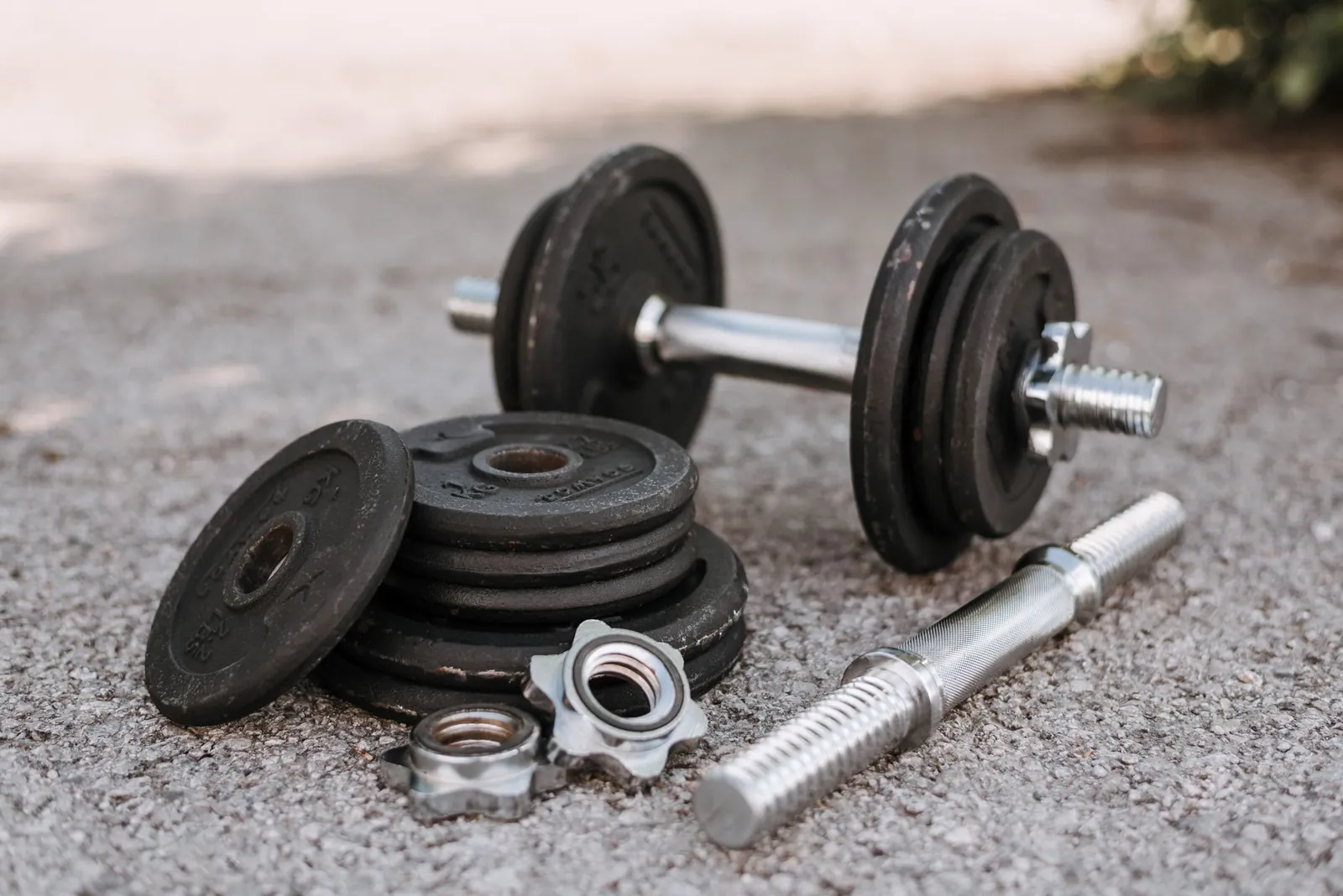
Key Features to Compare
Weight Range and Increment Size
Most adjustable dumbbells run 5–90 lbs per hand. The increment size matters more than the ceiling weight. A 5-lb jump from 20 to 25 lbs is manageable for most exercises. A 10-lb jump—say, 25 to 35 lbs on a bicep curl—forces you to either stall or sacrifice form. Look for 2.5-lb increments if you do a lot of isolation work; 5-lb increments are fine for compound movements.
Adjustment Mechanism
Three types dominate the market:
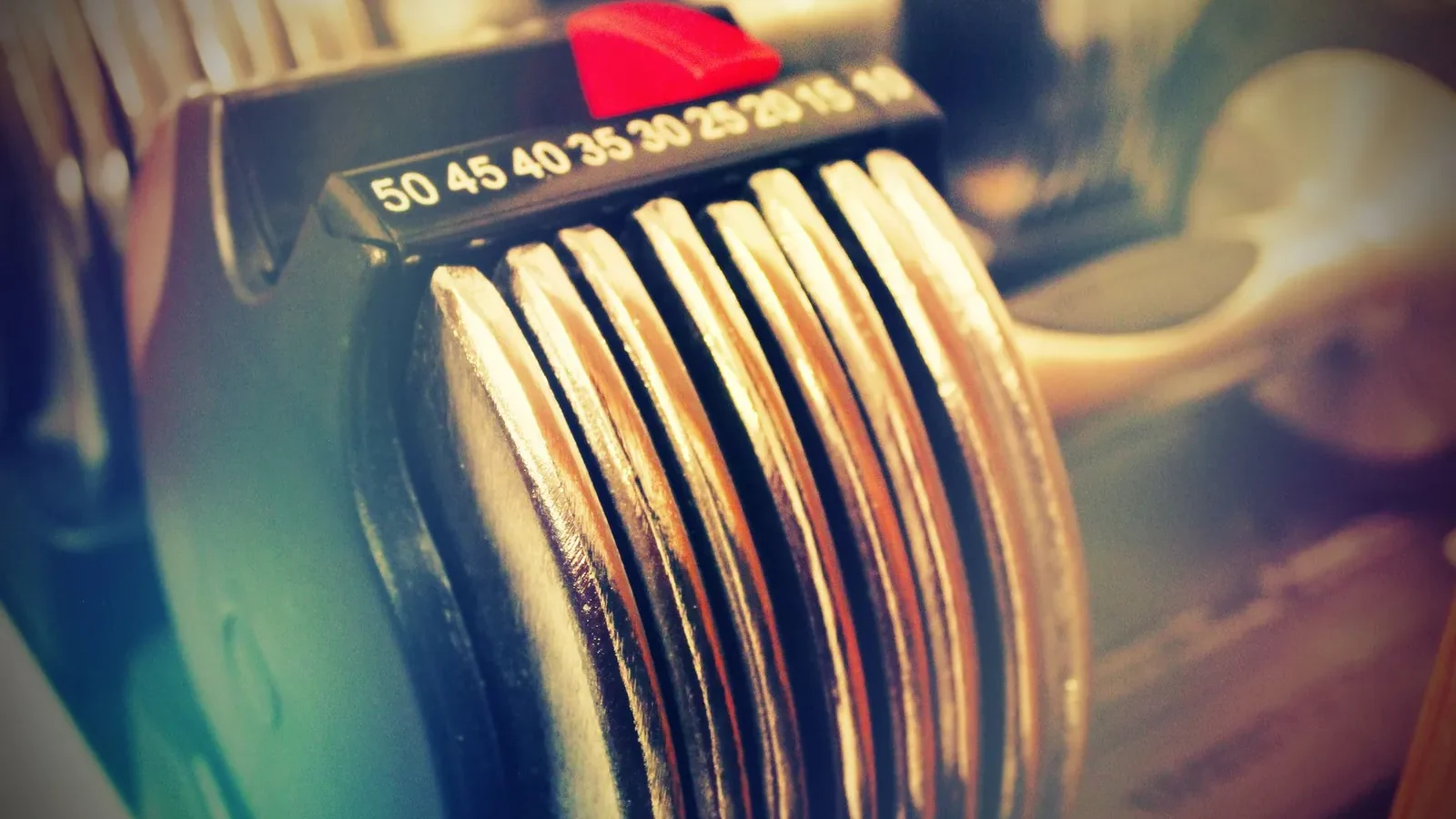
- Dial-based (twist to lock): 2–5 seconds, reliable, affordable. Best all-around.
- Pin-based (move a pin to a slot): 3–8 seconds, compact, fewer moving parts to fail.
- Magnetic (flip a switch): 1–2 seconds, but costs more and offers fewer weight options.
Dial-based is the sweet spot for most home gyms. Fast enough for supersets, simple enough to last years without maintenance.
Handle Comfort and Grip
Thin, smooth handles cause hand fatigue by set 3. A knurled (textured) handle with at least a 1.25-inch diameter holds firm during heavy rows and Romanian deadlifts. Check handle length too—some dumbbells feel cramped at lighter settings because the grip area shortens as plates are removed.
Durability and Noise
Rubber-coated heads protect hardwood floors and cut noise by roughly half compared to bare metal. If you train in an apartment or before 7 a.m., that matters. Scan reviews specifically for rattle—loose adjustment mechanisms can clank even when you’re not moving the dumbbell.
Top Adjustable Dumbbell Models
| Model | Weight Range | Increment | Adjustment Type | Price (per pair) | Best For |
|---|---|---|---|---|---|
| Bowflex SelectTech 552 | 5–52.5 lbs | 2.5 lbs | Dial | $380–$420 | Strength training, tight budgets |
| PowerBlocks Pro | 5–70 lbs | 5 lbs | Pin | $450–$500 | Compact storage, durability |
| Ironmaster Quick-Lock | 5–165 lbs | 2.5 lbs | Pin | $600–$800 | Advanced lifters, long-term use |
| Nuobell | 5–80 lbs | 5 lbs | Pin | $480–$550 | Sleek design, neutral grip |
| Yes4All Adjustable | 5–52.5 lbs | 2.5 lbs | Pin | $200–$250 | Budget-conscious beginners |
Bowflex SelectTech 552
Fifteen weight settings, 5–52.5 lbs, dial adjusts in 3–5 seconds. The handle runs slightly thinner than competitors—a plus for smaller hands, a drawback on heavy rows where grip fatigue sets in faster. Rubber coating is solid. Noise is moderate. The 52.5-lb ceiling is the only real limitation; if you’re pressing or rowing above that now, size up.
PowerBlocks Pro
Pin-based, 5–70 lbs, neutral handle angle. More compact than any dial system—the block design stacks tighter on a shelf. Adjustment takes 4–6 seconds once you know your pin slots. The 5-lb increments are the trade-off: a jump from 35 to 40 lbs can be a bigger ask than 2.5 lbs would be, especially on isolation work. Ideal for compound-focused training.
Ironmaster Quick-Lock
Tops out at 165 lbs per hand—you won’t outgrow it. Thick, knurled handle. Pin-and-lock mechanism is smooth and quiet. At $600–$800, it’s the steepest entry here, but the build quality supports 10+ years of daily use. Buy this if dumbbells are your primary strength tool and you expect to progress steadily for years.
Nuobell
5–80 lbs in a round, traditional dumbbell shape. The handle is longer than most adjustable options, so the grip area doesn’t feel cramped at light settings. Quieter than bare-metal competitors. Sits between the Yes4All and PowerBlocks on price and between them on features—a solid pick if aesthetics and neutral grip are priorities.
Yes4All Adjustable
The entry point. 5–52.5 lbs, 2.5-lb increments, pin-based. Heavier and less refined than the Bowflex, but it holds up under regular use. Buy this if you’re not sure yet whether adjustable dumbbells fit your training style—spend $200–$250, train with them for 90 days, then upgrade if you’re committed.
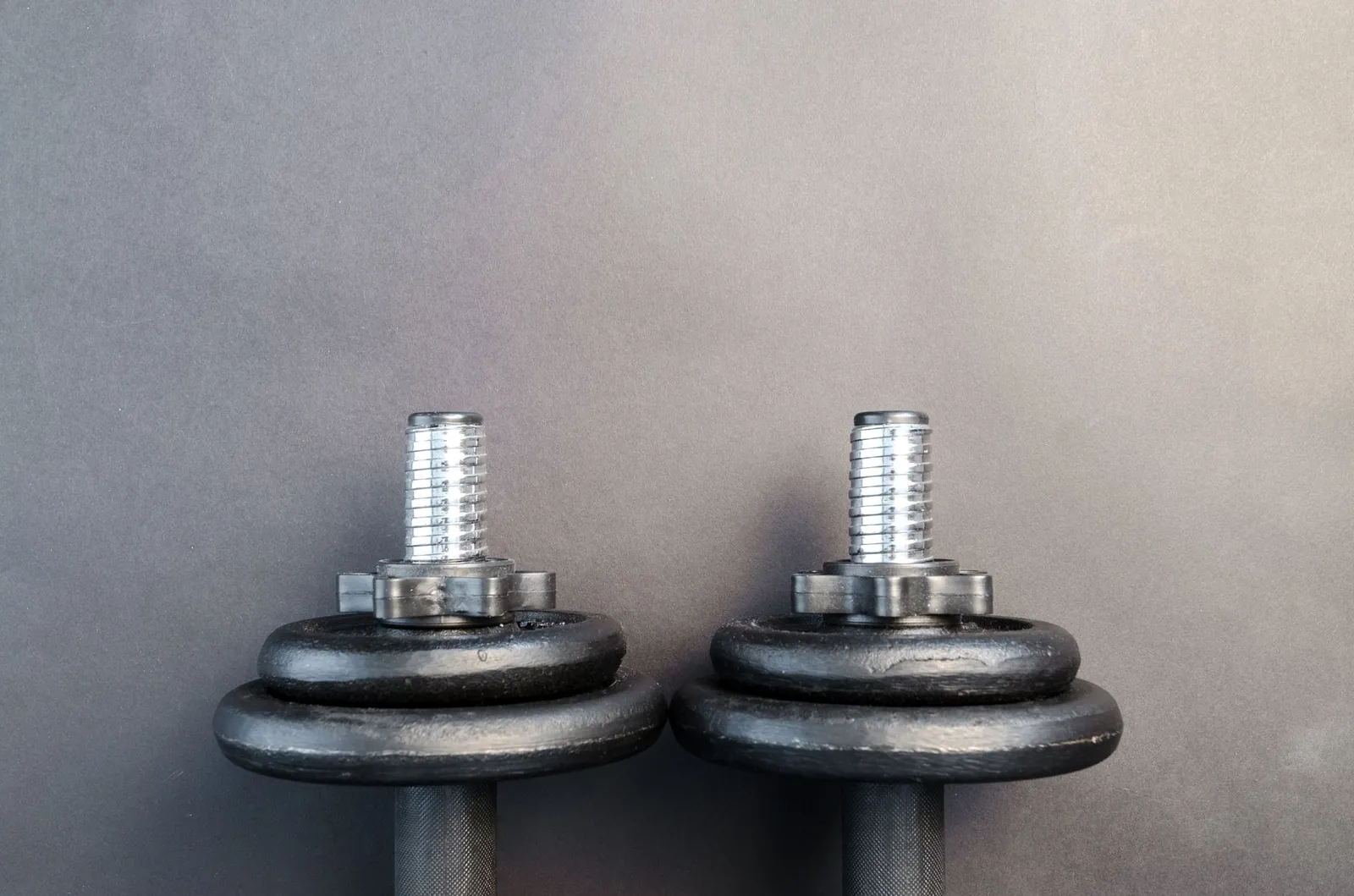
Our verdict
Buy the Bowflex SelectTech 552 if you want the fastest adjustment and don’t plan to lift above 52 pounds. Buy the PowerBlocks Pro if you value compact storage and neutral grip. Buy the Ironmaster Quick-Lock if you’re committed to strength training long-term and want zero compromise. Buy the Yes4All if you’re testing the concept on a budget. All four will serve you for 5+ years with normal use.
How to Fit Adjustable Dumbbells Into Your Space
Dial-based systems need 6–8 inches of lateral clearance when you rotate the dumbbell during adjustment. Pin-based block designs (PowerBlocks, Ironmaster) need less floor space but more vertical shelf height. Measure your workout area before ordering—a tight corner can make a dial system genuinely awkward to use.
A pair of adjustable dumbbells, a flat bench, and a pull-up bar covers a full-body program. See our guide on best home gym equipment for beginners for a complete setup breakdown.
Common Mistakes When Buying Adjustable Dumbbells
Underestimating Your Starting Weight
Beginners often assume they’ll stay light. Three weeks of consistent training and dumbbell rows jump from 20 lbs to 40 lbs fast. Buy a system that reaches at least 60 lbs per hand. The price gap between a 52-lb and 70-lb system is typically $50–$80; the frustration of hitting your ceiling in month two costs more.
Ignoring Adjustment Speed in Daily Use
Three seconds per adjustment sounds trivial. Across 6 exercises with 3–5 weight changes each, you lose 3–5 minutes per session. Over 150 annual workouts, that’s 7–12 hours. If you superset or train with a partner, slow adjustment actively breaks your rhythm.
Skipping the Handle Test
Buy from a retailer with a 30-day return window. If the handle diameter or knurling feels wrong after three workouts, return it. Hand comfort determines whether you grab the dumbbells or skip the session.
Pairing Adjustable Dumbbells With Your Routine
These shine in drop sets and supersets—scenarios where fixed dumbbells force you to stop, walk, and reset. For a 30-minute session, plan 3–4 exercises, 3 sets each, 60–90 seconds rest. Adjustable dumbbells keep that pace intact. See full body workout routine at home for a sample dumbbell-first program.
Frequently asked questions
How much do adjustable dumbbells cost compared to fixed dumbbells?
A pair of adjustable dumbbells costs $200–$800. A set of fixed dumbbells covering the same weight range (say, 10 to 70 pounds in 5-pound increments) costs $1,500–$2,500 and takes up 10 times the space. Adjustable dumbbells are cheaper and more practical for most home gyms.
Do adjustable dumbbells break easily?
Quality adjustable dumbbells last 5–10 years with normal use. Dial-based systems (Bowflex) are most reliable. Pin-based systems (PowerBlocks) are also durable but require you to insert the pin correctly each time. The main failure point is loose adjustment mechanisms, which is why you should buy from reputable brands with warranties.
Can you use adjustable dumbbells for Olympic lifts?
No. Adjustable dumbbells aren’t designed for explosive movements like snatches or clean-and-jerks. The plates can shift mid-lift, and the handle geometry doesn’t match Olympic barbells. Use them for strength training, conditioning, and isolation work only.
What’s the difference between dial and pin adjustment?
Dial-based systems (twist a dial) are faster and quieter. Pin-based systems (move a pin) are more compact and have fewer moving parts. Dial is better if you change weight often. Pin is better if you prioritize space and durability.
Are adjustable dumbbells good for beginners?
Yes. They let you start light (5–10 pounds), progress gradually, and avoid buying multiple sets. The main downside is cost upfront. If budget is tight, start with one pair of fixed dumbbells and upgrade to adjustable later.

Casey is a certified strength coach and trail runner who tests gear by breaking it.