This article may contain affiliate links. If you buy through them we may earn a commission at no extra cost to you.
Three to four sessions per week, 35–45 minutes each, hitting chest, back, legs, shoulders, and arms every time—that’s the structure. This plan works with dumbbells, resistance bands, or nothing but your bodyweight and a chair.
Beginners typically see measurable strength gains within 3–4 weeks. If you’ve trained before, tempo changes and harder progressions keep it challenging. No gym required.
The 4-Day Full Body Split
Train Monday, Tuesday, Thursday, and Saturday—or any four days that include at least one rest day between sessions. Each session follows the same skeleton: warm-up, compound lifts, accessory work, core finisher, cool-down.
Warm-up (5 minutes)
- 2 minutes light cardio: jumping jacks, marching in place, or a slow jog
- Arm circles: 10 forward, 10 backward each side
- Bodyweight squats: 10 reps
- Cat-cow stretches: 8 reps
- Glute bridges: 10 reps
Main Workout (30–35 minutes)
A1. Push — Chest, Shoulders, Triceps
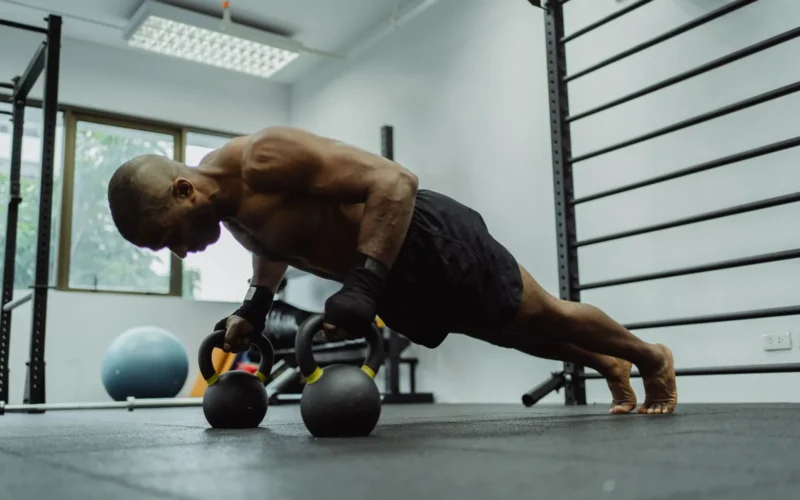
- Push-ups: 3 sets × 8–12 reps (modify to knee push-ups or incline on a chair)
- Dumbbell shoulder press: 3 sets × 8–10 reps (substitute pike push-ups if no weights)
- Tricep dips: 3 sets × 8–12 reps (chair or low bench)
A2. Pull — Back, Biceps
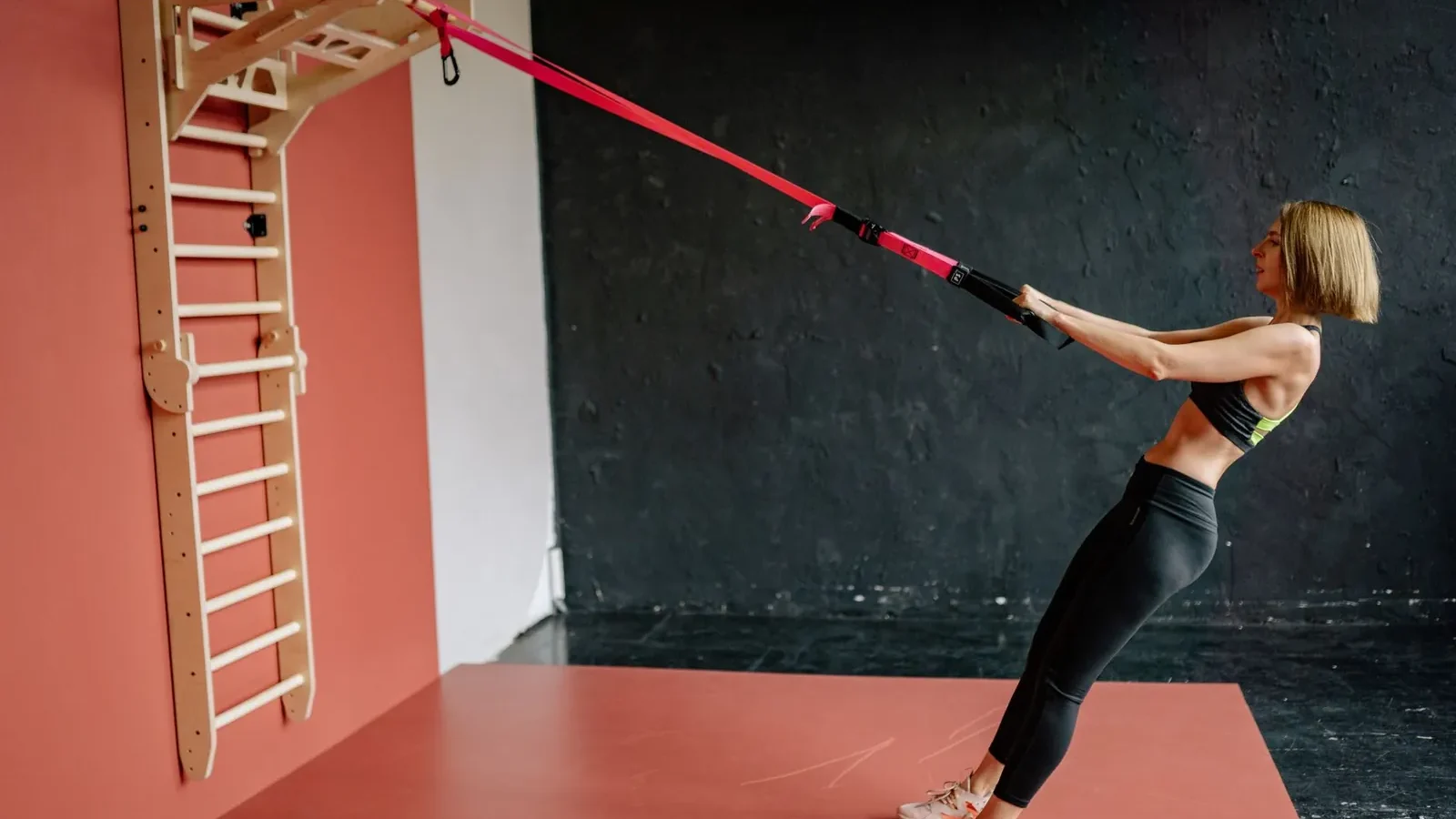
- Inverted rows: 3 sets × 8–12 reps (low table or resistance band)
- Dumbbell rows: 3 sets × 10–12 reps each side (or single-arm band rows)
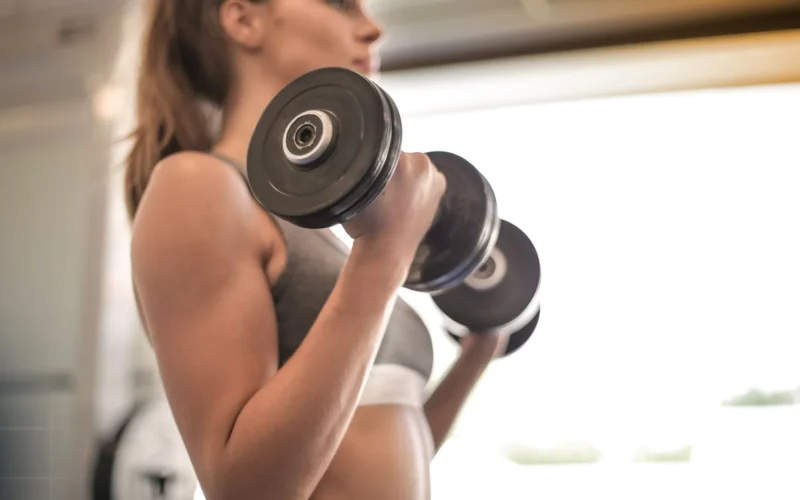
- Dumbbell curls: 2 sets × 10–12 reps (or resistance band curls)
A3. Legs — Quads, Glutes, Hamstrings
- Goblet squats: 3 sets × 12–15 reps (dumbbell at chest, or bodyweight)
- Bulgarian split squats: 3 sets × 10–12 reps each leg (rear foot on a chair)
- Single-leg deadlifts: 2 sets × 8–10 reps each leg (with or without dumbbells)
A4. Core Finisher (3–5 minutes)
- Plank: 2 sets × 30–60 seconds
- Dead bugs: 2 sets × 10 reps each side
- Bird dogs: 2 sets × 10 reps each side
Cool-down (3–5 minutes)
- Child’s pose: 30 seconds
- Quad stretch: 30 seconds each leg
- Hamstring stretch: 30 seconds each leg
- Chest and shoulder stretch: 30 seconds each side
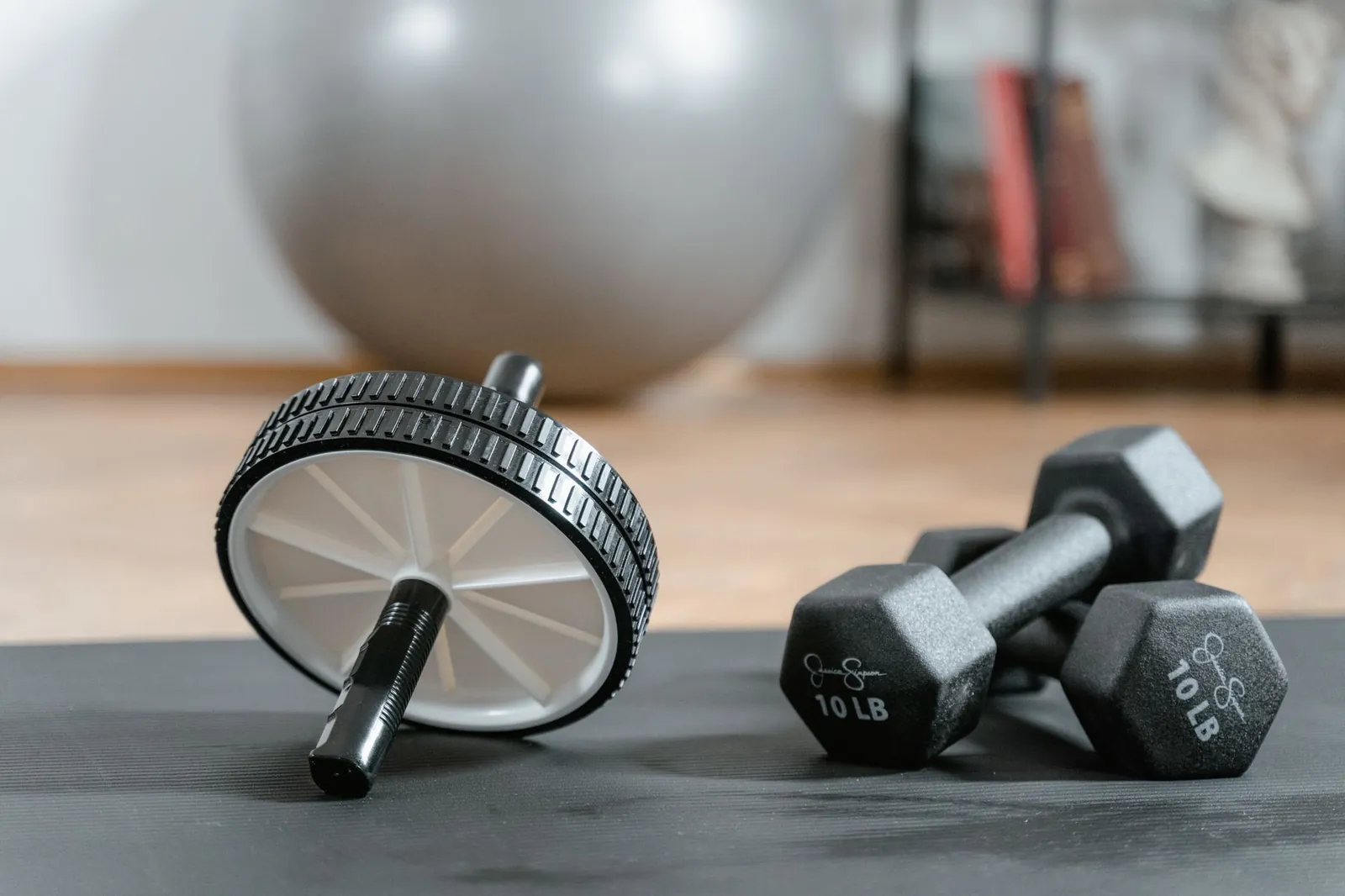
Bodyweight-Only Version
No dumbbells? Swap these moves directly:
- Dumbbell rows → Inverted rows on a table or resistance band rows
- Goblet squats → Bodyweight squats or jump squats (3 sets × 15–20 reps)
- Shoulder press → Pike push-ups (3 sets × 8–12 reps)
- Dumbbell curls → Resistance band curls or towel curls
- Single-leg deadlifts → Single-leg glute bridges (3 sets × 10–12 reps each side)
Progressive overload—adding reps, sets, or difficulty each week—beats perfect form on day one.
Week 1, target 8 push-up reps. Week 4, target 12. Once you’re hitting 12 clean reps across 3 sets, move to a harder variation: archer push-ups, diamond push-ups, or decline push-ups. The same ladder applies to every bodyweight move.
Essential Gear for Home Workouts
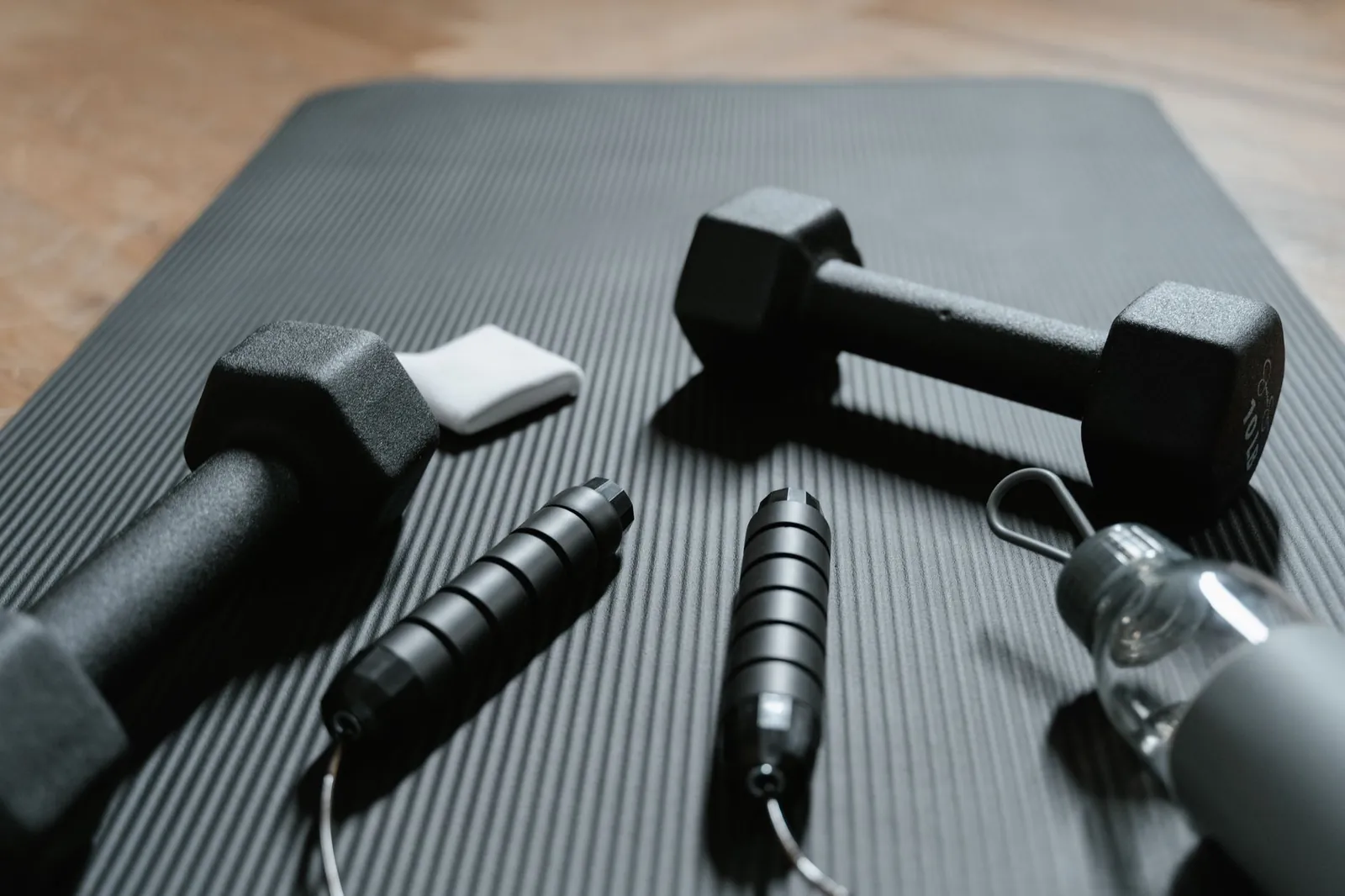
Start with a mat and your bodyweight. Add gear in this order as budget allows:
- Yoga mat — best for floor work and joint comfort; $20–40
- Resistance bands — best for rows, pull-apart drills, and band curls; $15–30 for a full set
- Doorway pull-up bar — best for back strength; $25–50
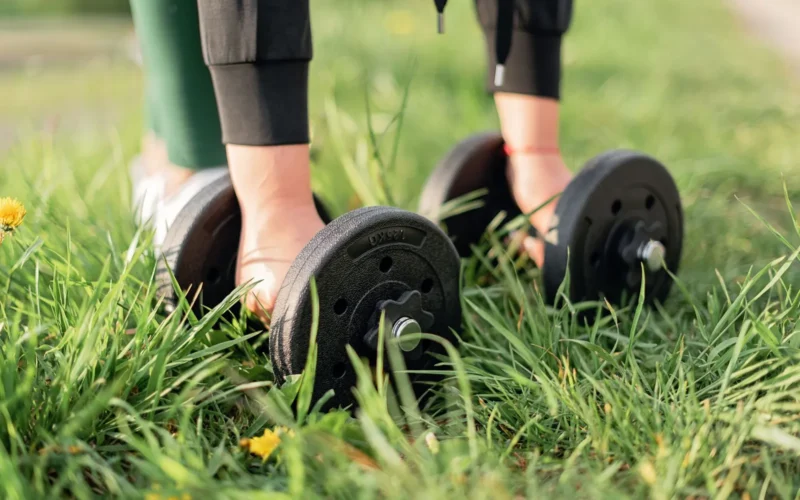
- Adjustable dumbbells — best for long-term progression; 5–50 lbs per hand covers most needs
- Sturdy chair or low bench — best for dips, split squats, and incline work; use what you have
See our guide on best home gym equipment for beginners for brand picks at each price point.
Form Cues That Actually Matter
Film yourself from the side for the first week. One session in front of a mirror catches more errors than months of guessing. Muscle soreness the next day is normal; sharp pain during a rep is not—stop and adjust the range of motion.
Push-ups
- Elbows at 45° to your torso, not flared to 90°
- Straight line from head to heels throughout
- Lower until chest nearly touches the floor
- Press hard through your palms on the way up
Squats
- Knees track over toes—no caving inward
- Chest stays upright; don’t let it fold toward your thighs
- Thighs parallel to the floor at minimum depth
- Weight in your heels, not your toes
Rows
- Pull elbows straight back, not out to the sides
- Squeeze shoulder blades together at the top of each rep
- Core tight—no sagging hips
Progression: What to Change and When
Your body adapts in roughly 3–4 weeks. Rotate through these levers so you’re always adding a small challenge:
- Add reps: Hit 12 clean reps for 3 sets? Aim for 13 next session.
- Add sets: Move from 3 sets to 4 sets on main lifts.
- Add load: Heavier dumbbells, or a backpack loaded with books.
- Slow the eccentric: Lower for 3 seconds instead of 1—same weight, harder stimulus.
- Harder variation: Bodyweight squat → jump squat → Bulgarian split squat.
Log every session: exercise, sets, reps, load. A notes app works fine. The log shows you whether you’re actually progressing or just feeling like you are.
Recovery Between Sessions
Muscle is built during rest, not during the workout itself. Take at least one full rest day per week. On off-days, a 20–30 minute walk or light yoga keeps blood moving without adding recovery debt. Sleep 7–9 hours. Protein intake matters: 0.7–1 gram per pound of body weight per day supports muscle repair—the exact amount depends on your training age and total calorie intake.
For nutrition timing and mobility drills, read our article on recovery between workouts explained.
Gear Comparison at a Glance
| Gear | Best For | Approx. Cost | Skip If |
|---|---|---|---|
| Yoga mat | Floor work, joint comfort | $20–40 | You have carpet |
| Resistance bands | Rows, curls, pull-aparts | $15–30 | You have dumbbells |
| Doorway pull-up bar | Back and bicep strength | $25–50 | Your doorframes won’t support it |
| Adjustable dumbbells | Long-term load progression | $150–350 | Budget is tight—bands work short-term |
Frequently Asked Questions
How often should I do a full body workout at home?
3–4 times per week is the sweet spot. That’s enough stimulus to build muscle while leaving 1–2 days for recovery. Start at 3 days (Monday, Wednesday, Friday) and add a fourth session after 4–6 weeks once the soreness stops being disruptive.
Can I build muscle with just bodyweight?
Yes—with a catch. Bodyweight training builds muscle reliably in the first 8–12 weeks. After that, progress slows unless you keep increasing difficulty. Harder variations (archer push-ups, pistol squats, inverted rows with feet elevated) extend the runway, but adding load via dumbbells or bands eventually speeds things up.
What if I only have 20 minutes?
Run a tight circuit: 2 sets each of push-ups, squats, rows, and one core move. Rest 60 seconds between sets. You’ll finish in about 18 minutes. It’s a real session—just not a complete one. Three to four of these per week still beats sporadic 45-minute workouts.
Should I do cardio on workout days?
Keep cardio to the 5-minute warm-up on strength days. A 20–30 minute walk on rest days aids recovery without interfering with muscle growth. Long cardio sessions—45-plus minutes at high intensity—on the same day as strength work can blunt gains if you’re also eating at maintenance calories.
How do I know if I’m doing the exercise correctly?
Film yourself from the side with your phone and compare to the form cues above. One session with a trainer—even a single online video call—is worth more than weeks of self-guessing. Start at 60–70% of your maximum effort and build load only after the movement feels automatic.

Casey is a certified strength coach and trail runner who tests gear by breaking it.