This article may contain affiliate links. If you buy through them we may earn a commission at no extra cost to you.
Three massage guns under $200 cover almost every recovery need. The Theragun Mini ($200) is the best travel pick at 1.2 lb. The Opro Grade 4 ($149) gives you 6 hours of battery and 6 heads for home use. The Hypervolt Go ($179) splits the difference. All three hit 3200 percussions per minute—the same core spec as guns twice the price.
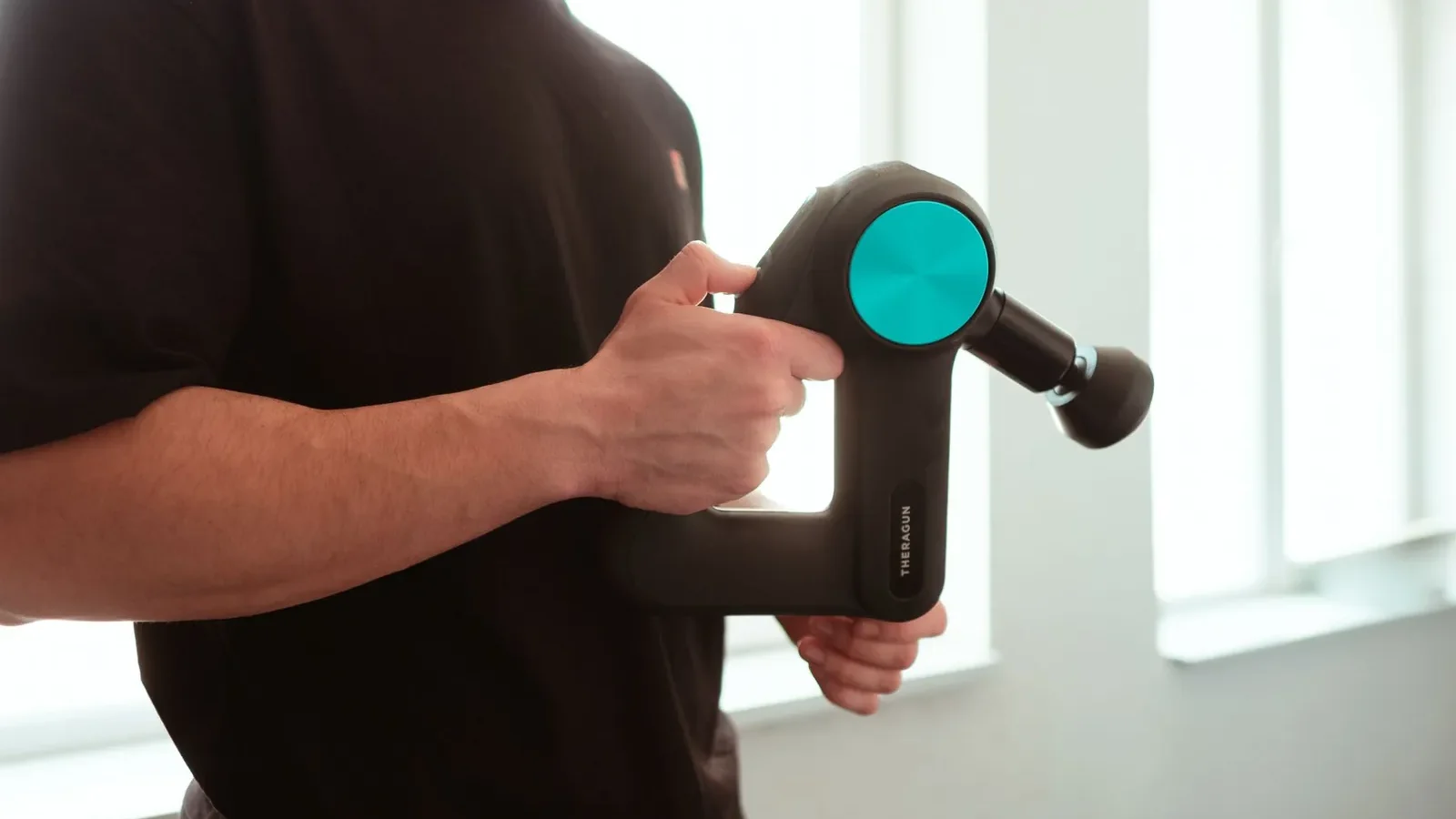
Theragun Mini: Compact Power for Travel
At 1.2 pounds, the Mini fits in a gym bag side pocket or carry-on without eating your weight allowance. It delivers 3200 percussions per minute at 1-inch (25 mm) amplitude and runs 150 minutes per charge.
The single head is the real trade-off. You’re limited to smaller, defined muscle groups—shoulders, forearms, calves. Covering your quads or upper back takes longer and more repositioning than with a larger gun. If portability isn’t your priority, the single head at $200 is hard to justify against the Opro Grade 4.
- Weight: 1.2 lb
- Amplitude: 1 inch (25 mm)
- Battery: 150 minutes
- Noise level: 72 dB
- Heads included: 1
Best for: Runners, travelers, anyone logging frequent miles away from home.

Hyperice Hypervolt Go: Mid-Range Workhorse
The Hypervolt Go at $179 is the easiest recommendation for most people. Four interchangeable heads, 180-minute battery, 2.1 pounds. The larger heads cover your back and glutes in roughly half the time the Mini requires. At 70 dB, it’s quieter than the Theragun Mini (72 dB) and noticeably quieter than older Hyperice models.
Hyperice doesn’t publish amplitude for the Go—a frustrating omission. Based on feel, it sits in the mid-range (roughly 10–12 mm), which is adequate for most gym-goers but may leave serious lifters wanting more depth on dense muscle groups like hamstrings.
- Weight: 2.1 lb
- Amplitude: Not disclosed (mid-range, ~10–12 mm estimated)
- Battery: 180 minutes
- Noise level: 70 dB
- Heads included: 4
Best for: Gym-goers who want one gun that handles everything without going heavy.
Opro Grade 4: Best Value for Home Use
At $149, the Opro Grade 4 has the best specs-per-dollar in this group. Six heads, 3200 percussions per minute, 10 mm amplitude, and a 360-minute (6-hour) battery that outlasts every other model here by at least 3 hours. You’ll charge it once a week on a 4-day training schedule.
The weight penalty is real: 2.8 pounds versus 1.2 for the Mini. In a 10-minute session working multiple muscle groups, arm fatigue becomes a factor—especially overhead or on hard-to-reach spots. That’s the only reason to skip it.
- Weight: 2.8 lb
- Amplitude: 10 mm
- Battery: 360 minutes
- Noise level: 75 dB
- Heads included: 6
Best for: Home users who train 4–5 days a week and want maximum battery and head variety without paying for a brand name.
Comparison Table
| Model | Price | Percussions/min | Battery (min) | Weight | Heads | Best For |
|---|---|---|---|---|---|---|
| Theragun Mini | $200 | 3200 | 150 | 1.2 lb | 1 | Travel, portability |
| Hypervolt Go | $179 | 3200 | 180 | 2.1 lb | 4 | Gym, versatility |
| Opro Grade 4 | $149 | 3200 | 360 | 2.8 lb | 6 | Home, long sessions |
| Ekrin Bantam | $189 | 3000 | 120 | 1.5 lb | 3 | Neck, shoulders |
| Shark PowerDrill | $169 | 3200 | 240 | 2.4 lb | 5 | Value seekers |
How to Pick the Right One for You
Travel and portability
The Theragun Mini or Ekrin Bantam. Both weigh under 1.5 pounds. You give up battery life (120–150 minutes versus 240–360) and head count, but neither will slow you down at airport security.
Home use and recovery sessions
The Opro Grade 4. Six heads let you go from deep-tissue work on quads to lighter percussion on calves without stopping to swap attachments. One charge covers a full week of 4-day training at 2 minutes per muscle group.
Gym and all-around flexibility
The Hypervolt Go. Four heads, 3-hour battery, 2.1 pounds—light enough to carry, powerful enough to cover large muscle groups. At $179 it’s the safest buy if you’re unsure how you’ll use it.
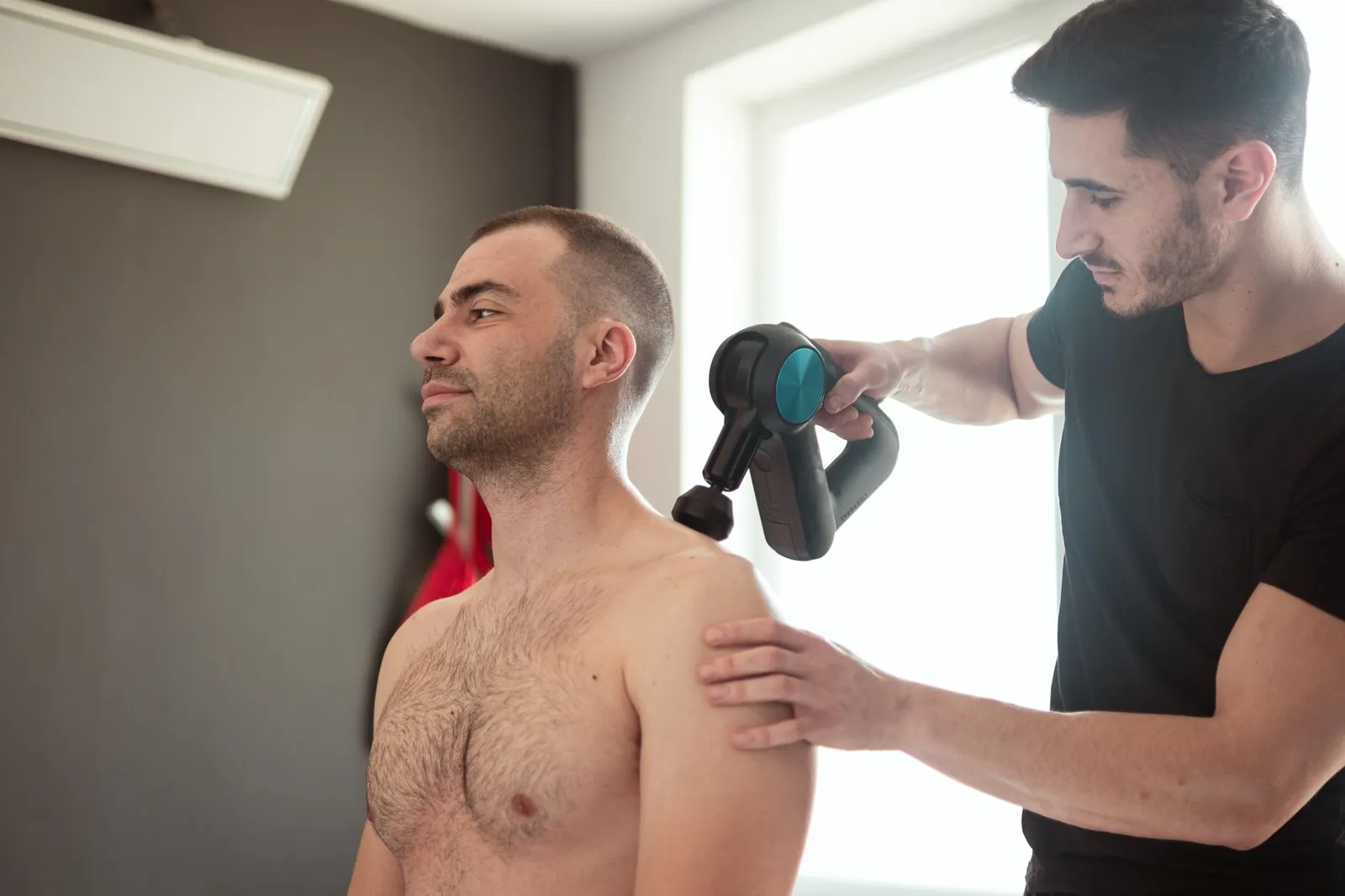
A massage gun is most effective 1–2 minutes per muscle group, 3–4 times per week; longer sessions don’t improve recovery and can increase soreness.
What to Look for in a Massage Gun Under $200
Percussion speed vs. amplitude
Speed (3000+ percussions per minute) creates surface sensation. Amplitude—how deep each stroke goes—is what reaches muscle tissue. For large groups like quads or glutes, 10–12 mm amplitude matters more than an extra 200 percussions per minute. The Theragun Mini’s 25 mm amplitude is unusually deep for its size; the Hypervolt Go’s undisclosed figure is its biggest spec gap.
Battery life
At 2 minutes per muscle group across 8 areas, one session uses 16 minutes. A 120-minute battery gives you 7–8 sessions before charging; 360 minutes stretches to 22 sessions. If you train 4 days a week, that’s the difference between charging every 2 days versus once a week.
Number of heads
Three heads (ball, flat, fork) covers the basics. Four or more lets you move between deep-tissue and lighter recovery work mid-session. Replacement heads run $15–30 each, so more included at purchase saves money long-term.
Noise level
70 dB is roughly conversational volume. 75 dB is noticeably louder in a quiet room—think a loud fan. If you use it before 7 a.m. or in shared spaces, stick to the Hypervolt Go (70 dB) over the Opro Grade 4 (75 dB).
Warranty
Most sub-$200 guns ship with 1-year coverage. Check whether the battery is included—replacements cost $30–60 and often aren’t covered. Theragun and Hypervolt have better-documented warranty claims processes than newer budget brands, which matters if you’re planning 2+ years of regular use.
Massage Gun vs. Foam Roller: When to Use Each
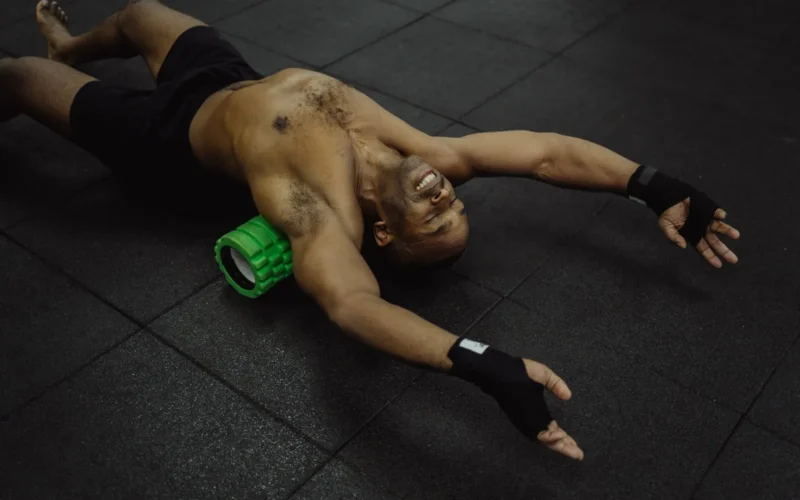
Use a foam roller for longer, full-body warm-ups before training—it covers more surface area faster. Use the massage gun post-workout on specific sore spots for 1–2 minutes per area. The two tools complement each other: foam roller for prep, massage gun for targeted recovery. See our full foam roller vs. massage gun comparison for a detailed breakdown.
Recovery Strategy: Where the Massage Gun Fits
Sleep quality, protein intake, and active rest drive most of your recovery. The massage gun handles one specific job: reducing localized soreness after hard workouts or long runs. Pair it with stretching and consistent hydration—it amplifies a solid recovery plan but can’t substitute for one. Our guide to recovery between workouts covers the full picture.
Our verdict
For travel, the Theragun Mini ($200) is worth the premium for its 1.2 lb weight and brand reliability. For home training, the Opro Grade 4 ($149) wins on specs—6-hour battery and 6 heads beat anything else at this price. For everyone else, the Hypervolt Go ($179) is the lowest-risk pick: versatile, quiet, and backed by a brand with a track record. None of these require spending $400+.
Frequently asked questions
Can a massage gun replace physical therapy?
No. A massage gun reduces muscle soreness and tension, but it’s not a treatment for injury. If you have pain from an injury, see a doctor or physical therapist first. A massage gun can support recovery alongside professional care, not replace it.
How often should I use a massage gun?
3–4 times per week is standard. Use it for 1–2 minutes per muscle group after workouts or on rest days. Daily use is safe, but more than 2 minutes per area can cause bruising or inflammation. Back off if soreness increases rather than decreases.
Do massage guns actually work?
Yes, for short-term soreness relief and blood flow. Research shows massage guns reduce delayed-onset muscle soreness (DOMS) by roughly 10–20% when used after workouts. They don’t improve strength or speed adaptation. Treat it as a recovery aid, not a performance tool.
What’s the difference between amplitude and percussion speed?
Percussion speed (3000+ per minute) is how fast the head moves. Amplitude (8–12 mm) is how deep each hit goes. Higher speed feels more intense on the surface; higher amplitude reaches deeper muscle layers. For most users, 3200 percussions per minute with 8–10 mm amplitude covers the full range of recovery needs.
Are cheaper massage guns worth it?
Yes, if specs matter more to you than brand name. The Opro Grade 4 at $149 has a 6-hour battery and 6 heads—both better than the Theragun Mini at $200. With premium brands, you’re paying for portability, warranty support, and reputation. That’s a fair trade-off for some buyers, not for others.

Casey is a certified strength coach and trail runner who tests gear by breaking it.