This article may contain affiliate links. If you buy through them we may earn a commission at no extra cost to you.
A foam roller gives you more pressure control and costs as little as $20. A massage gun cuts session time from 15 minutes to 5 and requires zero effort. If you’re tight on time and have $150 to spend, get the gun. If you want to learn your body and spend less, start with the roller. Most serious athletes end up using both.
How Each Tool Works
Foam Roller
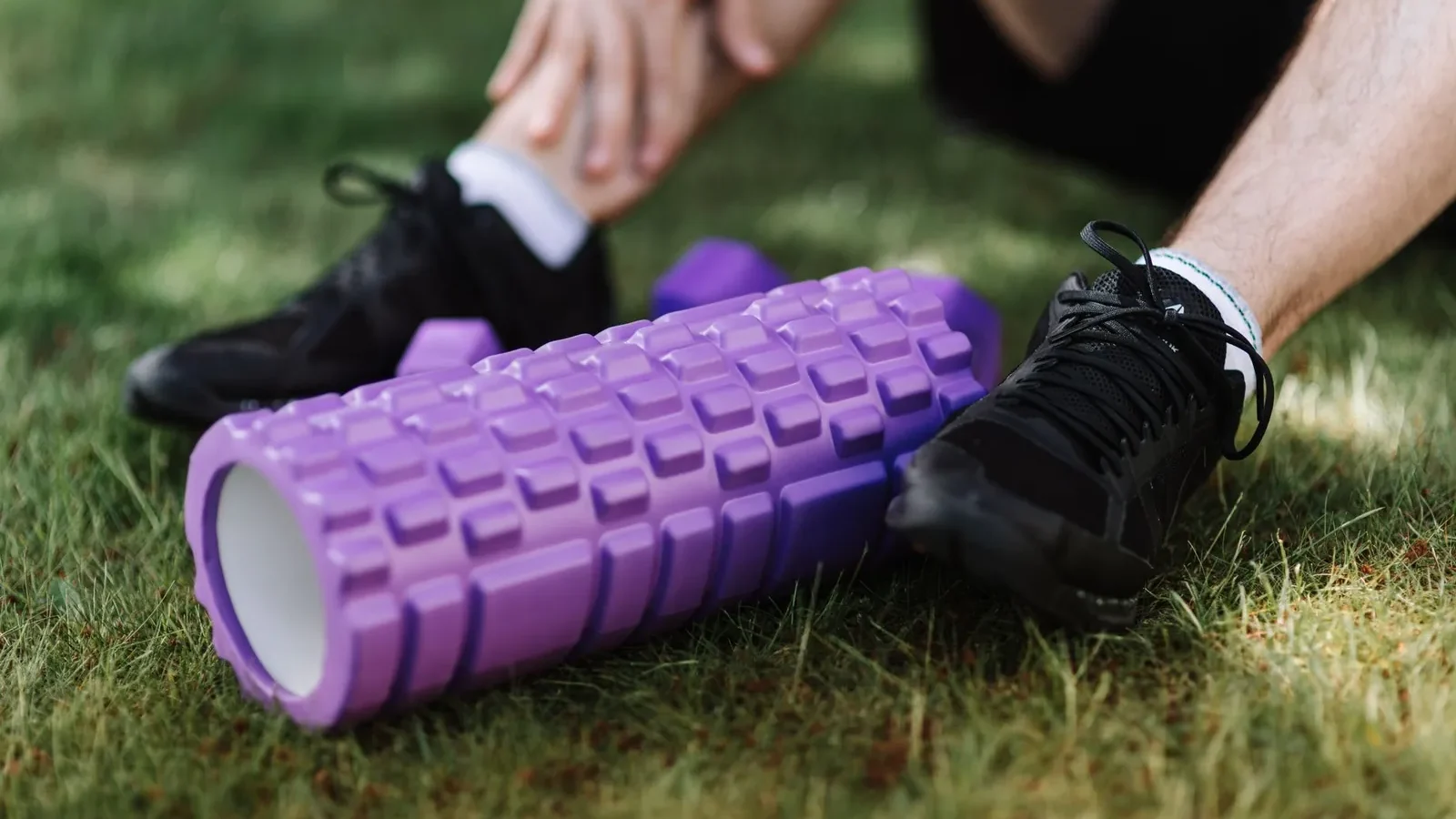
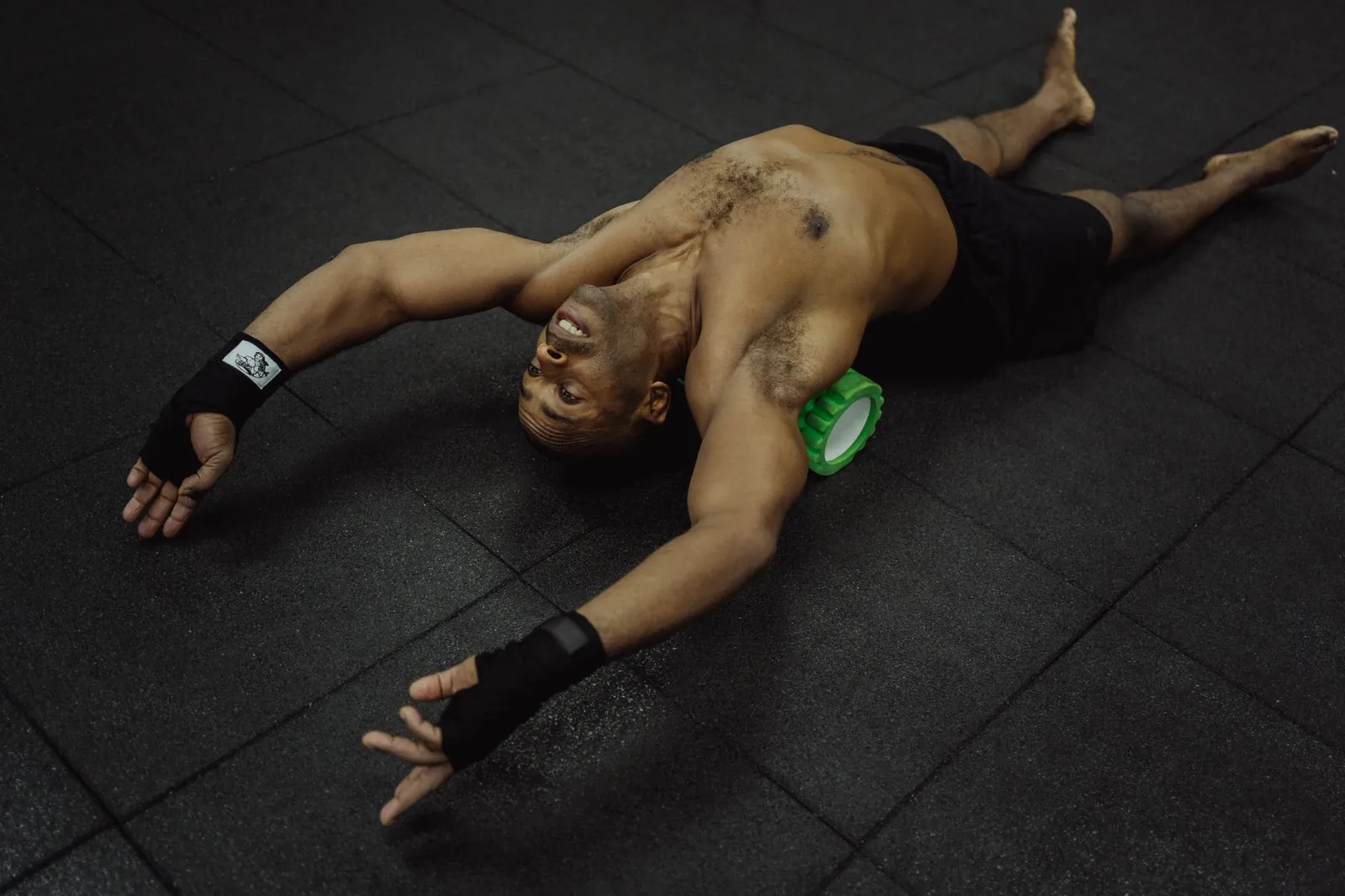
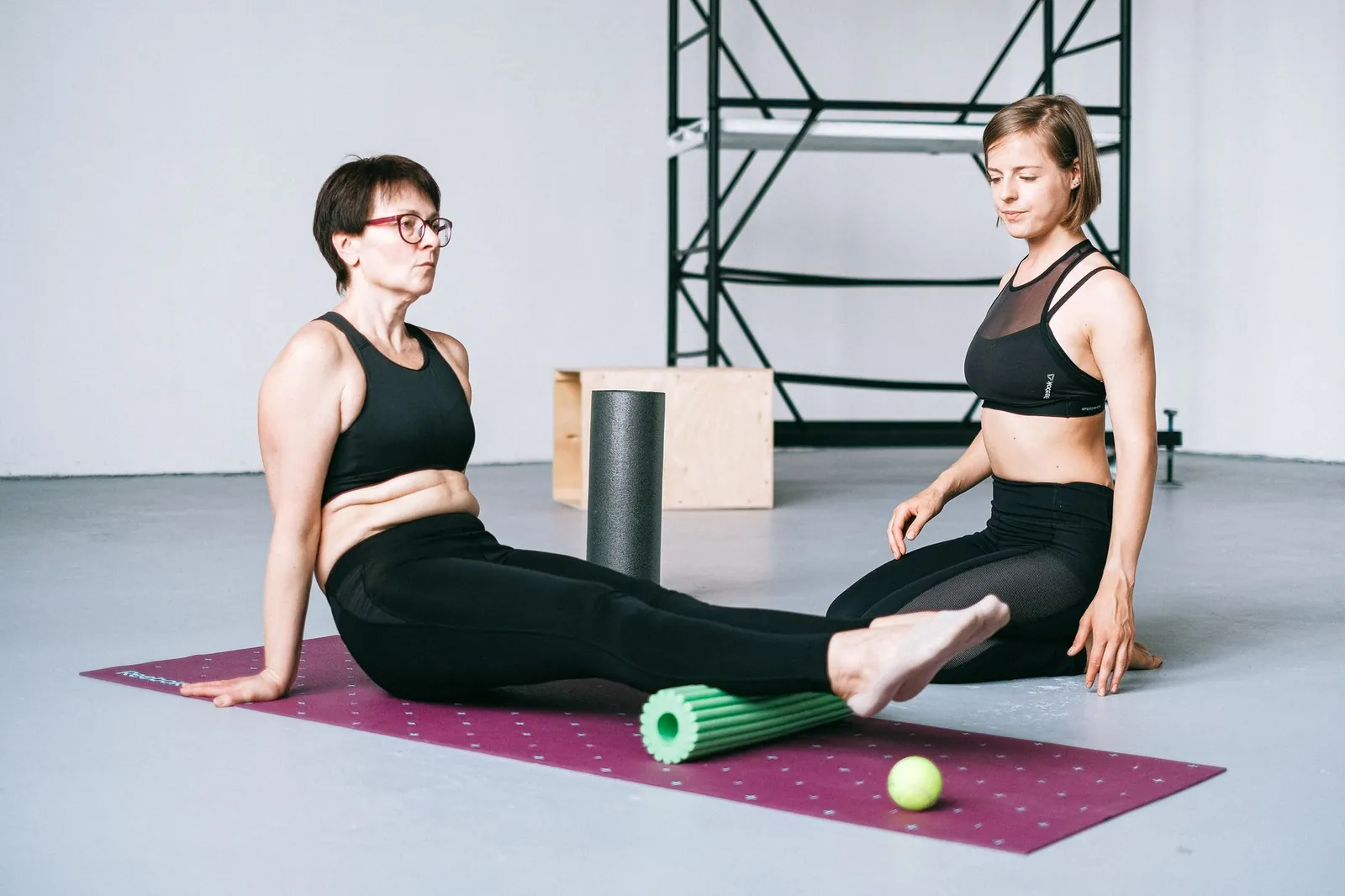
You roll your body weight over a dense cylinder, using gravity and leverage to apply sustained pressure. Expect 60–90 seconds per muscle group, moving slowly enough to feel where tension lives. This is self-myofascial release: manual pressure on the fascia surrounding your muscles. The slower you go, the more useful it gets.
Massage Gun
A massage gun fires 1,200–3,200 percussive pulses per minute into muscle tissue. Hold it on a spot for 15–30 seconds, move to the next, done. The vibration reaches deeper than hand pressure alone, and you don’t have to support your own body weight to do it. That’s the trade: you get speed and ease, but you lose the tactile feedback of feeling a knot release under your own weight.
Cost
Foam Roller
A basic smooth roller runs $20–50. Textured models—best for targeting trigger points—cost $40–80. Vibrating foam rollers exist at $150–200, but a standard $30 roller does the core job. No batteries, no charging, nothing to break.
Massage Gun
Budget guns start at $80–120 but often lack consistent motor power at higher speeds. Mid-range models like the Theragun Elite or Hypervolt 2 land at $200–300 and deliver reliable percussion across all settings. Professional-grade guns exceed $400. You’re paying for motor torque, battery life (2–4 hours per charge), and attachment variety—not just brand name.
Speed and Convenience
A massage gun covers your quads, hamstrings, calves, and upper back in 5–10 minutes. Foam rolling the same groups takes 15–20 minutes because you’re moving deliberately, pausing on tight spots, and repositioning your body weight for each area.
That 10-minute difference matters on days when you’re rushing. It’s also irrelevant on days when you want to slow down and actually pay attention to how your body feels. Know which kind of athlete you are most of the time.
A foam roller teaches you to find your own problem spots; a massage gun lets you stop thinking and start recovering.
Pressure Control
Foam Roller Advantage
Shift your weight left and you ease off. Lean in and you increase pressure. You can hover over a knot for 10 seconds or blow past loose tissue in two. That real-time adjustment is why many endurance athletes prefer foam rolling for targeted work—you feel the release happening.
Massage Gun Trade-off
Most guns offer 3–5 speed settings. Higher speeds feel more intense but get uncomfortable fast on bony areas—avoid the spine, shins, and any spot with acute tenderness. You can’t modulate mid-stroke the way you can shift body weight, so if a setting is too aggressive, your only option is to drop to the next level down. Some athletes find that limiting; others prefer the consistency of a fixed input.
Portability and Storage
A standard foam roller is 12–36 inches long and weighs 1–2 pounds. It fits in a large gym bag but is awkward in a carry-on. A massage gun weighs 1.5–3 pounds, fits in a backpack pocket, and travels clean—just pack the charger.
At home, a foam roller leans in a corner or slides under a bed. A massage gun needs a charging dock and somewhere to store attachments. Neither creates a real storage problem; the roller just takes up more floor space.
Injury Risk
Foam rolling carries low risk when you stay on muscle bellies. Rolling your IT band for 60–90 seconds: fine. Rolling directly over your knee joint or lumbar spine: not fine. Most people figure out the boundaries in a single session.
Massage guns carry higher misuse risk. The vibration feels good, which makes it easy to overdo it—holding on one spot longer than 30 seconds can bruise tissue or aggravate an existing strain. Start every session on the lowest speed setting, especially on unfamiliar muscle groups. On a fresh injury with swelling, put the gun down and see a physical therapist first.
Best Use Cases
Choose a Foam Roller If:
- You want the lowest entry cost ($20–50).
- You have 15–20 minutes and want hands-on feedback.
- You’re managing general post-workout soreness, not acute knots.
- You want zero charging or battery dependency.
- You’re new to recovery tools and want to learn your tension patterns.
Choose a Massage Gun If:
- You have 5–10 minutes and need full-body coverage.
- You want passive recovery—point, hold, move on.
- You have stubborn knots in your calves or upper back that need deep, consistent percussion.
- You travel frequently and need something compact.
- You’re willing to spend $150–300 for the time savings.
| Factor | Foam Roller | Massage Gun |
|---|---|---|
| Cost | $20–80 | $80–400+ |
| Time per session | 15–20 min | 5–10 min |
| Pressure control | High (body weight) | Medium (speed settings) |
| Portability | Bulky, no charging | Compact, needs charging |
| Learning curve | Very gentle | Gentle (watch speed) |
| Best for | Sustained pressure, tight budget | Quick relief, frequent travel |
Our verdict
Start with a $30–50 foam roller if you’re new to recovery work. Add a mid-range massage gun ($200–300) once you know which muscle groups give you the most trouble and want to cut session time. The athletes who get the most out of both typically foam roll 2–3 times a week for sustained deep work and use a massage gun for 5 minutes on heavy training days. For building out the rest of your routine, see our guide to best recovery tools for athletes and how to recover between workouts.
Frequently asked questions
Can you use a foam roller and massage gun on the same day?
Yes. A common approach: foam roll for 10–15 minutes in the evening, then use the massage gun for 5 minutes on lingering sore spots the next morning. They complement each other. Just don’t hammer the same muscle group with both tools within a couple of hours—give tissue time to respond.
Do foam rollers and massage guns actually reduce soreness?
Both reduce perceived soreness and improve short-term range of motion. The evidence for temporary relief is solid. Neither eliminates delayed-onset muscle soreness (DOMS) entirely, but both help you move better and feel less beat up in the 24–48 hours after hard training.
How long does a massage gun battery last?
Quality mid-range guns run 2–4 hours per charge. At 5–10 minutes per day, that’s 12–48 days between charges depending on speed settings. Budget models often cap at 1–2 hours. Check the spec sheet before buying if you train twice a day or travel without easy access to an outlet.
Can you foam roll or use a massage gun if you’re injured?
It depends on the injury. Mild muscle soreness responds well to both. Acute pain, swelling, or anything structural—stress fracture, torn muscle, joint inflammation—means put both tools away until a doctor or physical therapist clears you. Either tool applied to an acute injury can make it significantly worse.
Which is better for runners?
Both earn a place in a runner’s kit. Foam rolling the IT band, calves, and quads for 10–15 minutes two or three times a week addresses the tightness that builds over mileage. A massage gun on the calves and glutes for 5 minutes immediately post-run speeds up that day’s recovery. Use the roller for maintenance, the gun for quick turnaround on back-to-back run days.

Casey is a certified strength coach and trail runner who tests gear by breaking it.