This article may contain affiliate links. If you buy through them we may earn a commission at no extra cost to you.
The treadmill burns more calories—roughly 680 vs. 480–540 per hour for a 180-lb person—but the elliptical spares your joints and works your arms. If you have knee or hip pain, start on the elliptical. If you’re chasing a calorie target or training for a race, get on the treadmill.
Impact on Joints and Injury Risk
Running on a treadmill loads your knees, hips, and ankles at roughly 1.5 times your body weight per footfall. That impact isn’t inherently harmful—it strengthens bones and connective tissue over time—but the risk spikes when you ramp mileage too fast or run with poor form. New to treadmill running? Cap yourself at 2–3 sessions per week, 20–30 minutes each, for the first month.
The elliptical’s glide keeps your feet on the pedals throughout, eliminating that landing shock. It’s the safer default if you’re returning from a lower-body injury. One caveat: leaning your weight onto the handrails or letting your torso twist offloads your legs and strains your lower back. Keep your posture upright and drive with your legs.
Calorie Burn and Intensity
A 180-lb person running at 6 mph burns roughly 680 calories in 60 minutes. The same person on an elliptical at moderate intensity burns 480–540. The gap exists because running requires your legs to propel your full body weight airborne with every stride.
You can narrow that gap on an elliptical with deliberate effort. A 15-minute session alternating 30 seconds at max resistance with 30 seconds easy matches the metabolic stress of a 20-minute steady treadmill run—but not the total calorie count. If raw burn is your metric, the treadmill wins at every intensity level.
Higher calorie burn matters only if you stick with it—pick the machine you’ll actually use three times a week.
Muscle Groups Worked
Treadmill
- Primary: quadriceps, glutes, hamstrings, calves
- Secondary: core (stabilization), hip flexors
- Upper body: minimal engagement
Bump the incline to 6–8% for 30 minutes and the load shifts decisively to your glutes and hamstrings—more posterior-chain work than any flat run delivers.
Elliptical
- Primary: quadriceps, glutes, hamstrings
- Secondary: chest, back, shoulders, biceps (when you actively push and pull the handles)
- Core: engaged, but less than running
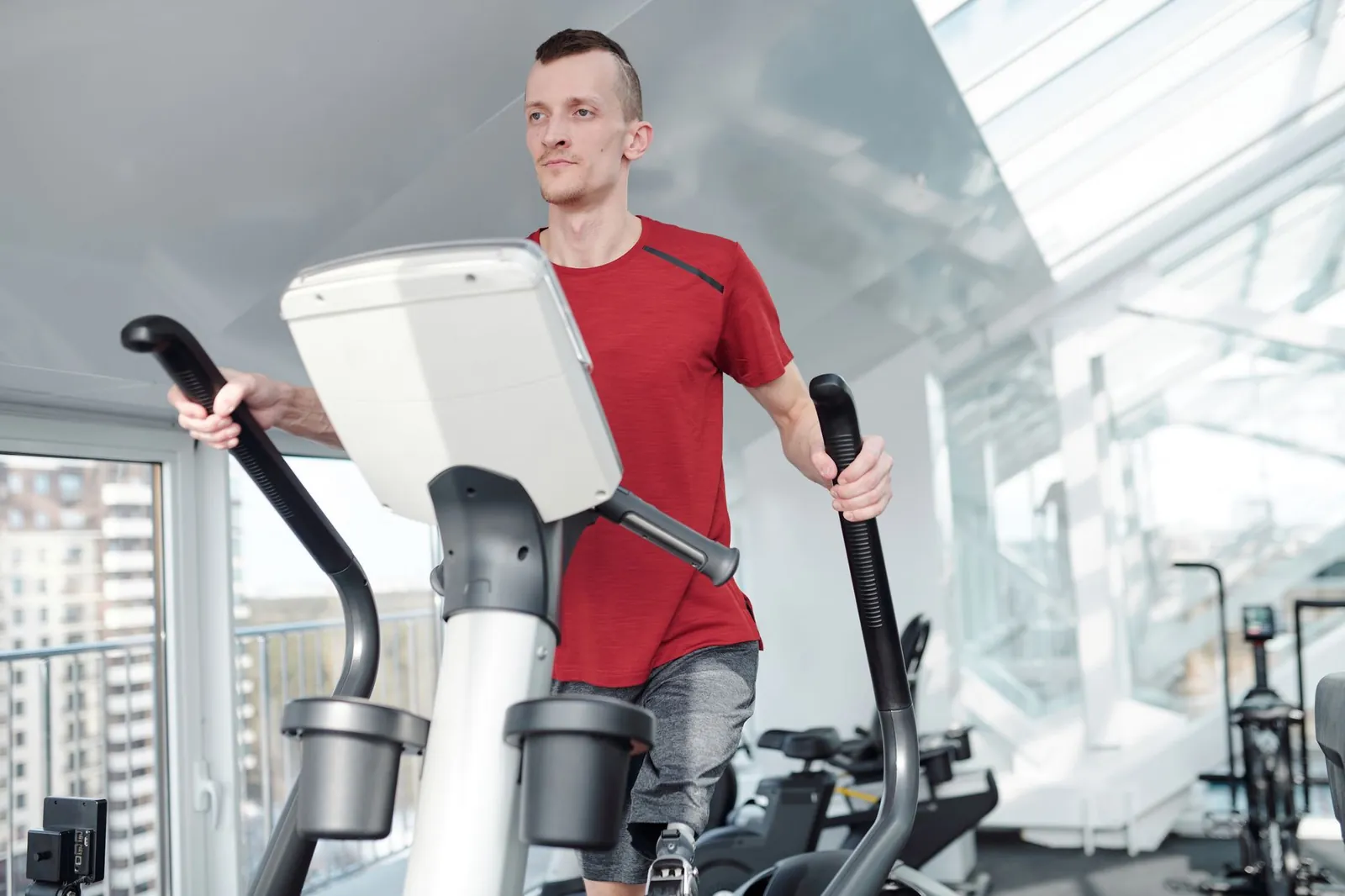
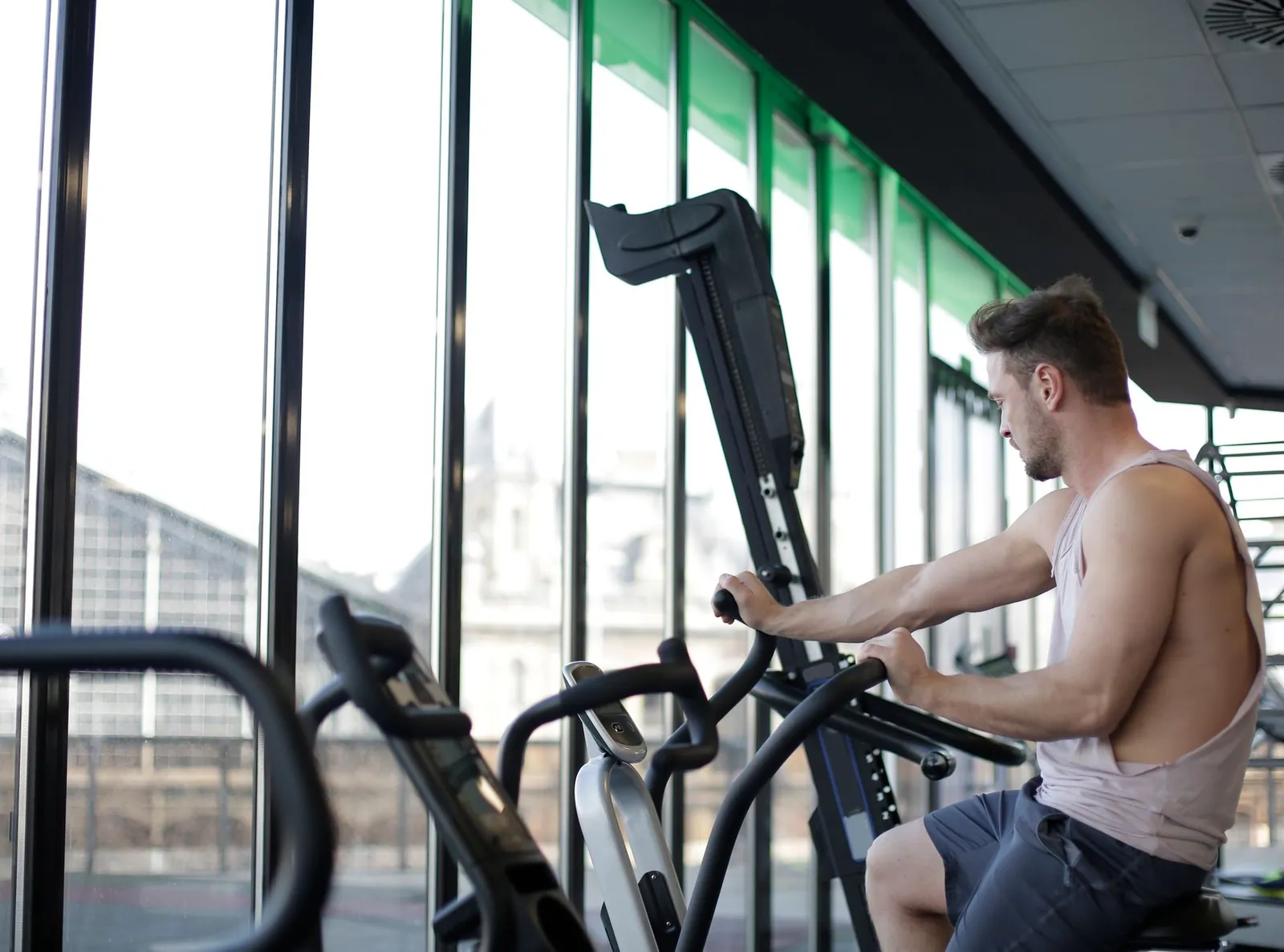
Most people rest their hands on the handles and let their legs do everything. That wastes the elliptical’s biggest advantage. Set resistance to level 5–7 on most machines—enough that you feel your arms working—and push the handle forward while pulling the opposite one back throughout the stride.
Ease of Use and Learning Curve
Treadmill mechanics are simple: set speed, run. The complication is form. Overstriding, heel striking, and slouching all lead to injury and wasted effort. Budget 2–4 weeks before treadmill running feels natural if you’re starting from scratch.
Ellipticals are immediately accessible. The motion is guided and repetitive, so there’s almost nothing to learn on day one. That makes them the better entry point for beginners or anyone coming back after a long layoff.
Time Efficiency
Twenty minutes at 6 mph on a treadmill covers 2 miles and delivers a clear training stimulus. To match that on an elliptical, you need 25–30 minutes at comparable intensity. The treadmill advantage compounds in shorter sessions; once you’re at 45 minutes or more, both machines produce solid results and the difference shrinks.
Noise and Space
Ellipticals run nearly silent—no belt motor, no footfall impact. Treadmills produce consistent motor and belt noise plus the thud of each stride. In an apartment or shared building, a 6 a.m. elliptical session won’t wake anyone; a treadmill likely will.
Ellipticals typically measure 7–8 feet long but sit narrower. Treadmills have a smaller footprint but need 3–4 feet of clearance behind the belt for safety. Folding versions of both exist, though folding mechanisms add $100–$200 to the price and reduce frame rigidity.
Cost and Durability
Entry-level treadmills run $400–$700; ellipticals start around $300–$600. A cheap treadmill belt typically wears out in 2–3 years under regular use. Mid-range machines ($800–$1,500 for treadmills, $600–$1,200 for ellipticals) last 5–7 years with basic maintenance—belt lubrication every 3 months, tension checks every 6.
Ellipticals tend to outlast comparable treadmills because fewer parts are under repetitive stress. If longevity per dollar is your priority, the elliptical has the edge. For budget treadmill picks, see our guide on best budget treadmills.
Comparison Table
| Factor | Treadmill | Elliptical |
|---|---|---|
| Calorie burn (60 min) | 600–700 (180 lb person) | 480–540 (180 lb person) |
| Joint impact | High | Low |
| Upper body work | Minimal | Moderate (if using handles) |
| Learning curve | 2–4 weeks | Immediate |
| Noise level | Moderate to loud | Quiet |
| Entry price | $400–$700 | $300–$600 |
| Best for | Runners, calorie targets, leg strength | Joint-friendly training, beginners, full-body |
Our verdict
Pick a treadmill if you want maximum calorie burn, are training for a running event, or have healthy joints and less than 30 minutes to spare. Pick an elliptical if you have joint pain, are new to cardio, or live somewhere noise is a real constraint. If budget and space allow, alternating between both cuts repetitive-use injury risk. For a complete home setup, check our best home gym equipment for beginners.
Frequently asked questions
Can I lose weight on an elliptical as fast as a treadmill?
Not at the same intensity level. You’ll need roughly 20–30% more time on an elliptical to match treadmill calorie burn. If the elliptical is what you’ll actually use consistently, that trade-off is worth it—a machine you use beats a machine you avoid.
Is running on a treadmill bad for my knees?
Not inherently. Gradual treadmill running strengthens the tissue around your knees. Risk rises with sudden volume increases, poor form, or a pre-existing condition. If you have knee pain now, start with the elliptical or alternate between both to reduce cumulative impact.
Which machine builds more leg muscle?
Treadmill running builds more leg endurance and calf strength, especially at incline. High-resistance elliptical work can build leg strength, but the motion is less explosive. Neither replaces weight training for muscle gain—both are cardiovascular tools first.
How often should I use each machine per week?
Beginners: 3 sessions per week, 20–30 minutes each. Intermediate: 3–4 sessions, 30–45 minutes. Advanced: 4–5 sessions, mixed durations. Rest at least one day between high-intensity sessions on the same machine.
Can I do interval training on both?
Yes. Treadmill: alternate 1 minute at 7 mph with 1 minute at 5 mph for 20 minutes. Elliptical: alternate 30 seconds at resistance 8 with 30 seconds at resistance 4. Both formats build cardiovascular capacity and compress effective training into 20–25 minutes.

Marcus is a cycling coach and hiker who plans routes down to the water stops.