This article may contain affiliate links. If you buy through them we may earn a commission at no extra cost to you.
Three days a week is enough to build real strength as a beginner. Hit major muscle groups twice per week with compound lifts, rest 48 hours between sessions, and add weight or reps every 1–2 weeks. Most beginners see their first strength jump by week 3–4 and visible muscle by week 6–8.
Why Three Days Works for Beginners
Your first 8–12 weeks of training are driven by neurological adaptation—your nervous system is learning movement patterns before muscle size even enters the picture. That process doesn’t require six days in the gym. Three days gives you:
- Each muscle group trained 2× per week (the minimum threshold for strength gains)
- 48 hours of recovery between sessions
- Workouts short enough to finish in 30–45 minutes
- A schedule you can actually sustain past week two
Untrained lifters plateau on strength gains after roughly 3–4 sets per muscle group per session. Three days lets you hit 3 sets of 3–4 compound lifts each day without padding sessions with isolation work you don’t need yet.
The Three-Day Split: Upper/Lower/Full Body
Why this structure works
Two lower-body days and one upper-body day—or alternating full-body sessions—gives your legs enough volume without grinding the same joints three days in a row. Your legs house your largest muscle groups; they need the extra frequency and the extra recovery.
Sample weekly schedule
- Monday: Lower body — squats, deadlifts, one leg accessory
- Wednesday: Upper body — press, row, overhead work
- Friday: Lower body again
That gives you 48–72 hours between every session. Prefer full-body training? Use the same Monday/Wednesday/Friday pattern and include one squat, one hinge, one press, and one row each day.
Exercises for Each Session
Lower body (Monday and Friday)
One squat variation, one hip hinge, one accessory. Don’t add more.
- Squat: Barbell back squat, goblet squat, or Smith machine squat — 3 sets × 6–8 reps
- Hinge: Conventional deadlift, sumo deadlift, or trap-bar deadlift — 3 sets × 5–6 reps
- Accessory: Leg press, Bulgarian split squat, or leg curl — 3 sets × 8–10 reps
Rest 2–3 minutes between squat and deadlift sets. Cut that to 60–90 seconds for accessories.
Upper body (Wednesday)
Alternate pushing and pulling. Skipping rows to do more pressing is the fastest route to shoulder problems.
- Press: Barbell bench press, dumbbell bench press, or machine chest press — 3 sets × 6–8 reps
- Row: Barbell bent-over row, dumbbell row, or machine row — 3 sets × 6–8 reps
- Overhead: Overhead press or machine shoulder press — 3 sets × 6–8 reps
- Accessory: Pull-ups, lat pulldown, or cable row — 2 sets × 8–10 reps
Rest 2–3 minutes for heavy presses and rows, 60 seconds for accessories.
Load and Rep Ranges
Use a weight where the last 1–2 reps of each set feel hard but you could grind out 1–2 more. That’s RPE 8–9. In practice:
- Compound lifts (squat, deadlift, bench, row): 3 sets × 6–8 reps
- Secondary lifts (overhead press, leg press): 3 sets × 6–8 reps
- Accessory work (leg curl, lat pulldown): 2–3 sets × 8–10 reps
If you’re unsure where to start, go 10–20% lighter than you think you need. Bad reps groove bad movement patterns—fixing them later costs more time than starting conservative.
Progression: Adding Weight and Reps
Strength comes from adding load or reps over time. Each week, do one of these:
- Add 1 rep to any set (6 reps → 7 reps)
- Add 5 lbs to the barbell, or 5 lbs per hand with dumbbells
- Add 1 set to an accessory exercise
If you miss reps or form breaks down, hold the same weight for another week. Beginners who jump 20 lbs at a time usually plateau by week 5. Slow adds compound into big numbers by week 12.
Strength training is 90% showing up and 10% what you do—pick a program you’ll actually follow for 8 weeks.
Recovery and Nutrition
Three training days only work if the other four support them. Rest days are when your body builds the strength you trained for.
Between-workout recovery
Read more on recovery between workouts explained for detailed strategies. The non-negotiables:
- Sleep 7–9 hours per night — this is when growth hormone peaks
- Eat 0.7–1 gram of protein per pound of body weight daily
- Eat at maintenance or a 200–300 calorie surplus; a steep deficit kills strength gains
- Stay hydrated; even 2% dehydration measurably reduces strength output
Off-day activity
20–30 minute walks, yoga, or easy swimming all help without competing for recovery resources. Hard cardio—sprints, long runs—does compete. If strength is your goal right now, keep off-day cardio low-intensity.
Equipment You’ll Need
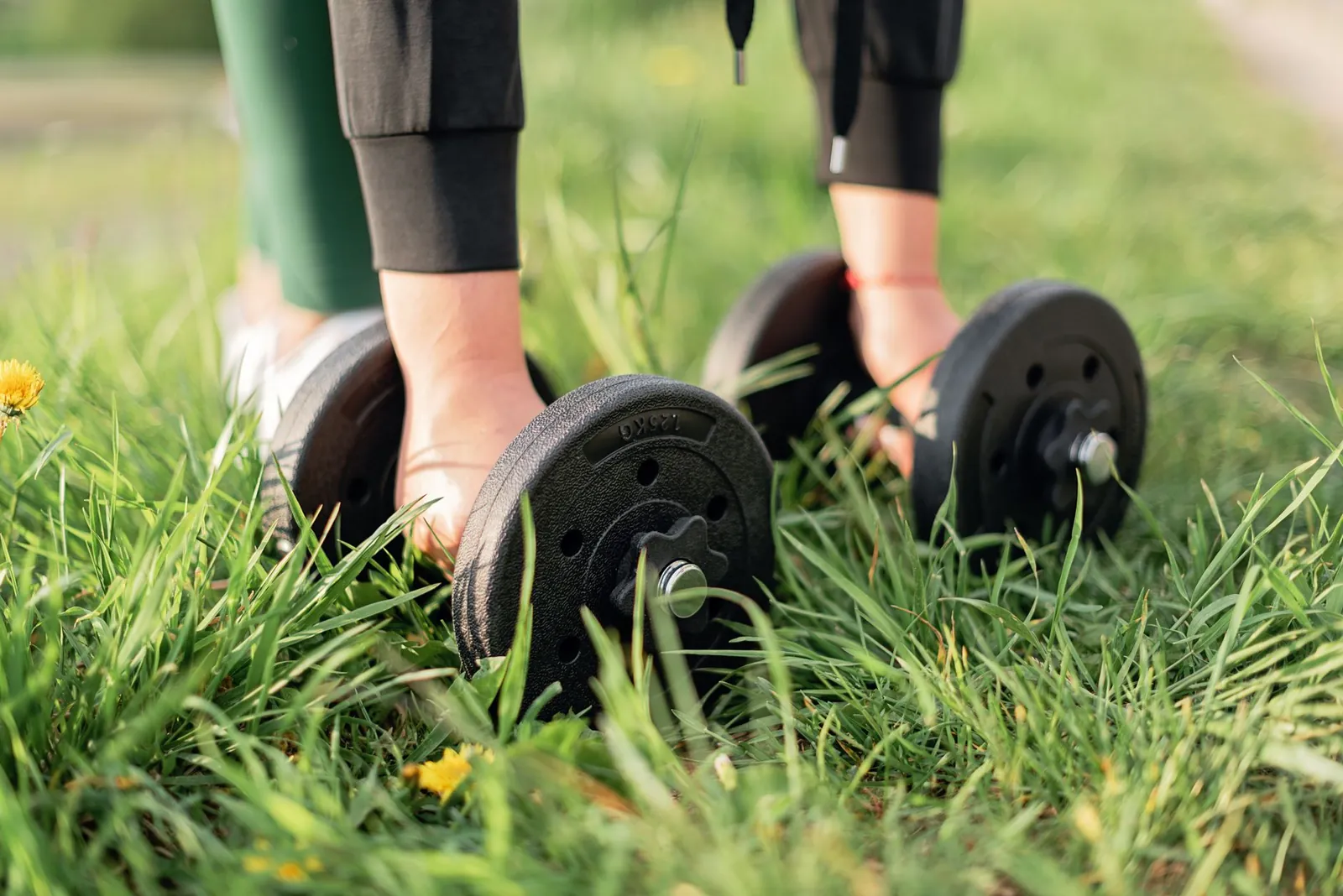
A barbell, rack, and adjustable dumbbells cover everything in this program. For home gym options, see best adjustable dumbbells for home. Minimum setup:
- Barbell (45 lbs) and plates
- Power rack or squat stand
- Adjustable dumbbells (5–50 lbs per hand minimum)
- Flat bench
- Pull-up bar
A gym membership adds variety—cables, machines, a spotter—but isn’t required. Dumbbells alone will build real strength through the first 12 weeks.
Mistakes That Stall Beginners
- Skipping warm-ups: 5 minutes of light cardio plus dynamic stretches. Cold joints under load is how you earn a 6-week layoff.
- Too much isolation work: Bicep curls don’t build strength the way rows do. Earn isolation work after 12 weeks.
- Jumping weight too fast: Add 5 lbs, not 20. Form breaks down before muscle does.
- Eating in a steep deficit: You can lose fat and build strength simultaneously as a beginner—but only at maintenance or a small surplus. A 500+ calorie deficit kills both.
- Skipping rest days: Adding a fourth training day in week two is the most common reason beginners quit by week four.
- Program-hopping: Eight weeks on one program beats two weeks each on four different ones. Pick a start date and lock in.
Timeline: What to Expect
- Weeks 1–2: Form improving, soreness peaking, weights feel awkward
- Weeks 3–4: First noticeable strength jump—weights that were hard feel manageable
- Weeks 6–8: Visible muscle definition, 10–20% strength increase on main lifts, clothes fit differently
The people who look strong after a year trained consistently for a year—not intensely for two months and then stopped.
Frequently asked questions
Can I do the same three exercises every session instead of alternating upper and lower?
No. Repeating the same three exercises every session loads the same joints—elbows, shoulders, or knees—without adequate recovery. Alternating upper and lower days, or using a full-body split, spreads stress across different joints. After 8–12 weeks, switch programs if you want variety.
Should I add cardio on rest days?
Light cardio—walking, easy cycling, swimming—for 20–30 minutes is fine and aids recovery. Hard cardio like sprints or long runs competes with strength training for the same recovery resources. Keep rest-day cardio low-intensity if strength is your primary goal.
What if I can only train two days a week?
Two full-body days still work. You’ll progress slower than on three days, but two consistent sessions beat three inconsistent ones. Add the third day when your schedule opens up.
How long do I stay on a beginner program?
Run the same program for 8–12 weeks. After 12 weeks, your body has adapted to that stimulus and needs a new challenge—more volume, different rep ranges, or a new split. Jumping programs every 4 weeks means you never build a foundation strong enough to progress from.
Do I need a spotter?
Not at beginner weights, as long as you train inside a rack with safety bars set correctly. As loads increase, a spotter lets you push harder on the last rep without getting pinned. They also help with accountability—gym partners show up more consistently than solo lifters.

Casey is a certified strength coach and trail runner who tests gear by breaking it.