This article may contain affiliate links. If you buy through them we may earn a commission at no extra cost to you.
Push pull legs (PPL) organizes your training by movement pattern: one day for chest, shoulders, and triceps; one for back and biceps; one for quads, hamstrings, and glutes. Each muscle group gets 48–72 hours of recovery before you hit it again. That balance makes PPL one of the most efficient structures for a beginner running 3 days per week.
What Is a Push Pull Legs Split?
Instead of training by body part (“chest day”, “arm day”), PPL groups muscles by how they move:
- Push: Chest, shoulders, triceps — bench press, overhead press, lateral raises
- Pull: Back, biceps — rows, pull-ups, curls
- Legs: Quads, hamstrings, glutes, calves — squats, deadlifts, leg press
The structure works because smaller muscles (shoulders, arms) get direct work on their day and indirect work on adjacent days, then have 5–7 days to recover before the next direct session. Compound lifts land at the start of each workout when you’re freshest.
Most beginners run PPL once per week (3 sessions). Twice per week (6 sessions) is an option after 8–12 weeks of consistent training.
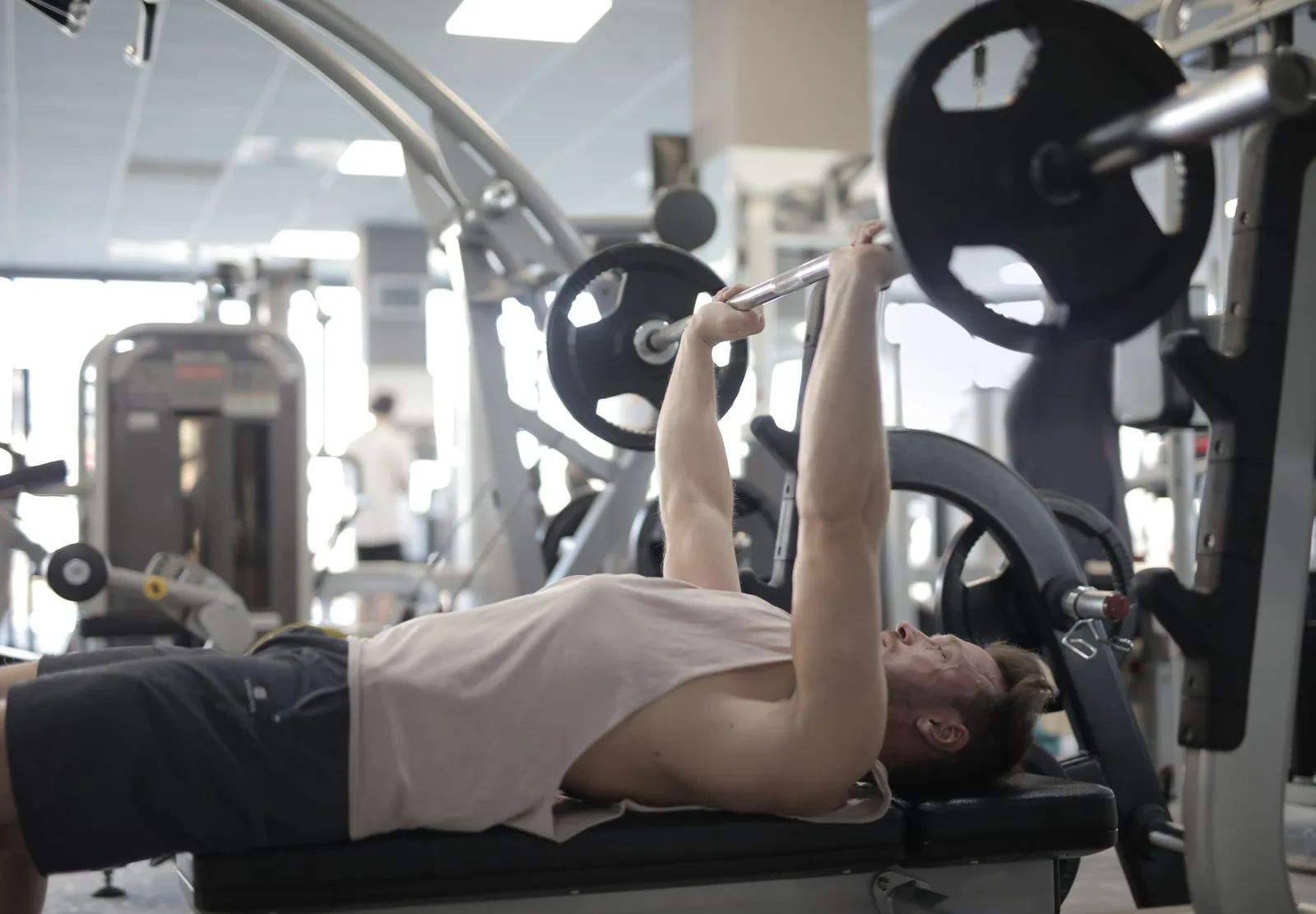
Sample Push Day Workout
Start with the heaviest compound lift, then layer in volume and isolation work as fatigue builds.
- Barbell bench press: 4 sets × 6–8 reps (rest 2–3 minutes)
- Incline dumbbell press: 3 sets × 8–10 reps (rest 90–120 seconds)
- Overhead press: 3 sets × 8–10 reps (rest 90 seconds)
- Lateral raises: 3 sets × 12–15 reps (rest 60 seconds)
- Tricep rope pushdowns: 3 sets × 12–15 reps (rest 60 seconds)
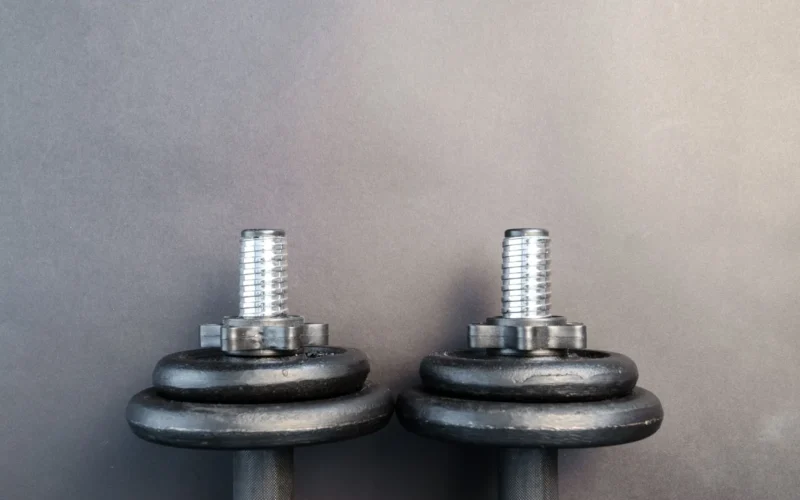
Total time: 45–55 minutes. No barbell? Adjustable dumbbells cover every movement here — dumbbell bench and dumbbell overhead press are equally effective at beginner loads.
Sample Pull Day Workout
Rows come before pull-ups because horizontal pulling is easier to control under fatigue. Curls go last — they’re small work and don’t need a fresh nervous system.
- Barbell bent-over row: 4 sets × 6–8 reps (rest 2–3 minutes)
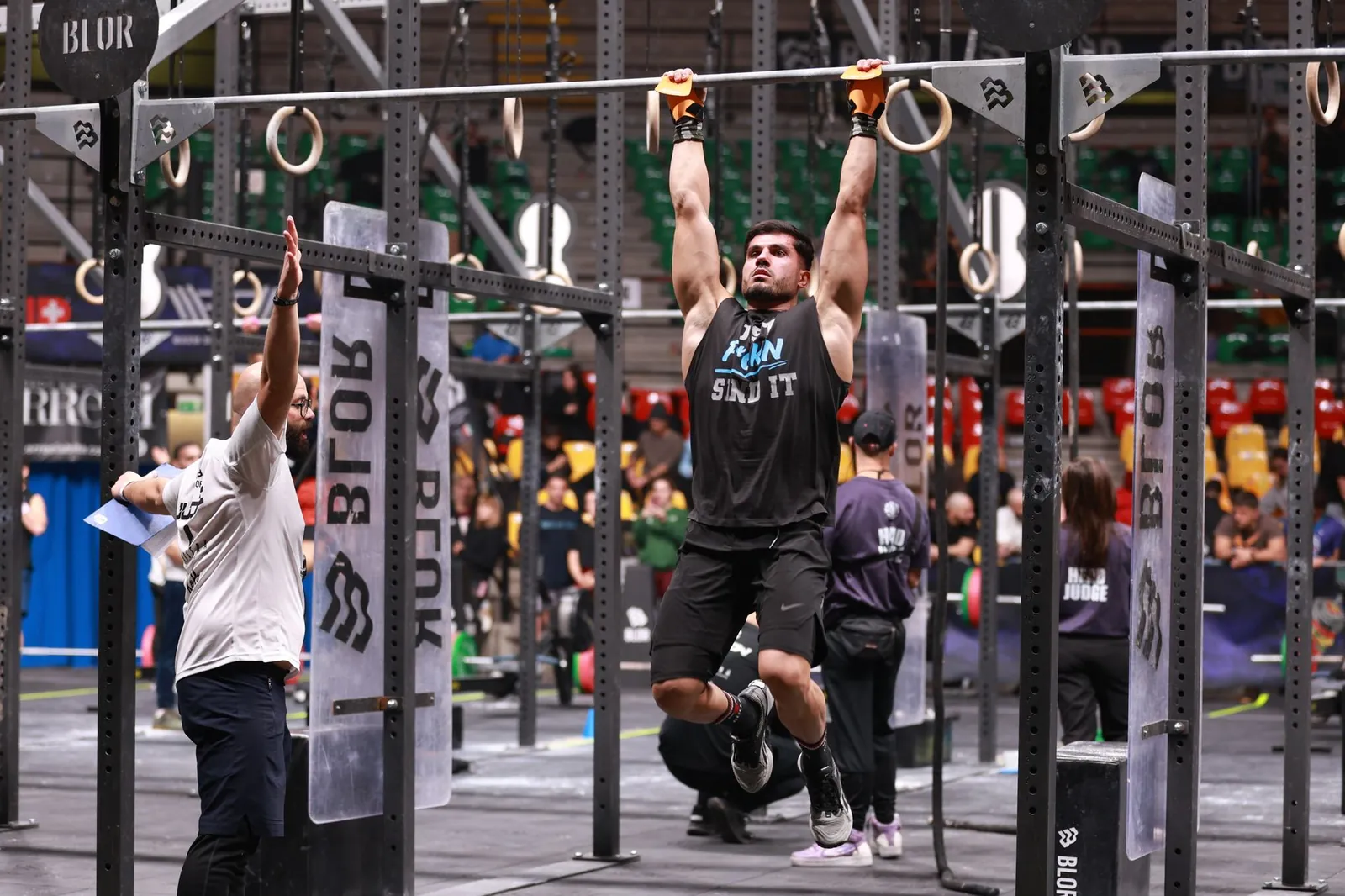
- Pull-ups or assisted pull-ups: 3 sets × 6–10 reps (rest 2 minutes)
- Dumbbell single-arm row: 3 sets × 8–10 reps per side (rest 90 seconds)
- Face pulls: 3 sets × 15–20 reps (rest 60 seconds)
- Barbell curls: 3 sets × 8–10 reps (rest 90 seconds)
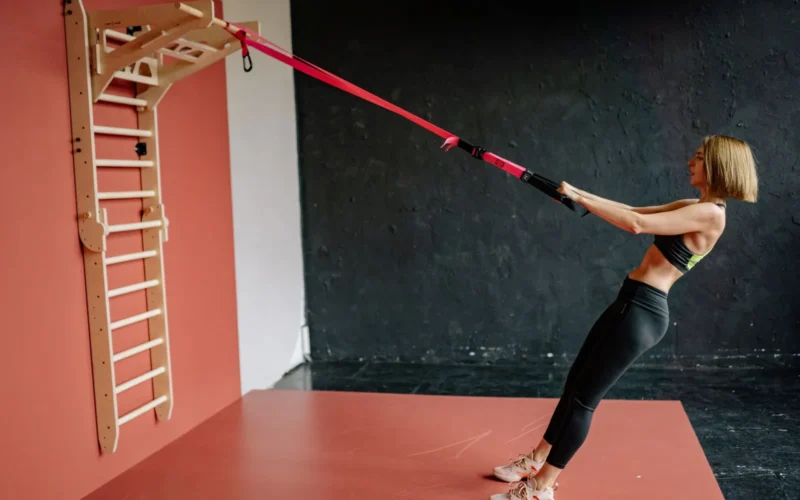
Total time: 50–60 minutes. Can’t do a pull-up yet? Use a resistance band or assisted pull-up machine to hit 6–10 controlled reps per set — that builds pulling strength faster than doing 3 shaky bodyweight reps.
Sample Leg Day Workout
Squat first. Your legs are the largest muscle group you train, and the squat demands the most from your central nervous system. Deadlifts follow while you still have technique focus.
- Barbell back squat: 4 sets × 6–8 reps (rest 2–3 minutes)
- Romanian deadlift: 3 sets × 6–8 reps (rest 2–3 minutes)
- Leg press: 3 sets × 8–10 reps (rest 90 seconds)
- Leg curls: 3 sets × 10–12 reps (rest 60 seconds)
- Calf raises: 3 sets × 15–20 reps (rest 60 seconds)
Total time: 50–65 minutes. Knee pain during squats? Reduce depth to the point where pain stops, or substitute leg press until mobility improves. For deadlifts, spend your first 2–3 sessions with an empty 45 lb bar — form errors at 135 lbs cause the injuries that sideline beginners for weeks.
Your first 4 weeks on PPL should focus on learning movement patterns and handling light weight safely, not on lifting heavy or hitting rep maxes.
Push Pull Legs: 3 Days vs. 6 Days
3-Day Split (Once Per Week)
Each muscle group trains once per week with 48+ hours between sessions. Right for you if you’re in your first 8–12 weeks of lifting, sleep fewer than 7 hours, or have a physically demanding job.
- Monday: Push
- Tuesday: Rest
- Wednesday: Pull
- Thursday: Rest
- Friday: Legs
- Saturday–Sunday: Rest
Trade-off: Lower injury risk and easier recovery, but each muscle group only gets one stimulus per week. Strength gains come — just slightly slower than twice-per-week frequency.
6-Day Split (Twice Per Week)
Each muscle group trains twice per week, which research consistently shows produces faster hypertrophy than once-per-week at equal total volume. The catch: you need 7–9 hours of sleep and enough calories to recover from six sessions.
- Monday: Push
- Tuesday: Pull
- Wednesday: Legs
- Thursday: Rest
- Friday: Push
- Saturday: Pull
- Sunday: Legs or Rest
Trade-off: More volume and faster gains, but fatigue accumulates quickly if nutrition and sleep aren’t dialed in. Don’t jump to 6 days until you’ve run the 3-day version for at least 8–12 weeks.
Not sure which fits your life? Start with 3 days per week and reassess after 2–3 months.
Key Tips for Beginners
Add Weight Slowly
For compound lifts — squat, bench, row, deadlift — add 5 lbs every 1–2 weeks. For accessory work, add 2–5 lbs or 1–2 reps when the final set feels easy. A 10–20 lb jump per session breaks form and eventually breaks you.
Protect Recovery
Muscle grows between sessions, not during them. Hit 7–9 hours of sleep per night. Eat 0.7–1 gram of protein per pound of bodyweight. A 180 lb beginner needs roughly 125–180 grams of protein daily — that’s not optional on a 3-day lifting program.
Track Every Session
Log exercises, weights, and reps in a notebook or free app like Strong. Your only goal each week: match or beat last week’s numbers on at least one set. That single habit separates lifters who progress from those who plateau.
Avoid These Four Mistakes
- Skipping warm-ups: 5–10 minutes of light cardio plus 2 warm-up sets at 50% of your working weight cuts injury risk on compound lifts.
- Rushing weight increases: See above — 5 lbs per week on big lifts is the ceiling, not the floor.
- Training through sharp pain: Muscle soreness (dull, diffuse, peaks 24–48 hours post-session) is normal. Sharp, joint-specific, or shooting pain means stop and rest.
- Skipping leg day: Underdeveloped legs limit your squat and deadlift, slow overall strength gains, and create posture imbalances that show up as lower back pain later.
Nutrition and Recovery
PPL runs higher weekly volume than a 2-day full-body routine. Undereating stalls progress faster than any programming mistake.
- Protein: 120–200 g/day depending on bodyweight — chicken, fish, eggs, Greek yogurt, or protein powder all count.
- Carbs: 150–250 g/day to fuel sessions and replenish muscle glycogen. Oats, rice, potatoes, and bread are practical choices.
- Fats: 40–70 g/day from nuts, olive oil, and fatty fish.
- Water: 2–3 liters daily; add 500 ml on training days if you sweat heavily.
Eat a mixed carb-and-protein meal 1–2 hours before training. Get protein and carbs in within 2 hours after — the window isn’t magic, but skipping post-workout nutrition on a 6-day split adds up to meaningful recovery debt over weeks.
Frequently asked questions
How long does a PPL workout take?
Each session runs 45–65 minutes depending on rest times and gym traffic. Your first few weeks will skew longer — 60–70 minutes — because you’re learning movement patterns. As technique becomes automatic, sessions typically tighten to 45–55 minutes.
Can I do PPL at home with dumbbells?
Yes. Dumbbell bench press, dumbbell rows, dumbbell overhead press, and goblet squats cover all three days effectively. You need a weight range that lets you work in the 6–15 rep window across exercises. Adjustable dumbbells — best for: small spaces and budget-conscious setups — replace a full rack of fixed weights.
How long before I see results on PPL?
Strength gains — lifting more weight for the same reps — appear within 2–4 weeks. Visible muscle change takes 8–12 weeks of consistent training and adequate protein. The first month is mostly your nervous system learning to recruit muscle efficiently, not muscle tissue growing.
Is PPL better than full-body training for beginners?
Neither is universally better. Full-body 3x per week is simpler to program and recovers faster. PPL allows more volume per muscle group and suits people who prefer longer, focused sessions. A practical approach: run full-body for 4–6 weeks to build a movement foundation, then switch to PPL when you want more specialization.
What if I can only train 2 days per week?
PPL is the wrong tool for 2 days — recovery windows stretch too long and frequency drops too low. Run an upper/lower split instead (upper body day 1, lower body day 2) or full-body twice per week. Both deliver better results at that frequency.

Marcus is a cycling coach and hiker who plans routes down to the water stops.