This article may contain affiliate links. If you buy through them we may earn a commission at no extra cost to you.
Lose just 2% of your body weight in fluid and your power output drops 10–15%. Lose 3–4% and decision-making and coordination follow. The fix isn’t complicated: drink the right amount, at the right times, with the right electrolytes. Here’s how to do it by sport and session length.
Why Hydration Matters for Athletes
Your muscles are 75% water. Sweat strips both fluid and electrolytes—sodium, potassium, magnesium—and the losses compound fast. Your heart works harder to pump thickened blood, core temperature climbs faster, and reaction time slows. You hit the wall earlier and recover slower.
- Endurance: Dehydrated athletes fatigue 15–20% sooner at the same pace.
- Strength: A 2% fluid deficit measurably reduces force production in resistance training.
- Thermoregulation: Adequate fluid keeps core temp stable—critical above 75°F (24°C).
- Recovery: Rehydration speeds nutrient delivery to muscle tissue post-exercise.
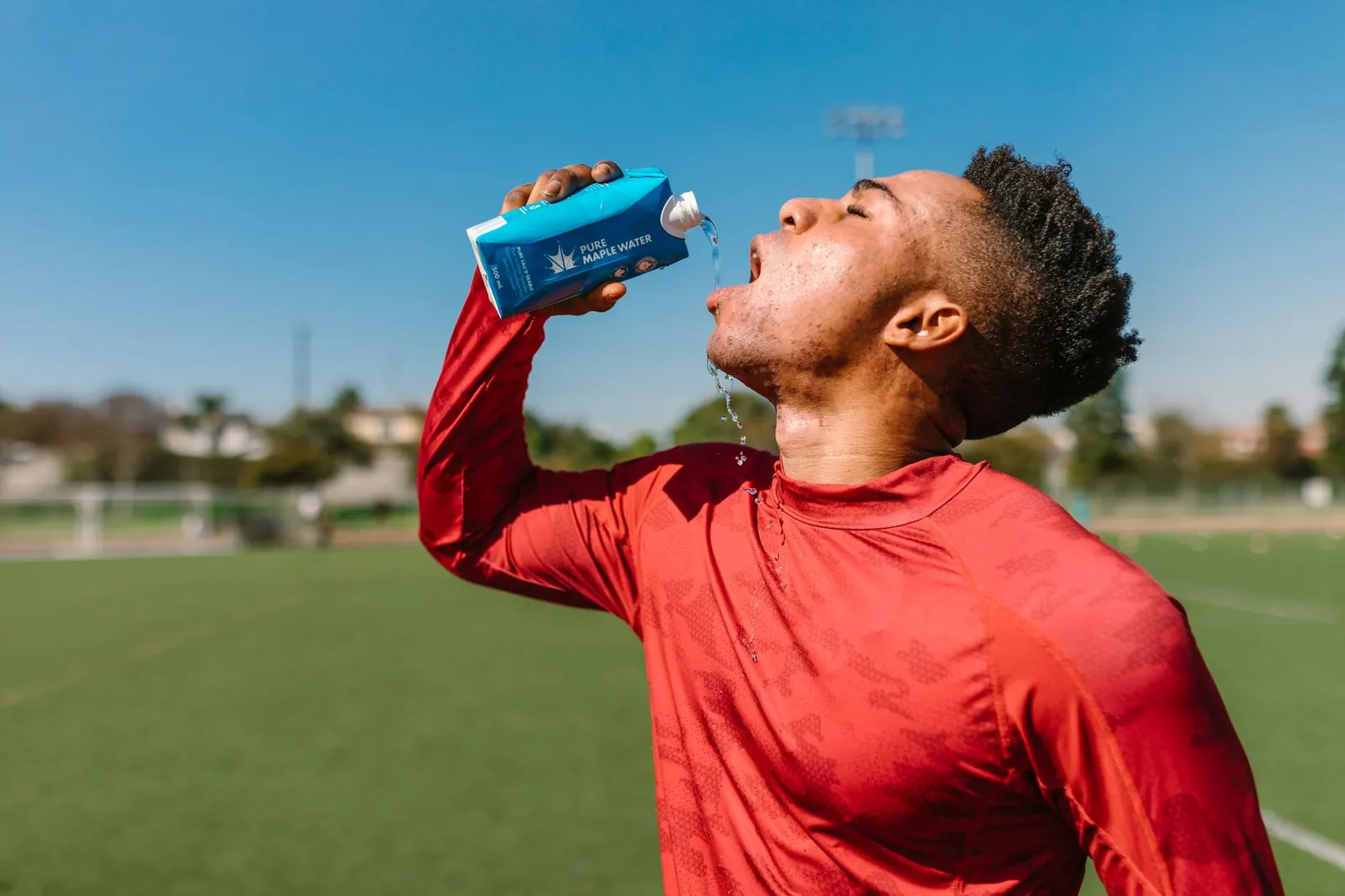
How Much to Drink During Exercise
Three variables drive your target: session duration, personal sweat rate, and ambient heat. Use these ranges as your starting point, then refine with a sweat-rate test.
Under 60 minutes
Water alone is enough. Drink 4–8 oz (120–240 ml) every 15–20 minutes. A 30-minute strength session or easy run doesn’t require carbs or electrolytes—sip water and move on.
60–90 minutes
Add carbs and sodium. Target 6–8 oz (180–240 ml) every 15–20 minutes, with a drink containing 6–8% carbohydrate (15–20 g per 8 oz) and 200–300 mg sodium per hour. This stabilizes blood glucose and helps your body retain fluid instead of flushing it.
Over 90 minutes
You need a full fuel strategy. Consume 16–24 oz (480–720 ml) per hour with 6–8% carbs and 300–600 mg sodium per hour. This applies to marathon running, long-course cycling, and triathlon. Anything less and you’re borrowing against the back half of your effort.
Finding your personal sweat rate
Sweat rates range from 16 oz to over 48 oz per hour depending on body size, fitness, and heat. Here’s how to measure yours:
- Weigh yourself naked before exercise.
- Train for exactly 1 hour at your typical intensity and conditions.
- Weigh again, naked and toweled dry.
- Each pound lost equals 16 oz of fluid. Drink 150% of that loss over the next 4 hours to fully rehydrate.
Example: a 180-pound runner who drops 1.5 pounds in an hour loses roughly 24 oz of fluid. During similar efforts, plan to drink 16–20 oz per hour and make up the rest post-run.
Pre-Exercise Hydration
Drink 16–20 oz (480–600 ml) of water or a dilute sports drink 2–3 hours before exercise. Follow with 8–10 oz (240–300 ml) about 20 minutes before you start. That tops off fluid stores without leaving you sloshing through warm-up.
Training in heat above 85°F (29°C) or racing a long event? Add 300–500 mg sodium to that pre-exercise drink. Sodium increases thirst and slows urinary fluid loss, so more of what you drink actually stays on board.
Electrolytes: When and Why
Sodium is the priority electrolyte. It drives thirst, helps kidneys retain water, maintains nerve and muscle signaling, and—critically—reduces your risk of hyponatremia, the dangerously low blood sodium that hits athletes who drink too much plain water on long efforts.
Target 200–500 mg sodium per 8 oz of fluid during exercise lasting over 60 minutes. Standard sports drinks (Gatorade, Powerade) contain 110–160 mg per 8 oz—adequate for moderate efforts, but short for hot-weather endurance work where you may need a high-sodium option or added salt capsules.
Potassium and magnesium matter for long-term muscle function, but your muscles store enough of both to last several hours. Get them through food post-exercise. Sodium is the one you manage in real time.
Post-Exercise Rehydration
Sweat and urine losses continue for hours after you stop. Drink 16–24 oz (480–720 ml) for every pound of body weight lost, spread over 4 hours. Include carbs and protein to accelerate glycogen refill and muscle repair simultaneously.
A practical option: 8 oz chocolate milk (8 g protein, 26 g carbs, ~200 mg sodium) within 30 minutes, then normal meals and water over the next few hours. It’s not magic—it’s just a convenient ratio of the things your body needs right then.
Double-session day? Drink 20–24 oz per pound lost within the first 2 hours between sessions, and include sodium to boost retention. Going into session two even slightly dehydrated compounds fatigue and injury risk.
Hydration Strategies by Sport
Endurance (running, cycling, triathlon)
Drink 16–24 oz per hour with 6–8% carbs and 300–600 mg sodium. Use a hydration pack, handheld bottle, or aid stations depending on distance. Test your drink choice in training—race day is not the time to discover a new formula upsets your stomach.
Team sports (soccer, basketball, hockey)
Drink 8–10 oz every 15–20 minutes during stoppages. Repeated high-intensity sprints push sweat rates higher than most players expect. Keep a bottle on the sideline and sip consistently—not just at halftime when you’re already behind.
Strength training
Water covers most 60-minute sessions. Drink 8–10 oz between sets or every 15 minutes. Sessions running 90 minutes or longer benefit from a sports drink with carbs to sustain energy through later sets when glycogen is running low.
Combat sports (boxing, MMA, wrestling)
Aggressive fluid restriction before weigh-ins raises cramping risk and blunts reaction time during competition. If your sport requires a cut, rehydrate heavily immediately after weigh-ins if the rules allow it. During training, drink 8–10 oz every 15–20 minutes and don’t treat dehydration as a training tool—it isn’t.
Signs of Dehydration and Overhydration
Dehydration warning signs
- Urine darker than pale yellow.
- Dizziness or lightheadedness during or after effort.
- Muscle cramps—often sodium-related, not just fluid loss.
- Heart rate that stays elevated well past the end of a set or interval.
- Fatigue disproportionate to your actual effort level.
Overhydration (hyponatremia) warning signs
Rare but serious. Drinking more than ~1 liter per hour of plain water without electrolytes dilutes blood sodium to dangerous levels—most common in slower endurance athletes who drink on a rigid schedule regardless of sweat rate.
- Nausea or vomiting mid-effort.
- Headache and confusion that worsen over time.
- Weight gain during a long event (fluid accumulation, not muscle).
- Shortness of breath.
Drink to thirst during shorter efforts; drink to a plan during efforts over 90 minutes.
Hydration Gear and Drink Options
Hydration carriers
- Handheld bottles (10–12 oz): Best for running and trail work up to 90 minutes. Easy intake control, minimal weight.
- Hydration packs (50–100 oz): Best for long trail runs, mountain biking, and multi-hour efforts. Hands-free with 2–3 hours of capacity.
- Bike bottles (20–24 oz): Best for cycling. Frame-mounted, easy to grab, holds roughly 30–45 minutes of fluids at moderate effort.
- Insulated bottles: Best for training above 85°F. Keeps drinks cool 4–6 hours—worth carrying the extra ounces if heat is consistent in your environment.
Drink types
| Drink | Carbs per 8 oz | Sodium per 8 oz | Best for |
|---|---|---|---|
| Plain water | 0 g | 0 mg | Efforts under 60 min |
| Sports drink (Gatorade, Powerade, Nuun) | 14–17 g | 110–160 mg | 60–90 min efforts |
| High-sodium drink (Liquid IV, SaltStick, Skratch) | Varies | 300–500 mg | Endurance and heat |
| Coconut water | ~11 g | ~45 mg | Recovery only—low sodium limits use during exercise |
| Homemade sports drink | ~14 g | ~290 mg | Budget endurance option |
Homemade recipe: 8 oz water + 1 tablespoon honey or maple syrup + ¼ teaspoon table salt. Cheap, effective, and easy to adjust for taste.
The Bottom Line
Know your sweat rate. Drink on a schedule for anything over 90 minutes. Include sodium whenever sessions exceed 60 minutes. Test every drink and strategy in training—never on race day. Hydration is one of the few performance variables you control completely; treat it that way.
For more on fueling your workouts, see our guide to what to eat before a workout.
Frequently asked questions
Can I drink too much water during exercise?
Yes. Drinking more than ~1 liter per hour of plain water without electrolytes risks hyponatremia—dangerously low blood sodium. It’s rare but serious, and most common in slower endurance athletes over-drinking on a rigid schedule. Drink to thirst or follow a plan (16–24 oz per hour), and include sodium for efforts over 90 minutes.
Should I drink if I’m not thirsty?
During efforts over 90 minutes, yes. Thirst lags behind actual fluid loss, especially in cool conditions or at high intensity. Follow a schedule: 8–10 oz every 15–20 minutes for efforts under 90 minutes, then 16–24 oz per hour for longer work.
Is sports drink better than water for short workouts?
No. For efforts under 60 minutes, water is enough. Sports drinks earn their place during longer efforts (60–90 minutes and beyond) by delivering carbs and sodium. For a 30-minute strength session or easy run, water works fine and costs less.
How do I hydrate if I have a sensitive stomach?
Start with diluted drinks—half-strength sports drink—and sip small amounts (4–6 oz) every 10–15 minutes instead of gulping. Avoid high-fructose formulas and try lower-carb options (4–5% instead of 8%). Some athletes do better with electrolyte capsules plus plain water. Test every option in training, never on race day.
Does caffeine help or hurt hydration?
Caffeine is a mild diuretic, but the dose in a pre-workout coffee or caffeinated sports drink doesn’t meaningfully increase fluid loss during exercise. Count it as part of your pre-exercise hydration, but don’t rely on it as your primary fluid source during the session.

Casey is a certified strength coach and trail runner who tests gear by breaking it.