This article may contain affiliate links. If you buy through them we may earn a commission at no extra cost to you.
The best hiking boots for beginners cost $80–$180, break in within 2–5 wears, and keep your ankle stable without making your shins ache by mile 4. Skip the ultralight or technical models—they add features you won’t use and often punish beginners with longer break-ins. The five boots below cover every beginner scenario from budget day hikes to rocky technical terrain.
What Makes a Good Beginner Hiking Boot
A beginner boot does three things: stabilizes your foot on uneven ground, prevents blisters during 5–8 mile days, and doesn’t demand a painful break-in. Most beginners overspend on weight savings or technical features. Focus instead on fit, traction, and materials that match your climate.
Fit is non-negotiable
Your boot should feel snug at the heel, roomy at the toe box (thumb’s width of space), and supportive across the midfoot. A poor fit causes the majority of beginner hiking problems—blisters, black toenails, and tendon strain. Try boots in the afternoon when your feet are slightly swollen, and wear the socks you plan to hike in. Lace them firm, not tourniquet-tight.
Ankle support vs. ankle freedom
You don’t need mountaineering-level rigidity. A cuff 4–5 inches high stabilizes your ankle on rocky terrain without restricting movement on flat sections. Overly stiff boots tire your shins faster—especially on your first few hikes.
Waterproofing trade-offs
Gore-Tex and sealed seams keep water out but trap sweat inside. On dry trails or in summer heat, breathable mesh saves both weight and comfort. On wet or muddy terrain, waterproofing prevents cold feet and the blisters that follow. Choose based on your local climate and season, not marketing.
Top Beginner Hiking Boots
Merrell Moab 2 Vent
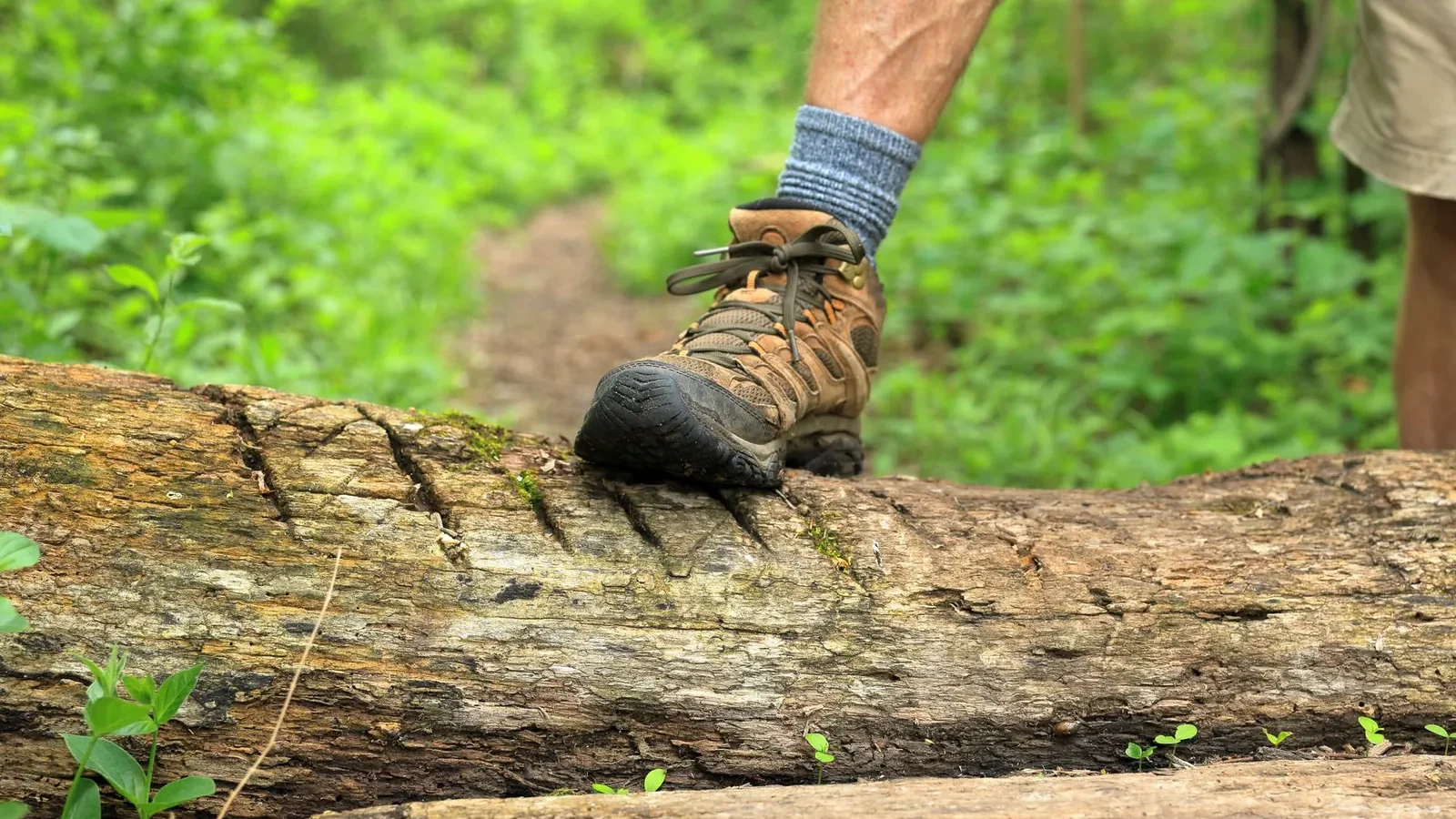
The most popular beginner boot on the market for good reason. It weighs 11 oz per shoe, breaks in within 2–3 wears, and costs $90–$110. The breathable mesh upper keeps feet cool on 6–8 mile days, and the Vibram sole grips wet rock reliably. One hard limit: no waterproofing. Skip it in rain or snow.
Salomon X Ultra 4
At $120–$140 and 10.5 oz, the X Ultra 4 is the lightest waterproof option here. It handles rocky, rooty, muddy terrain well, and the quick-lace system is genuinely faster on the trail. Fit runs narrow—size up half a size if your feet are wider than average.
KEEN Targhee III
The Targhee III ($110–$130) suits hikers who find traditional boots too stiff. It’s a hybrid boot-shoe with solid ankle support, waterproofing, and a roomier toe box than most competitors. Trade-offs: it’s the second heaviest here at 13 oz, and it takes 4–5 wears to fully break in.
Columbia Newton Ridge Plus II
The budget pick at $80–$100. Waterproof and comfortable for day hikes up to 8 miles. It’s the heaviest boot in this group at 14 oz, and the break-in is slower than the Merrell or Salomon. A solid choice if you hike once or twice a month and don’t want to spend more than $100.
La Sportiva Nucleo High GTX
At $150–$170, this is the investment pick for hikers who plan to progress quickly. Excellent foot precision on rocky terrain, Gore-Tex waterproofing, and aggressive tread. It’s stiffer than everything else on this list—expect a 5–7 wear break-in. Don’t buy it for casual day hikes; buy it if scrambling is in your near-term plans.
| Boot | Price | Weight (per shoe) | Waterproof | Break-in time | Best for |
|---|---|---|---|---|---|
| Merrell Moab 2 Vent | $90–$110 | 11 oz | No | 2–3 wears | Dry trails, comfort priority |
| Salomon X Ultra 4 | $120–$140 | 10.5 oz | Yes | 2–3 wears | Mixed terrain, lightweight |
| KEEN Targhee III | $110–$130 | 13 oz | Yes | 4–5 wears | Wider feet, insulation needed |
| Columbia Newton Ridge Plus II | $80–$100 | 14 oz | Yes | 4–5 wears | Budget, occasional hiking |
| La Sportiva Nucleo High GTX | $150–$170 | 12 oz | Yes | 5–7 wears | Technical terrain, long-term use |
Our verdict
Start with the Merrell Moab 2 Vent if you hike dry trails and want the fastest break-in. Choose the Salomon X Ultra 4 if you need waterproofing without extra weight. Go with the Columbia Newton Ridge Plus II if your budget is under $100 and you hike infrequently. Invest in the La Sportiva if you’re committing to regular hiking and expect to hit technical terrain within a season.
Sizing and Fit Tips
Hiking boot sizing runs differently from street shoes. You need a thumb’s width—roughly half an inch—of clearance past your longest toe to prevent black toenails on downhills. Your heel should not slip when you walk uphill; if it does, the boot is too loose regardless of length.
Shop in the afternoon after your feet have expanded slightly. Wear the exact socks you plan to hike in—merino wool or synthetic blends. Cotton absorbs sweat, stays wet, and causes blisters within the first 3 miles.
Return or exchange boots if they cause pain after 3 wears. Mild tightness across the arch and heel is normal break-in. Sharp pain or hot spots mean the boot is wrong for your foot shape—not something you can hike through.
Breaking In Your Boots Correctly
The 5-wear method
Wear your boots around the house for 30 minutes daily for the first 5 days. Then do a 2–3 mile flat walk. Follow with a 4–5 mile hike with 500 feet of elevation gain. By wear 5–6, they should feel natural. If blisters appear, apply moleskin or blister tape before the next wear—don’t wait for the skin to break.
Lacing for comfort
Lace the toe box loosely, tighten the midfoot and arch, and lock down the cuff. This prevents heel slip and reduces pressure on the top of your foot. At mile 4 or 5, when feet swell, loosen the toe box slightly rather than stopping to rest.
Socks matter more than most beginners expect
Merino wool or synthetic hiking socks wick moisture; cotton does not. Sock thickness affects fit: thin socks for snug boots, medium for roomy boots. On hikes over 8 miles, carry a spare pair and change them at the halfway point if your feet feel damp.
Common Beginner Boot Mistakes
Buying online without trying boots on first is the fastest route to returns and blisters. Even the same model fits differently across sizes and widths. Order from retailers with free returns and walk around your home for 20 minutes before committing.
Choosing based on weight alone trades durability and comfort for a marginal difference you won’t feel on beginner trails. A 12 oz boot that lasts 3 seasons beats a 9 oz boot that degrades in 18 months.
Skipping the break-in period and jumping straight to 10+ mile hikes is how beginners end up with tendon strain. Build up with 4–6 mile days for your first five hikes, regardless of how comfortable the boots feel in the store.
Maintenance and Lifespan
Clean boots after muddy hikes with a soft brush and cold water. Dry them at room temperature—heat warps the midsole and degrades adhesives. Stuff them with newspaper to pull moisture from the interior overnight.
A quality hiking boot lasts 400–600 miles, roughly 2–3 seasons of regular use, before the sole compresses and traction fades noticeably. Waterproofing treatments like Nikwax can extend seam integrity by 1–2 seasons; reapply every 6–12 months if you hike frequently in wet conditions.
For more foundational advice, check our guide on how to choose hiking boots properly. If you’re building out your full kit, we’ve ranked the best hiking gear for beginners.
A good boot fits your foot, not the brand name—spend time trying on multiple models before committing.
Frequently asked questions
How much should I spend on beginner hiking boots?
Budget $80–$150 for a quality beginner boot. Boots under $80 typically have poor traction and midsoles that compress within a season. Boots over $180 add lighter materials and technical soles that beginner trails don’t require. The mid-range hits the best balance of comfort, durability, and value.
Do I need waterproof boots if I only hike dry trails?
No. Waterproof membranes trap sweat and feel clammy above 65°F. If you hike consistently in dry conditions and check the forecast before each trip, breathable boots like the Merrell Moab 2 Vent are more comfortable. Switch to waterproof boots once you’re hiking in wet or snowy conditions regularly.
Can I wear hiking boots on non-hiking days?
You can, but it accelerates sole wear without benefiting break-in much. Hiking boots are stiffer and heavier than casual shoes—wearing them on pavement puts unnecessary stress on the midsole. Use short neighborhood walks to break them in gradually, then save them for trails.
What’s the difference between hiking boots and hiking shoes?
Boots provide ankle support and protection on rocky, rooted terrain. Shoes are lighter and more flexible, better suited to smooth trails and faster paces. Beginners benefit from boots on uneven ground—reduced ankle strain matters when your stabilizer muscles aren’t yet trail-conditioned. You can move to shoes once you’ve built ankle strength over a season.
How do I know if my boots are too tight?
Tight boots cause sharp pain across the top of your foot, heel blisters within the first mile, or toe numbness on downhills. Snug is correct; tight is not. If pain persists after 3 wears, the fit is wrong—return them and try a half size larger or a brand with a different last shape.

Casey is a certified strength coach and trail runner who tests gear by breaking it.