This article may contain affiliate links. If you buy through them we may earn a commission at no extra cost to you.
The right hiking boots come down to three decisions: boot type for your terrain, fit tested with your actual hiking socks, and a break-in plan before your first long day. Get those three right and you sidestep blisters, ankle rolls, and the misery of mile 8 in the wrong footwear. Spend 20–30 minutes in the store walking laps—if a boot hurts on carpet, it will destroy you on a rocky descent.
The Four Boot Types
Pick your category first, then find the right fit within it.
Hiking shoes (low-cut)
Lightweight and flexible, with minimal ankle support. Best for day hikes on established trails under 5 miles with flat to rolling terrain. Typical weight: 12–16 oz per shoe. The trade-off is real: less cushioning and no ankle collar means a higher roll risk on rocky ground. A solid entry point if you’re new and staying on maintained paths.
Hiking boots (mid-cut)
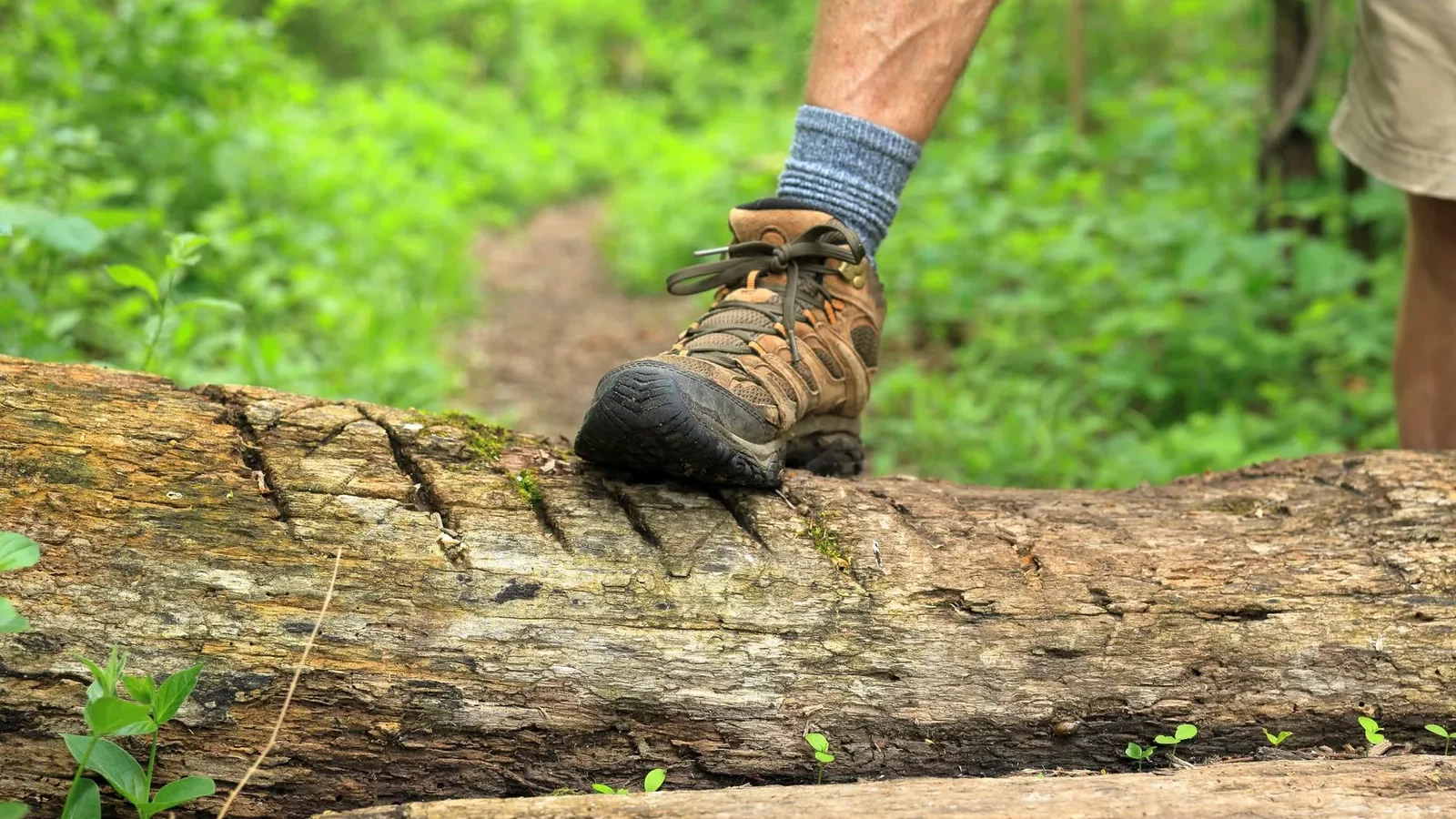
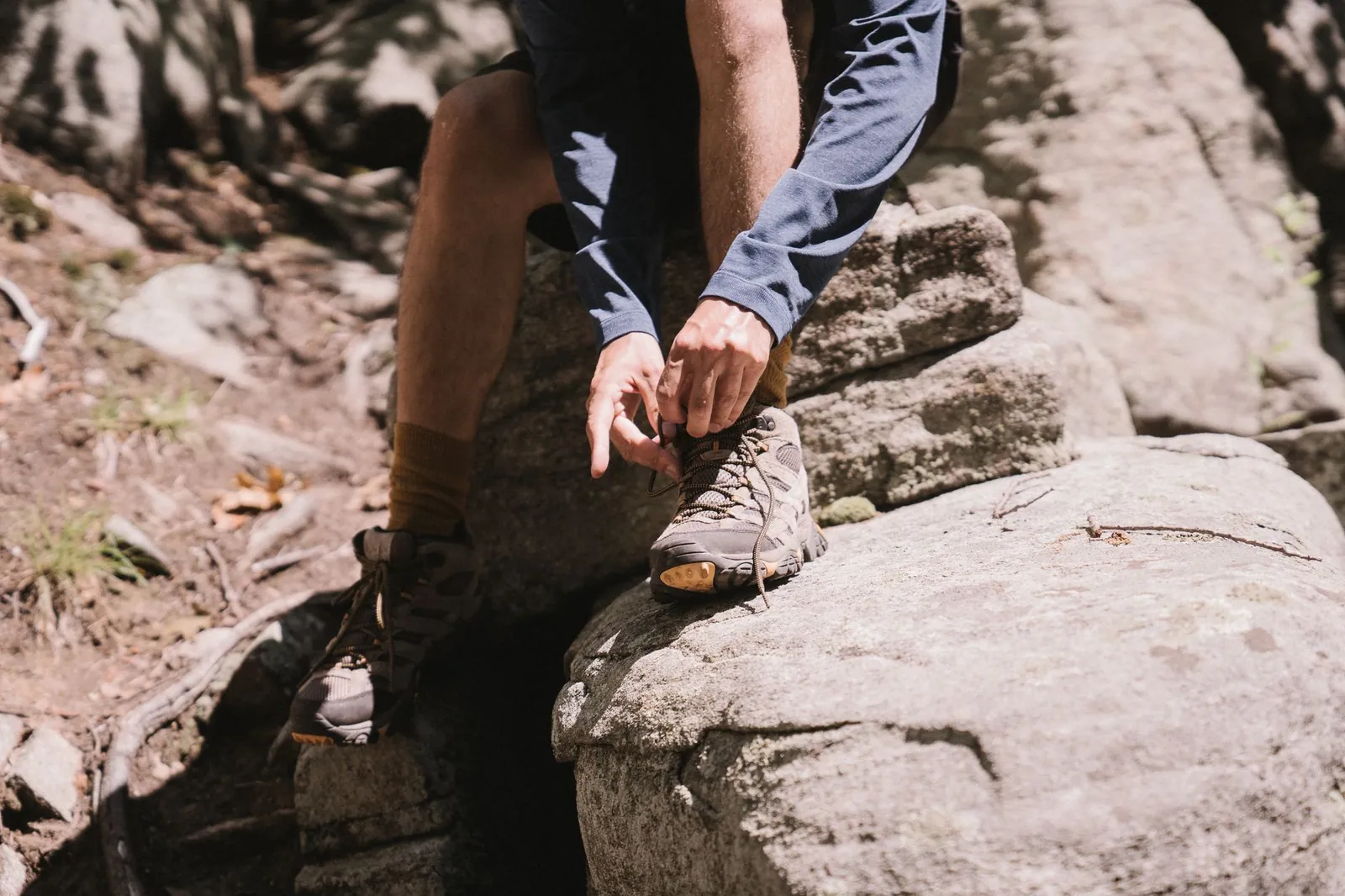
The most versatile option for most hikers. Moderate ankle support, better cushioning than shoes, still light enough for all-day comfort. Best for 5–15 mile day hikes with moderate elevation gain and mixed terrain—dirt, rocks, roots. Weight: 18–24 oz per boot. The ankle collar cuts twisting risk without the bulk of a full backpacking boot.
Backpacking boots (high-cut, stiff)
Rigid midsole, strong ankle support, built to carry 30+ lbs over multiple days. Weight: 26–32 oz per boot. That stiffness demands a longer break-in—plan for 50–100 miles before they feel natural—and more calf strength on steep climbs. Don’t reach for these on a casual Saturday hike.
Mountaineering boots
Insulated, rigid, crampon-compatible. For snow, ice, and alpine terrain above treeline in winter. Weight: 32+ oz. Skip these unless you’re doing technical peak climbs; they’re overkill for anything else.
Get Measured—Then Know Your Gait
Foot size shifts with age, pregnancy, and weight changes. Have both feet measured at a specialty outdoor retailer, not a general shoe store—ask for length and width on each foot. Most people have one foot slightly larger; fit to the bigger one.
Gait matters more than most hikers realize
Watch how you walk. Feet that roll inward (overpronation) need medial support built into the midsole; feet that roll outward (supination) benefit from lateral reinforcement. Many outdoor stores offer treadmill or video gait analysis at no charge. If you’re unsure, ask a staff member to watch you walk 10 steps—it takes 30 seconds and narrows your options fast.
Shop in the afternoon
Feet swell roughly 5–10% by late afternoon. Morning shopping means you risk buying boots that feel fine at 9 a.m. and pinch by noon on the trail. Bring the socks you’ll actually hike in—thick merino or synthetic. Cotton socks give you a false fit and cause blisters.
A boot that fits perfectly in the store but hasn’t been broken in will cause blisters on your first real hike; a boot that feels slightly stiff now will mold to your foot and feel locked in at mile 10.
The Five-Point Fit Test
Lace the boots snugly—not tight—with your hiking socks on. Walk around for at least 10 minutes, then check all five:
- Heel slip: Your heel should lift no more than a quarter-inch. More than that means blisters guaranteed. Try a half-size down or a different brand’s last shape.
- Toe room: Press your thumb in front of your longest toe. One thumb-width of space is correct—enough to prevent jamming on descents, not so much that your foot slides forward.
- Arch support: Walk 10 steps. The arch should feel cradled. Pressure that builds after 5 steps means the boot’s footbed doesn’t match your arch height—an aftermarket insole ($30–50) often fixes this.
- Ankle collar: It should contact your shin and ankle without pressing the Achilles tendon. A hard edge there causes blisters within 2 miles, every time.
- Midfoot: Lace firm enough that your foot doesn’t roll side-to-side inside the boot. If your toes go numb within 5 minutes, loosen the upper laces one notch.
Pain in the store is a verdict, not a warning. Discomfort from stiffness eases with break-in; pain from a bad fit does not.
Material and Weight Trade-offs
Leather vs. synthetic
Full-grain leather is durable, molds to your foot over time, and handles abrasion well—but adds 2–4 oz and needs 50–100 miles to break in. Synthetic uppers (nylon, mesh, polyester) break in within 10–20 miles, dry faster, and cost less, but wear out sooner and don’t conform as closely. Hybrid boots split the difference: leather at the toe and heel for durability, synthetic panels for weight savings.
Insulation
Most three-season boots have none. If you regularly hike below 40°F, look for Thinsulate or PrimaLoft insulation—it adds roughly 2–3 oz and $30–50 to the price. Avoid insulated boots for warm-season hiking; they trap heat and moisture and turn a 10-mile summer hike into a sweaty ordeal.
Waterproofing
Gore-Tex and similar membranes block water but reduce breathability and add $30–80. The coating also degrades after 3–5 years of regular use regardless of care. If you hike in rain or cross streams more than occasionally, the trade-off is worth it. For dry climates or short day hikes, skip it—lighter and cheaper wins.
Break-In Strategy: The First 50 Miles
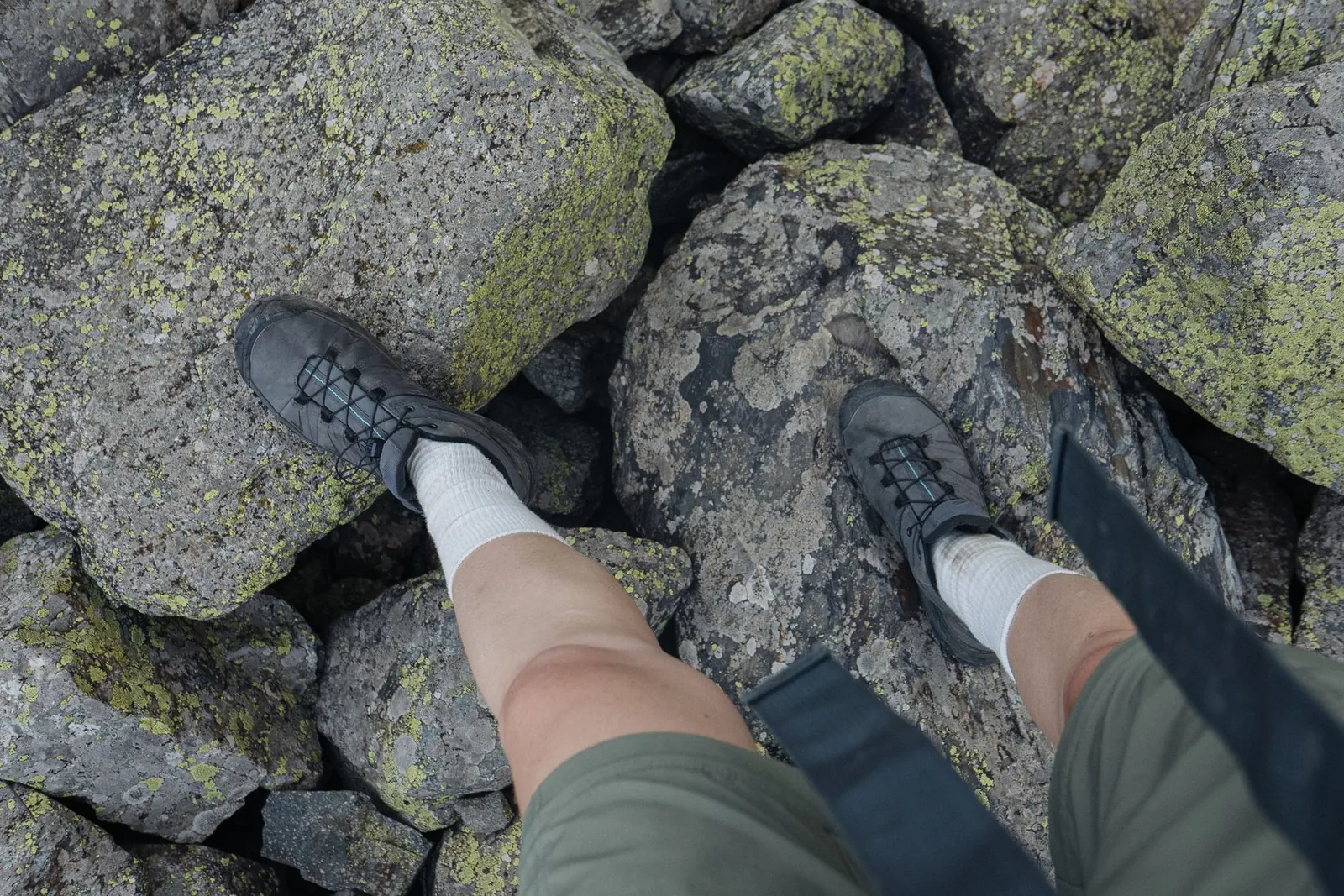
New boots are stiff. Soften them gradually or pay for it in blisters.
Week 1: Indoors only
Wear them 30–60 minutes daily for 3–4 days around the house. You’ll spot pressure points before they open into blisters.
Weeks 2–3: Short trails
Stick to 2–4 mile flat or rolling hikes. Stop when you feel a hot spot forming—not after it blisters. Apply Leuko tape or Moleskin to problem areas before you lace up.
Week 4 onward: Build distance
Increase to 5–10 mile hikes. By 50 miles, the boots should feel broken in. If specific spots still hurt at that point, the fit is wrong—no amount of additional miles will fix a bad last shape.
See our guide on best hiking gear for beginners for socks and other essentials that work with your new boots.
Key Features at a Glance
| Feature | Why it matters | Best for |
|---|---|---|
| Midsole stiffness | Stiff = better load support but more leg fatigue; soft = comfort with less control | Backpacking: stiff; day hiking: soft to moderate |
| Tread pattern | Deep lugs grip wet rock and mud; shallow treads shed weight | Wet or rocky terrain: deep lugs; dry packed trails: any |
| Heel drop | Higher drop (12–14 mm) reduces calf strain on descents; lower (8–10 mm) feels more natural on flat ground | Steep terrain: higher drop; flat: lower |
| Toe cap | Rubber or leather bumper absorbs rock and root strikes | Rocky or rooty trails: essential; smooth trails: optional |
| Gusseted tongue | Sealed tongue blocks debris and water from entering | Wet or dusty conditions: yes |
Our verdict
Match boot type to your typical hike distance and terrain. Spend real time on fit in the store—lace them properly, walk 10 minutes, and don’t compromise on heel slip or toe room. Break in on short trails before committing to a long hike. If you’re just starting out, our best hiking boots for beginners covers tested models in each category with honest notes on who each one suits.
Frequently asked questions
Do I need waterproof boots?
Not always. Waterproof boots are heavier, less breathable, and the membrane degrades after 3–5 years. Choose them if you hike in rain or cross streams regularly. For dry climates or short day hikes, save the weight and money.
What’s the difference between hiking boots and trail runners?
Trail runners are low-cut shoes weighing 8–12 oz with minimal ankle support. They’re fast and light on short, smooth trails. Hiking boots add protection, cushioning, and ankle stability for longer distances and rougher terrain. Base the choice on distance and terrain, not just what feels comfortable in the parking lot.
How long do hiking boots last?
Most boots hold up for 300–500 miles before the midsole compresses and tread wears flat. At 10 miles per week, that’s roughly 1–2 years. Check the sole and heel annually; replace when tread is gone or the heel compresses unevenly underfoot.
Should I size up for thick hiking socks?
No. Wear your actual hiking socks during the fitting and size based on that combination. Sizing up to accommodate socks creates heel slip and blister risk. The right size is snug with proper socks already on your feet.
Can I use hiking boots for everyday walking?
Yes, but they’ll wear out faster and feel heavier than casual shoes. Rotate between your boots and everyday footwear to extend boot life and give your feet a break from the extra weight.

Marcus is a cycling coach and hiker who plans routes down to the water stops.