This article may contain affiliate links. If you buy through them we may earn a commission at no extra cost to you.
Push-ups, pull-ups, squats, and dips build real muscle and power—no barbell required. The key is progressive overload: adding reps, cutting rest, or moving to harder variations every week. Skip that, and you plateau in 4–6 weeks. Apply it consistently, and you’ll be doing pistol squats and handstand push-ups within a few months.
Why Bodyweight Training Works for Strength
Every rep moves your full body mass against gravity. A 180-pound person doing a pull-up lifts 180 pounds. A pistol squat demands single-leg stability and force your quads won’t forget. Your nervous system learns to recruit muscle fibers efficiently, and your stabilizer muscles engage harder than they would on a guided machine.
The trade-off: you plateau faster than with free weights if you don’t progress smartly. Progression strategy matters more than the exercise selection itself.
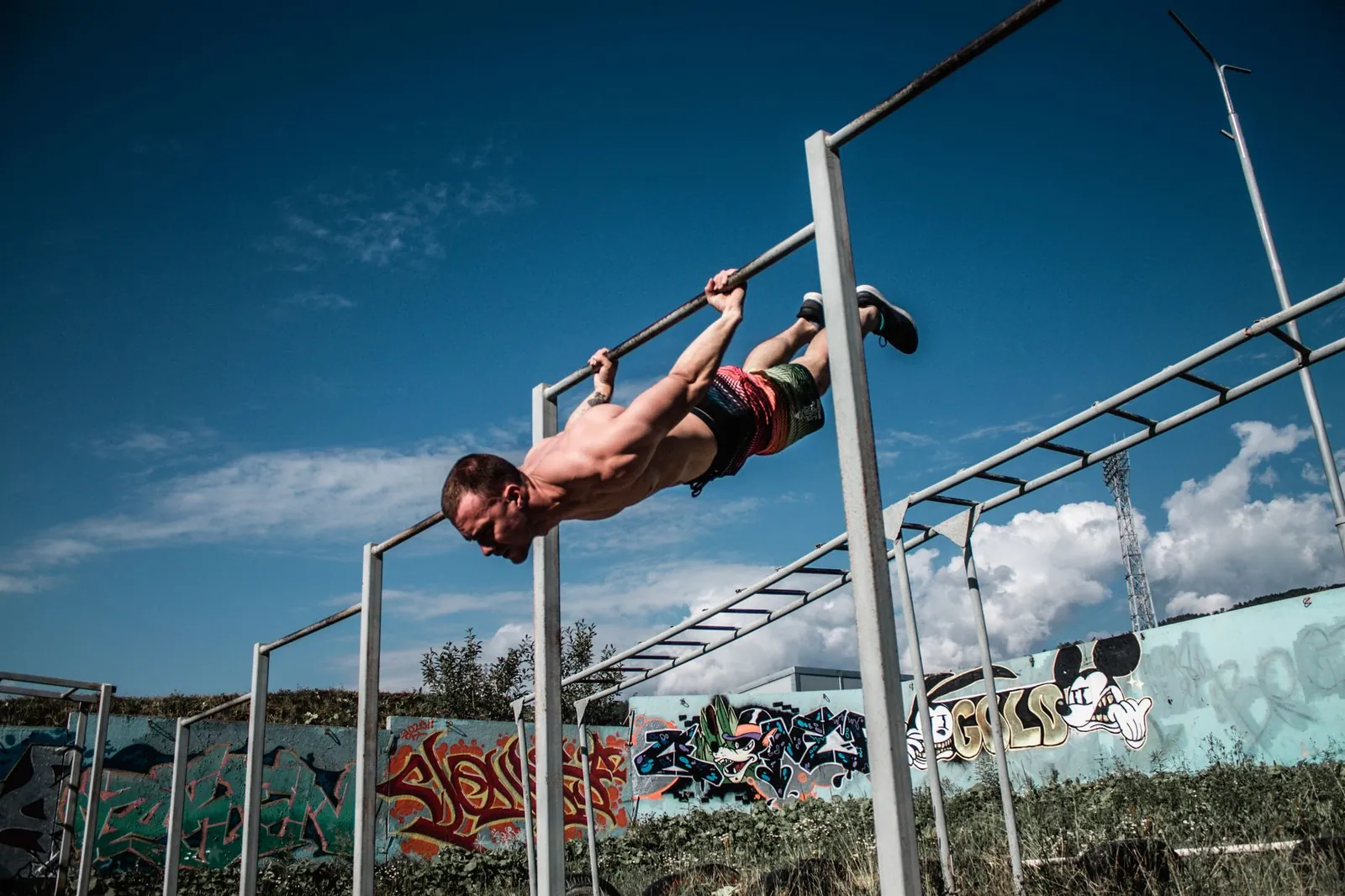
The Core Strength Movements
Push-ups
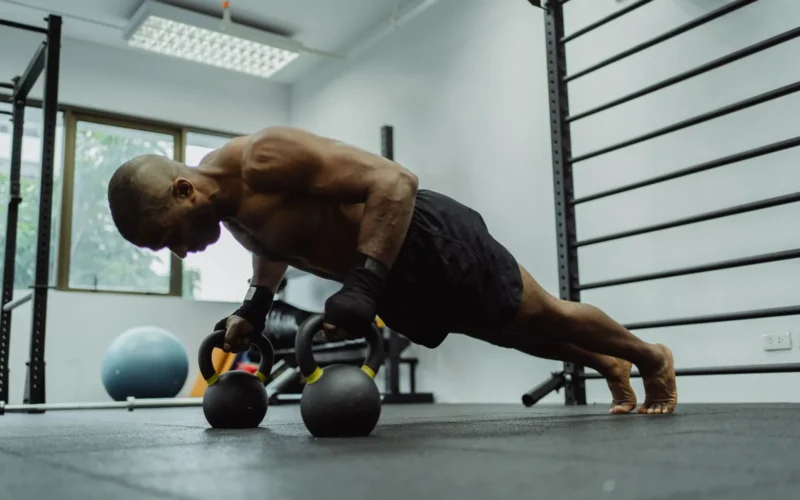
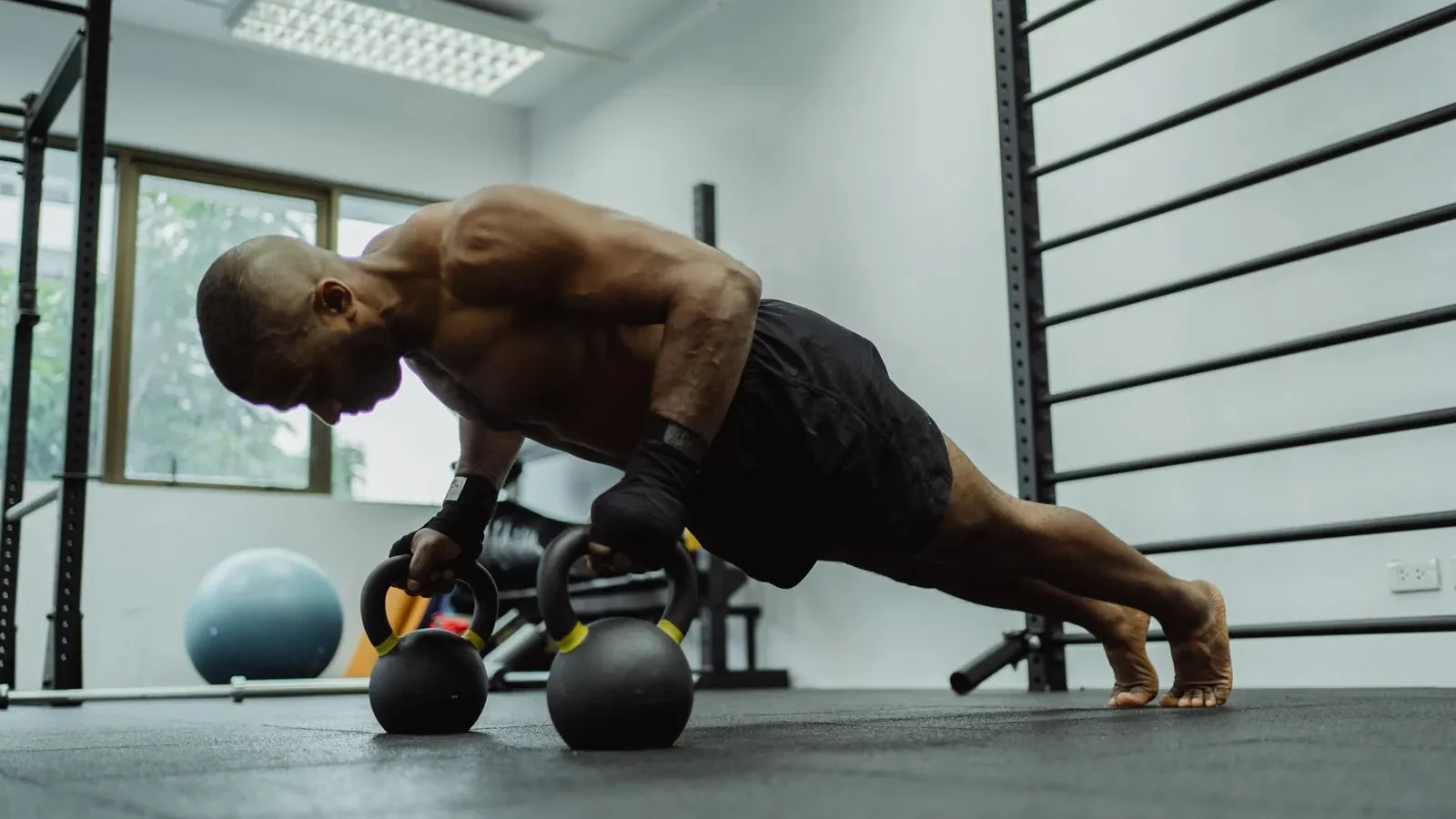
Hands shoulder-width apart, body straight from head to heels, lower until your chest nearly touches the floor, then drive back up. Start with 3 sets of 8–12 reps. Progress by elevating your feet, shifting to archer push-ups (weight moves side to side), and eventually single-arm push-ups. Each variation demands more force from fewer limbs.
Pull-ups and Chin-ups
Pull-ups (palms away) load your back and shoulders harder; chin-ups (palms toward you) favor the biceps. Can’t do a full rep yet? Loop a resistance band around the bar and your knees, or do negatives—jump to the top and lower yourself over 3–5 seconds, 5 reps, 3 sets. Once you’re capable, aim for 3 sets of 5–10 full reps.
Squats and Pistol Squats
Feet shoulder-width, lower until thighs are parallel to the ground, drive through your heels to stand. Do 3 sets of 15–20 reps. Progress to Bulgarian split squats (rear foot elevated on a bench) and then pistol squats. Expect 8–12 weeks of dedicated mobility and strength work before a clean pistol squat is achievable.
Dips
Use parallel bars, a sturdy bench, or a solid chair. Lower until elbows reach roughly 90 degrees, then press back up. Start with 3 sets of 6–12 reps. Once bodyweight feels easy, elevate your feet or add load with a dip belt.
Handstand Push-ups
Kick up against a wall, lower your head toward the ground, press back up. Start with 3 sets of 3–8 reps. Budget 4–8 weeks to build the shoulder strength and balance this move requires. Pike push-ups are the stepping stone—same pressing pattern, feet on the floor.
Progressive Overload Without Weights
More reps, fewer breaks, harder angles—pick one each week and your strength will follow.
Strength is about force generated, not weight on a bar. With bodyweight, you progress through five levers:
- Add reps: Hit 10 push-ups last week? Aim for 12 this week. Target 1–2 extra reps per session before moving to a harder variation.
- Reduce rest: Cut 15–30 seconds between sets. Shorter rest forces your muscles to work under more fatigue, driving adaptation.
- Change leverage: Elevate your feet, narrow your grip, or shift to a single-limb variation. Each change alters the force demand significantly.
- Increase time under tension: A 3-second lower, 1-second pause, 1-second drive is 5 seconds per rep instead of 2. Try 3 sets of 8 at slow tempo—it’s harder than it sounds.
- Combine movements: Superset pull-ups with dips, or squats with lunges, to exhaust a muscle group more completely.
Track every session—sets, reps, rest times. If you did 3×10 push-ups at 60 seconds rest, next week target 3×11 at 50 seconds. Small improvements compound fast over 8–12 weeks.
Sample Bodyweight Strength Workout
This 3-day full-body routine takes 30–40 minutes per session. Rest 60–90 seconds between sets on compound moves, 45 seconds on accessory work.
Day 1: Lower + Pull
- Squats: 4 sets × 12 reps
- Pull-ups: 4 sets × 6–8 reps
- Bulgarian split squats: 3 sets × 10 reps per leg
- Inverted rows: 3 sets × 8–10 reps
Day 2: Upper + Core
- Push-ups: 4 sets × 10–12 reps
- Dips: 3 sets × 8–10 reps
- Pike push-ups: 3 sets × 8 reps
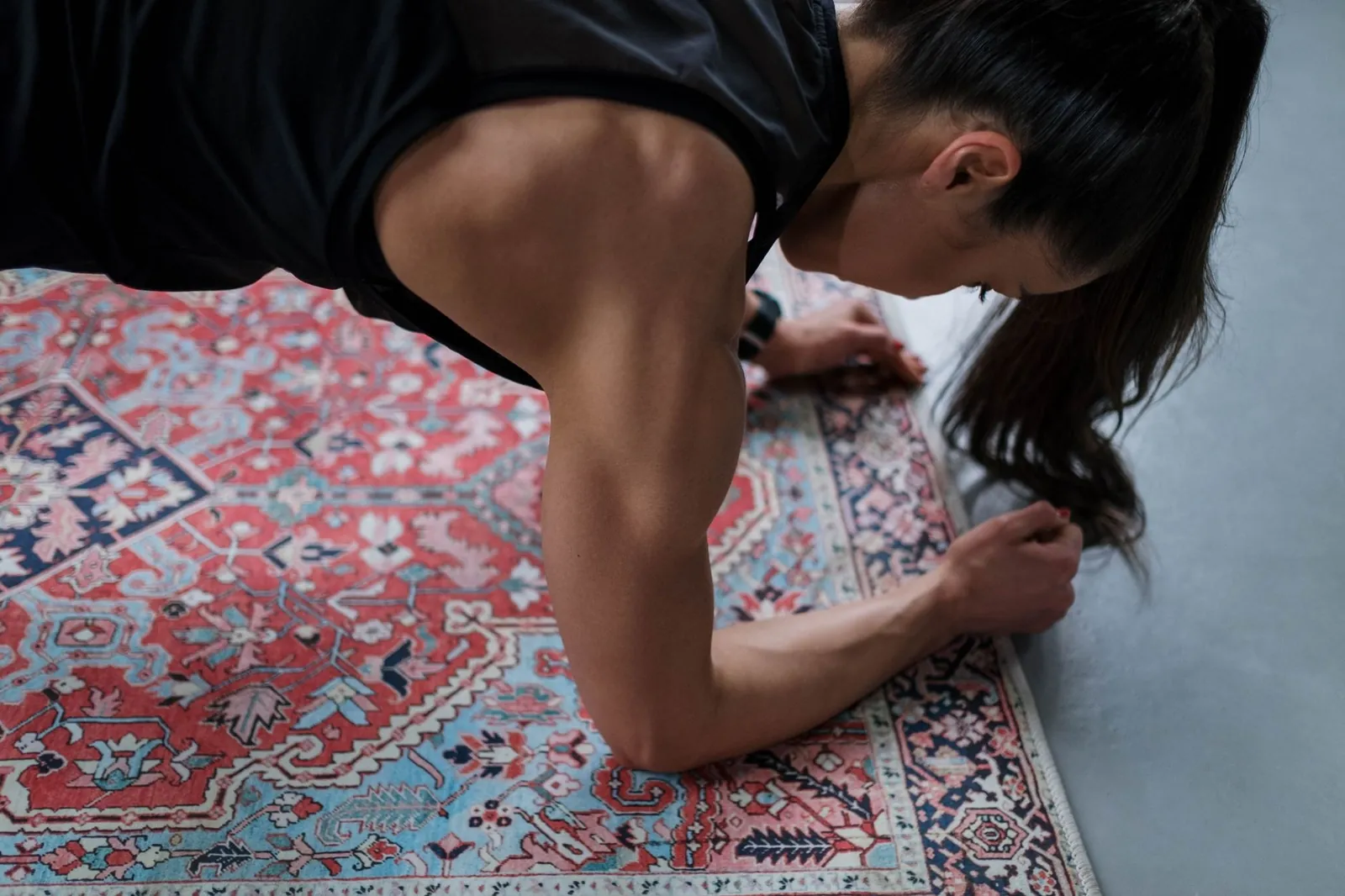
- Plank: 3 sets × 45–60 seconds
Day 3: Full Body
- Squats: 3 sets × 15 reps
- Push-ups: 3 sets × 12 reps
- Pull-ups: 3 sets × 5–8 reps
- Lunges: 3 sets × 10 per leg
- Dips: 3 sets × 8 reps
Every 4 weeks, add 2–3 reps or cut rest by 10–15 seconds. If a movement feels stale, swap it for the next harder variation.
| Movement | Beginner | Intermediate | Advanced |
|---|---|---|---|
| Push pattern | Knee push-up | Archer push-up | Single-arm push-up |
| Pull pattern | Band-assisted pull-up | Pull-up | Weighted pull-up |
| Squat pattern | Bodyweight squat | Bulgarian split squat | Pistol squat |
| Press pattern | Pike push-up | Wall handstand hold | Handstand push-up |
Avoiding Injury
Bodyweight training is low-cost to start, but shoulder impingement from sloppy push-up form, elbow tendinitis from high-volume dips, and knee strain from uncontrolled squats are real risks. A few non-negotiables:
- Warm up for 5–10 minutes: Light cardio, arm circles, leg swings, and ankle mobility before any working set. Cold muscles under load is where strains happen.
- Control the lowering phase: A 2-second lower beats a half-second drop every time. Slow eccentrics build strength and cut impact stress on joints.
- Stop 1–2 reps before failure most days: Training to absolute failure every session accelerates overuse injuries. Save max-effort sets for once a week at most.
- Rest 3–4 days per week: Muscle grows during recovery. Don’t train the same group hard two days in a row.
- Distinguish soreness from sharp pain: Muscle soreness 24–48 hours after training is normal. Sharp pain during a rep is a stop signal—not a push-through signal.
New to strength training? Spend 2–3 weeks on basic movement patterns at low intensity before pushing volume or harder variations. Tendons and connective tissue adapt slower than muscle.
When to Add Equipment
Bodyweight alone can carry a beginner to a solid intermediate level—think 10 pull-ups, 30 push-ups, and a clean pistol squat. After that, progression slows. A pull-up bar ($25–$40), a set of resistance bands ($15–$30), or a single adjustable dumbbell extends your runway considerably. For a structured plan mixing bodyweight with minimal gear, see our full-body workout routine at home and our guide to building muscle without equipment.
Frequently asked questions
How long before I see strength gains from bodyweight exercises?
Improved endurance and work capacity show up in 2–3 weeks. Measurable strength gains—more reps or a harder variation—take 6–8 weeks of consistent training. Nervous system adaptation happens fast; muscle growth takes longer.
Can I build muscle with only bodyweight exercises?
Yes, with limits. Bodyweight works well for beginners and intermediate lifters. Advanced lifters typically need added resistance to keep progressing. Protein intake (0.7–1 gram per pound of bodyweight daily) and a calorie surplus matter as much as the training itself.
What if I can’t do a single pull-up yet?
Do negatives: jump to the top position and lower yourself over 3–5 seconds, 5 reps, 3 sets, three times per week. After 4–6 weeks, test 1–2 unassisted reps. Progress is non-linear—some weeks feel stronger than others. Stick with the negatives.
How often should I train with bodyweight exercises?
3–4 days per week is the sweet spot for strength. Five to six days works if you split muscle groups and keep volume moderate per session. Training 1–2 days per week builds some strength but leaves significant gains unrealized. Don’t train the same muscle group hard two days running.
Do I need to stretch or do mobility work?
Yes. Tight hip flexors, shoulders, and ankles directly limit your range of motion and raise injury risk. Spend 5–10 minutes pre-workout on dynamic mobility (leg swings, shoulder circles) and 5–10 minutes post-workout on static stretching. Stiff ankles make pistol squats impossible; mobile ankles make them achievable.

Marcus is a cycling coach and hiker who plans routes down to the water stops.