This article may contain affiliate links. If you buy through them we may earn a commission at no extra cost to you.
Whey concentrate gives you 20–25g of complete protein per serving at $0.80–$1.20—the best value for most lifters. Step up to whey isolate if you’re lactose-sensitive or cutting calories. Go plant-based only if you’re vegan or have a dairy allergy; you’ll pay $1.40–$2.20 per serving and need 10–15% more total daily protein to match whey’s absorption rate.
Why Protein Powder Earns a Place in Your Stack
Muscle repair runs on amino acid availability. Whey delivers 20–30g of amino acids—including a leucine spike that triggers muscle protein synthesis—within 60 minutes of drinking it. Chicken breast takes 2–3 hours to hit the same peak. That gap matters post-workout, but it’s not magic: powder is a delivery tool, not a shortcut.
You don’t need powder. A 180-pound lifter who eats three chicken breasts, three eggs, and a cup of Greek yogurt daily is already at roughly 120g protein. One shake closes the gap to 150g without forcing down more solid food. That’s the real use case.
Whey Protein: Fastest and Most Researched
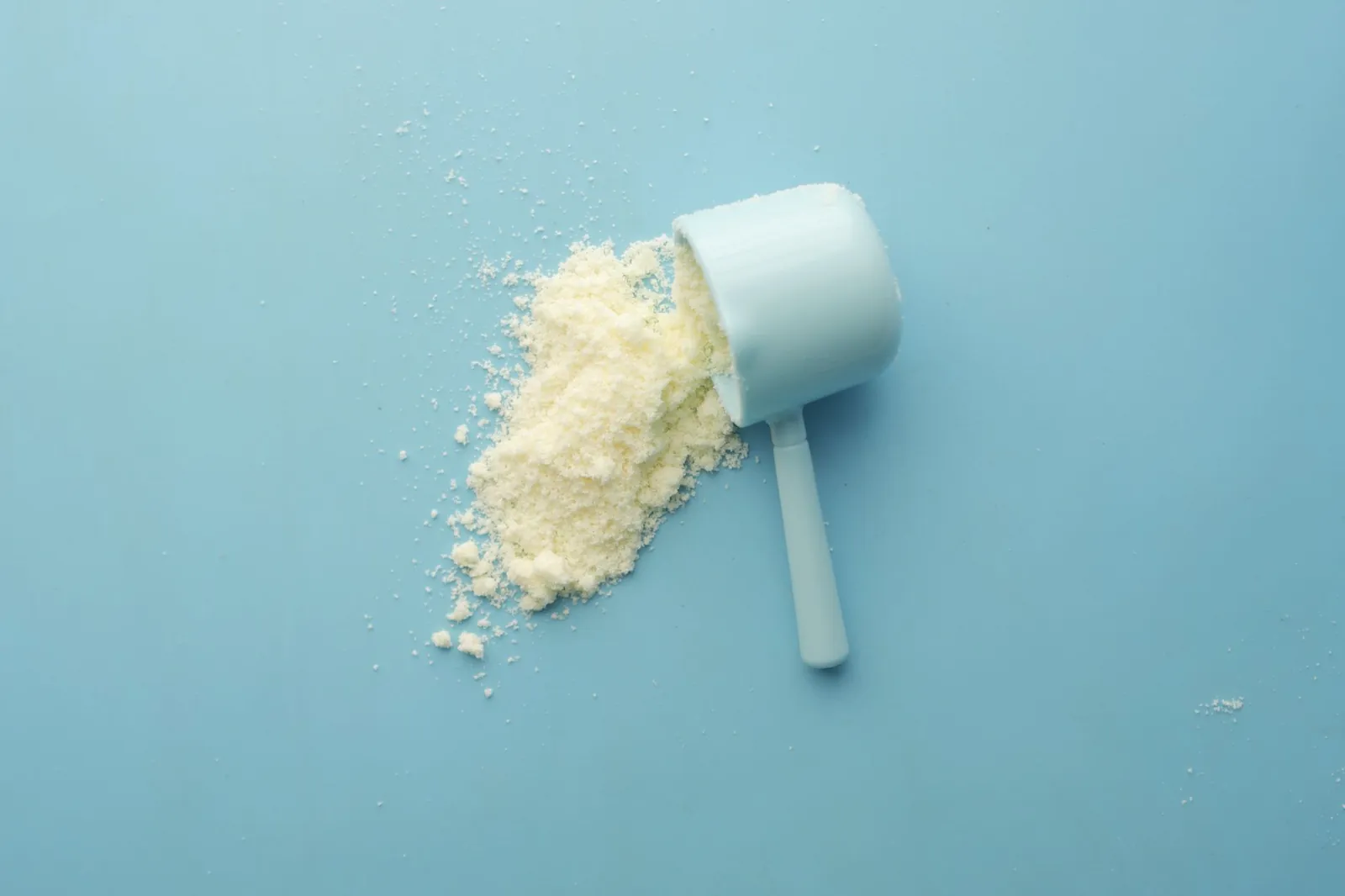
Whey contains all nine essential amino acids and peaks in your bloodstream within 30–60 minutes. It’s the most studied protein supplement for hypertrophy, and the data consistently supports it—not because it’s magical, but because it’s complete, fast, and easy to hit daily targets with.
Whey Isolate vs. Concentrate
- Isolate: 90%+ protein by weight, minimal lactose, $1.50–$2.00 per serving. Best for: cutting phases, lactose sensitivity, or anyone who wants maximum protein per calorie.
- Concentrate: 70–80% protein by weight, more lactose, $0.80–$1.20 per serving. Best for: budget-conscious bulkers who digest dairy without issues.
If you’re hitting your daily protein target, the muscle-gain difference between isolate and concentrate is negligible. Pick whichever your stomach and wallet tolerate.
Casein: The Pre-Bed Option
Casein gels in your stomach and releases amino acids over 4–6 hours. Research shows a pre-bed casein shake reduces overnight muscle breakdown by roughly 10–20% compared to going to bed on carbs alone. That’s a real but modest edge—worth it if you sleep 8+ hours and want 24-hour protein coverage.
Cost runs $1.20–$1.80 per serving. It’s not essential for muscle gain, but it’s the right tool if your biggest protein gap is overnight.
Plant-Based Protein: Vegan and Allergen-Free
Soy is the closest plant protein to whey—complete amino acid profile, 2–3 hour digestion, $1.40–$1.80 per serving. Pea and rice blends compensate for each other’s amino acid gaps when combined, but alone they fall short on leucine and lysine respectively.
Budget for $1.40–$2.20 per serving and target 1.0–1.2g protein per pound of bodyweight instead of the standard 0.7–1.0g, because plant proteins are absorbed less efficiently. Taste is the main trade-off: pea and hemp can run earthy. Muscle gain is fully achievable—it just requires tighter discipline on total intake.
Protein Powder Comparison Table
| Type | Protein per Serving | Cost per Serving | Digestion Speed | Best For |
|---|---|---|---|---|
| Whey Isolate | 25–30g | $1.50–$2.00 | 30–60 min | Post-workout, cutting |
| Whey Concentrate | 20–25g | $0.80–$1.20 | 30–90 min | Budget bulking |
| Casein | 22–28g | $1.20–$1.80 | 4–6 hours | Pre-bed, overnight recovery |
| Soy Blend | 20–25g | $1.40–$1.80 | 2–3 hours | Vegan, complete amino acids |
| Pea/Rice Blend | 20–24g | $1.40–$2.20 | 2–3 hours | Vegan, allergen-free |
Timing and Dosing for Muscle Gain
Timing is real but overrated. Total daily intake drives results; the post-workout window is convenient, not mandatory.
- Post-workout: 20–30g within 2 hours of training. Muscles are primed; it’s the most practical window.
- Daily target: 0.7–1.0g per pound of bodyweight. A 180-pound lifter needs 126–180g daily—spread across 4–5 meals, with 1–2 shakes filling gaps.
- Serving size: One scoop (25–30g) in 6–8 oz water or milk. Two scoops only if you’re in a hard bulk and genuinely can’t hit your target from food.
Total daily protein matters infinitely more than whether you drink your shake at 2 p.m. or 3 p.m.
Already hitting 150g from whole foods? A shake won’t accelerate gains. Stuck at 80g? Adding 25g from powder will move the needle immediately.
Ingredients to Look For (and Avoid)
Look For
- Under 2g added sugar per serving. Extra sugar adds calories without muscle-building benefit.
- 5–7g carbs per serving—enough for mixability, not so much it replaces a meal.
- Third-party testing (NSF Certified for Sport or Informed Choice) if you compete in tested sports. Contamination risk is low but real.
- Digestive enzymes (lactase, protease) if you bloat on concentrate—a minor addition that helps some people significantly.
Avoid
- Proprietary blends. No label means no way to verify protein quality or amino acid ratios.
- High-dose sugar alcohols (xylitol, sorbitol). Above 5–10g per serving, they reliably cause bloating in sensitive guts.
- Ingredient lists longer than 10 items. You need protein, a carb source, a fat, and flavoring—the rest is margin-padding.
Budget vs. Premium: What the Price Gap Actually Buys
Budget powders at $0.70–$1.00 per serving mix chalkier and taste worse. The amino acid profile is identical to a $2.00 premium brand. You’re paying for flavor engineering, packaging, and branding.
Mid-range ($1.20–$1.60) is the sweet spot—decent taste, reasonable cost. Premium ($1.80+) often bundles creatine, BCAAs, or digestive enzymes. Those additions have value, but you can buy 5g creatine monohydrate separately for under $0.20 per dose. A $30 five-pound tub of concentrate outperforms a $60 premium blend for pure muscle gain. Spend the difference on food or an extra training session.
Protein Powder vs. Whole Food Sources
Powder is convenient, not superior. Chicken, eggs, and Greek yogurt deliver vitamins, minerals, and satiety that no shake matches. Target 70–80% of your daily protein from whole foods; use powder to cover the remaining 20–30%.
Three chicken breasts, three eggs, and a cup of Greek yogurt gets a 180-pound lifter to roughly 120g. One shake closes the gap to 145–150g without forcing down more solid food at the end of a long day.
Recovery Beyond Protein
Protein is one variable. Carbs replenish glycogen, dietary fat supports testosterone production, and sleep drives growth hormone release. A 300–500 calorie surplus, 7–8 hours of sleep, and progressive overload—adding weight or reps each week—contribute as much to muscle gain as hitting your protein target. Powder without those in place is expensive urine.
Our verdict
Buy whey concentrate for budget bulking, whey isolate for cutting or lactose sensitivity, or a soy blend if you’re vegan. A five-pound tub (~60 servings) runs $30–$50 and lasts about two months. Mix one scoop post-workout, hit 0.7–1.0g protein per pound from whole foods and powder combined, and add progressive overload. Flavor and premium add-ons are irrelevant until those basics are locked in.
Frequently asked questions
How much protein powder do I need per day for muscle gain?
One shake (25–30g) covers most gaps if you’re already eating protein-rich meals. Two shakes work during a hard bulk when total food volume is high. More than two daily shakes usually signals you’re replacing whole foods rather than supplementing them—which costs more and delivers less satiety.
Can I build muscle with plant-based protein powder?
Yes. Soy matches whey’s amino acid profile. Pea and rice blends compensate for each other’s gaps. Aim for 1.0–1.2g protein per pound of bodyweight instead of 0.7–1.0g, because plant proteins absorb less efficiently. Consistency with total intake matters more than the source.
Is expensive protein powder worth it?
Not for muscle gain alone. Budget and mid-range powders carry the same amino acids. Premium brands charge for flavor, mixability, or bundled ingredients—creatine and BCAAs—that you can buy separately for less. Save money on powder and spend it on food or training equipment.
Should I drink protein powder before or after my workout?
Post-workout is slightly more practical—muscles are primed and you’re already in the habit of a post-session routine. But the difference versus pre-workout is minor. Total daily protein intake determines results; timing is a fine-tuning detail, not a foundation.
Will protein powder make me bloated or constipated?
It depends on your digestion. Whey concentrate causes bloating in lactose-sensitive people; switching to isolate or plant-based usually fixes it. High total protein intake (150g+) can cause constipation if you’re drinking under 3 liters of water daily or skimping on fiber. Fix water and vegetable intake before blaming the powder.

Marcus is a cycling coach and hiker who plans routes down to the water stops.