This article may contain affiliate links. If you buy through them we may earn a commission at no extra cost to you.
Zone 2 means running or cycling at 60–70% of your maximum heart rate—a pace where you can speak in full sentences without gasping. Done consistently (3–5 sessions per week, 45–180 minutes each), it builds the mitochondrial density and fat-burning efficiency that make every other workout feel easier.
What Is Zone 2 Training?
Zone 2 sits just above a recovery shuffle but well below tempo effort. Your body burns fat efficiently, clears lactate as fast as it produces it, and responds by growing more mitochondria and capillaries inside your slow-twitch muscle fibers—the cellular machinery that drives endurance.
The zone spans roughly 60–70% of max heart rate, or 50–65% of heart rate reserve depending on the formula. For a 40-year-old with a max HR of 180, that’s approximately 108–126 bpm.
Why Zone 2 Matters for Endurance
Most recreational runners and cyclists train at zone 3—hard enough to accumulate fatigue, not hard enough to drive top-end adaptation. Zone 2 fixes that by separating easy from easy.
Aerobic Base Building
Eight to twelve weeks of consistent zone 2 work produces a measurable shift: you run or cycle faster at the same heart rate. That’s mitochondrial density improving, not fitness mythology.
Fat Adaptation
At zone 2 intensity, fat supplies the majority of your fuel. That spares glycogen for hard surges, reduces bonking risk on efforts longer than 90 minutes, and improves your ability to switch fuel sources mid-race.
Recovery and Repeatability
Zone 2 is recoverable. You can run a 60-minute zone 2 session the morning after a hard interval workout and still be fresh for the next hard day. That repeatability is what allows 50–80% of elite training volume to live here.
Zone 2 is not about speed; it’s about consistency and volume at a sustainable intensity.
How to Find Your Zone 2 Heart Rate
Max Heart Rate Method
Subtract your age from 220, then multiply by 0.60 and 0.70. A 35-year-old estimates: (220 − 35) × 0.60 = 111 bpm (lower bound); (220 − 35) × 0.70 = 129 bpm (upper bound). Zone 2 is 111–129 bpm. The formula is imprecise—individual max HR can vary by ±10–15 bpm from the estimate—so treat it as a starting point.
Heart Rate Reserve Method
Subtract resting HR from max HR, multiply by 0.50 and 0.65, then add resting HR back. With a max of 180 and resting of 60: lower bound = (180 − 60) × 0.50 + 60 = 120 bpm; upper bound = (180 − 60) × 0.65 + 60 = 138 bpm. This method accounts for cardiovascular fitness and tends to produce a higher, more useful range than the simple percentage approach.
The Talk Test
No monitor? Speak a full sentence mid-effort. If you’re gasping, slow down. If you’re barely breathing, speed up slightly. This is your zone 2 check on watch-free days.
Zone 2 Paces and Workouts
Running Paces
Pace depends entirely on your current fitness. A beginner might land in zone 2 at 11–12 min/mile; a well-trained runner might be at 8–9 min/mile. Terrain shifts things further—expect 60–90 seconds per mile slower on trails versus flat road at the same HR.
Start with 30–45 minutes of continuous zone 2 running, 2–3 times per week. After 4 weeks, extend one session to 60–90 minutes. Keep the others at 45–60 minutes.
Cycling Paces
Power is more reliable than speed on a bike. Amateur cyclists typically land in zone 2 at 150–200 watts, but that range shifts with body weight and fitness. If you don’t have a power meter, use the talk test—it’s accurate enough for zone 2 because intensity is stable on flat roads.
Zone 2 cycling sessions range from 60 to 180 minutes. Three 90-minute rides per week builds a solid aerobic base without meaningful fatigue accumulation.
Sample Weekly Structure
A balanced week for an endurance runner or cyclist:
- Monday: Rest or 20–30 min recovery jog/spin
- Tuesday: Threshold or interval session (zone 4–5)
- Wednesday: 45–60 min zone 2
- Thursday: Rest or 30 min easy
- Friday: Tempo or short interval session (zone 3–4)
- Saturday: Long zone 2 session (60–180 min, scaled to your goal event)
- Sunday: Rest
Zone 2 sessions typically make up 50–80% of total training volume. The remaining volume—threshold, VO₂ max, sprints—drives performance gains that zone 2 alone can’t produce.
Common Mistakes in Zone 2 Training
Drifting Into Zone 3
This is the most common error. Zone 3 feels comfortable, but it accumulates fatigue without delivering zone 2’s aerobic adaptations or zone 4’s performance stimulus. If your breathing is rhythmically audible, you’re already too fast. Slow down by 1–2 min/mile or 20–30 watts and watch your HR drop back into range.
Expecting Fast Results
Zone 2 adaptation is slow by design. Commit to 4–6 weeks before judging it. Measurable gains—faster 5K time, higher FTP—take 8–12 weeks and require hard sessions alongside zone 2 work.
Skipping Hard Sessions Entirely
Zone 2 alone won’t improve your 5K time or sprint power. One to two hard sessions per week (threshold, intervals, or tempo) are non-negotiable for performance. See our guide on how to improve aerobic fitness for a balanced approach.
Treating Zone Formulas as Exact
Some runners thrive with zone 2 at 65–75% max HR; others respond better at 55–65%. Wear a monitor for 2–3 weeks, note how you feel and recover, and shift the range by 5 bpm if something feels off.
Zone 2 Training for Different Goals
Half-Marathon and Marathon
Zone 2 is your workhorse. Build 12–16 weeks of base (3–4 sessions per week, 45–120 minutes each), then add one hard session per week in the final 8 weeks. Long runs stay in zone 2, drifting into zone 3 only for race-specific pacing work.
Ultramarathon and Long-Distance Cycling
Zone 2 dominance increases to 70–80% of total volume. Long efforts of 3–6 hours train fueling management as much as fitness. Hard sessions drop to one per week or fewer.
5K, 10K, and Criteriums
Zone 2 still provides the aerobic foundation, but volume drops to 2–3 sessions per week. Most training is threshold and VO₂ max work. See our running pace guide for breakdowns by race distance.
Gear and Tools for Zone 2 Training
| Tool | Best For | Price Range |
|---|---|---|
| Polar H10 chest strap | Accurate HR during running | ~$90 |
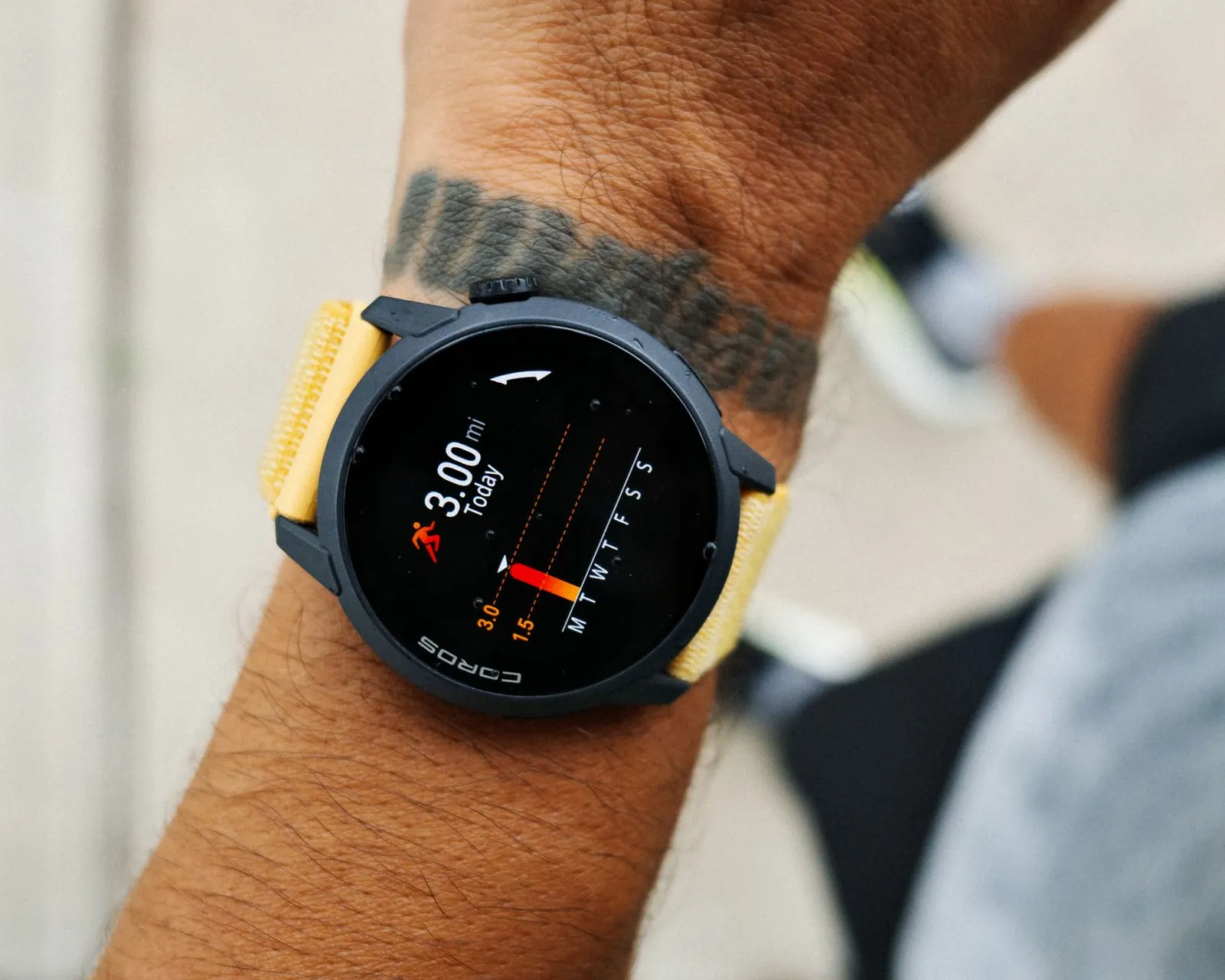
| Garmin Forerunner / Coros Pace | Real-time zone display + trend logging | $200–$350 |
| Favero Assioma pedals | Budget-friendly cycling power meter | ~$400 |
| SRM / Quarq crankset | High-precision cycling power | $800–$2,000 |
| Fitbit / Oura ring | HR trends and recovery tracking | $100–$300 |
Wrist-based HR monitors work well for cycling; chest straps are more reliable during running due to arm movement artifact. If budget is tight, use the talk test and a free HR app—zone 2 doesn’t require expensive hardware to work.
Frequently Asked Questions
How long until I see zone 2 training results?
Most runners and cyclists notice improved aerobic capacity within 4–6 weeks—you’ll feel faster at the same HR and recover quicker between sessions. Measurable fitness gains (faster 5K time, higher FTP) take 8–12 weeks and depend on pairing zone 2 with at least one hard session per week.
Can I do zone 2 every day?
Technically yes, but not recommended. Zone 2 is low-stress, but daily volume without hard sessions limits performance gains. Include 1–2 harder sessions per week—threshold, intervals, or tempo—to drive adaptation. Rest days also prevent overuse injuries, particularly for runners logging high mileage.
Is zone 2 training boring?
It feels slow at first, especially if you’re used to pushing every session. In practice, the pace is comfortable enough to run with a partner, listen to a podcast, or take in scenery you’d miss at tempo effort. Most athletes find it becomes a mental reset rather than a chore.
What if my max heart rate estimate is wrong?
Estimates from 220 − age are rough. If zone 2 feels genuinely hard, lower the upper bound by 5–10 bpm. If it feels like a stroll, raise it. Use the talk test as a sanity check and adjust after 2–3 weeks of data.
Can I mix zone 2 running and cycling in one week?
Yes. A week might include 2 zone 2 runs (45–60 min each) and 2 zone 2 bike sessions (90–120 min each), plus one hard session. Cross-training reduces impact injury risk while building the same aerobic adaptations. Total aerobic volume matters more than which sport delivers it.

Marcus is a cycling coach and hiker who plans routes down to the water stops.