This article may contain affiliate links. If you buy through them we may earn a commission at no extra cost to you.
Your gait pattern, foot shape, and weekly mileage determine the right shoe—not brand loyalty or price. A correct fit means a thumb’s width of space at the toe, zero heel slip, and no hot spots after 3–5 miles. Start there.
Understand Your Gait Pattern
How your foot lands and rolls through each stride dictates which shoe category you need. Get this wrong and even a well-fitted shoe will cause problems by mile 8.
How to test your gait at home
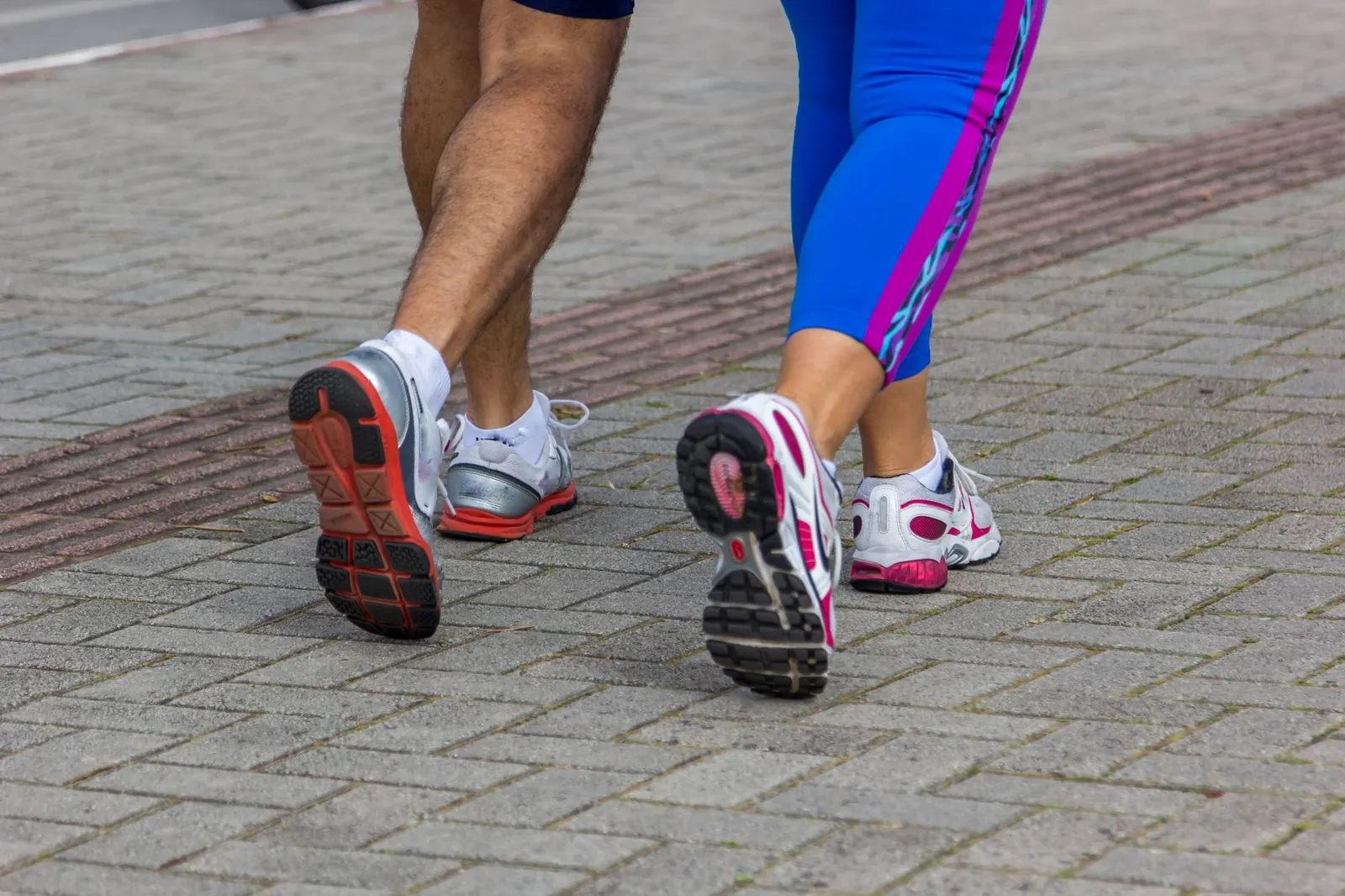
Wet the sole of your foot and step onto cardboard or a paper bag. A neutral gait leaves a C-shaped curve on the inner edge. Overpronation—foot rolling inward—leaves a nearly straight inner edge or wide band. Underpronation (supination) leaves a thin, sharply curved print with almost no inner contact.
Most specialty running stores offer treadmill camera or pressure-mat analysis for $0–50. You get a short video clip, which is useful when shopping online later.
Know Your Foot Type
Flat feet tend toward overpronation; high arches often underpronate; neutral arches can go either way. Gait and foot type usually align, but not always—a flat-footed runner can still have a neutral gait if hip strength compensates. The wet-foot test tells you more than arch height alone. For specific model picks, see our guide on best running shoes for flat feet.
Match shoe support to foot type
- Neutral shoes: Minimal arch support; best for neutral gaits and moderate arches. Typical weight: 7–9 oz per shoe.
- Stability shoes: Extra medial (inside-edge) support for mild to moderate overpronation. Typical weight: 8–10 oz.
- Motion-control shoes: Maximum stiffness and support for severe overpronation. Typical weight: 10–12 oz.
- Cushioned neutral shoes: Extra padding without corrective support; suits underpronators and high-mileage recovery days. Typical weight: 8–10 oz.
Check Shoe Drop and Cushioning
Heel-to-toe drop is the height difference between heel and forefoot. Most road shoes sit between 4–12 mm. A higher drop (10–12 mm) reduces calf and Achilles load—useful for distance runners or anyone returning from a calf strain. A lower drop (4–6 mm) demands more from your calf and forefoot; it suits speed work but requires a 4–6 week transition if you’re coming from a high-drop shoe. Skipping that transition is a common cause of Achilles tendinopathy.
Cushioning thickness is separate from drop. Maximal-cushion midsoles (12+ mm of foam stack) suit recovery runs and runners over 180 lbs. Minimal cushioning (6–8 mm stack) works for tempo efforts and lighter runners who want ground feel. Match cushioning to your current training phase, not just your preference in the store.
A shoe that feels perfect in the store at 2 p.m. might pinch at 6 a.m.; try on running shoes in the afternoon when your feet are at their largest.
Get the Fit Right
A shoe with ideal support still causes blisters if the shape doesn’t match your foot. Run through this checklist every time you try a new model.
The fitting checklist
- Timing: Shop between 3–6 p.m. Feet swell up to half a size during the day. Bring the socks you train in.
- Heel fit: Slip should not exceed ¼ inch when you jog in place. More than that causes blisters on runs over 5 miles.
- Toe box: About ½ inch (a thumb’s width) between your longest toe and the end of the shoe. Press your foot forward—your heel should stay down.
- Midfoot: Snug, not tight. One finger should slide under the laces without forcing it.
- Width: Most major brands offer narrow, standard, and wide versions. Your foot should feel held across the full width—not squeezed at the little toe or floating inside the upper.
Jog in the shoe for at least 5 minutes before deciding. Pain on the outer foot, sharp toe pressure, or a slipping heel rules it out—no matter how good the spec sheet looks.
Compare Key Shoe Specs
Once gait type and fit are confirmed, use these measurable factors to choose between finalists:
| Spec | What it means | Best for |
|---|---|---|
| Weight (oz per shoe) | Lighter = faster; heavier = more cushioning | Racing: 5–7 oz; daily training: 8–10 oz |
| Heel-to-toe drop (mm) | Higher drop = less calf load; lower = more forefoot engagement | Distance runs: 8–10 mm; speed work: 4–8 mm |
| Midsole foam type | EVA = firm and responsive; gel or air = plush; carbon-infused foam = bouncy and fast | Depends on feel preference; test both EVA and plush before buying |
| Outsole durability (miles) | Rubber coverage and compound quality; most brands publish expected lifespan | Budget for replacement at 300–500 miles |
| Upper material | Mesh = breathable and light; knit = flexible and warm; Gore-Tex = waterproof but heavier | Hot or humid climates: mesh; cold or wet: knit or Gore-Tex |
Our verdict
Buy the shoe that matches your gait, fits your foot shape, and feels right after a 5-minute store jog—not the one with the best marketing. If you’re just starting out, our best running shoes for beginners article covers forgiving, well-cushioned options in the $100–150 range.
Test Before You Commit
Most running specialty stores offer a 30-day return window. Use 2–3 runs totaling 8–12 miles to confirm the shoe works. Blisters, pressure points, and fit problems rarely appear on a 1-mile test jog.
Online retailers including REI and most brand sites accept returns within 30–60 days. If you’re unsure of your size, order two and return the one that doesn’t fit—shipping is usually free both ways.
When you find a model that works, write down the exact name and version number. Shoe lines update annually, and midsole geometry can shift between versions. Buying the same model year-over-year is the easiest way to stay consistent.
Frequently asked questions
How often should I replace my running shoes?
Most midsoles compress and lose meaningful cushioning between 300–500 miles. At 20 miles per week, that’s a new pair every 4–6 months. Track mileage with a running app or GPS watch—guessing usually means running 100+ miles past the shoe’s useful life, which increases knee and hip stress.
Should I buy running shoes online or in a store?
If you already know your gait type, size, and preferred model, online is fine and often $20–40 cheaper. If you have foot pain or you’re buying your first pair, visit a specialty running store. A proper fitting session ($0–50) typically saves more than it costs by eliminating wrong purchases and returns.
Can I use the same shoe for road and trail running?
Road shoes have smooth, low-profile outsoles built for pavement. Trail shoes use aggressive lugs and reinforced uppers to handle rocks and roots. A hybrid trainer handles both surfaces at a compromise—fine for occasional trail detours, but limiting if you run technical singletrack or high-mileage road weeks. Two dedicated shoes is the better call if you split time evenly.
What’s the difference between men’s and women’s running shoes?
Women’s lasts are typically narrower through the heel and midfoot with a relatively wider toe box. The gender label matters less than the shape: narrow-footed men often fit better in women’s sizes, and wide-footed women may prefer men’s. Try both if standard sizing doesn’t feel right.
Do I need orthotics if I have flat feet?
Not as a first step. A well-fitted stability shoe handles mild to moderate overpronation for most runners. If you still have arch, heel, or knee pain after 3–4 weeks in the right stability shoe, see a physical therapist or podiatrist before buying custom orthotics—over-the-counter insoles in the $40–60 range are worth trying first.

Marcus is a cycling coach and hiker who plans routes down to the water stops.