This article may contain affiliate links. If you buy through them we may earn a commission at no extra cost to you.
Couch to 5K (C25K) takes you from zero running fitness to a continuous 5K (3.1 miles) in 9 weeks, three days per week. Week 1 starts with 60-second jogs. Week 9 ends with 30 minutes of unbroken running. The walk-run structure does the heavy lifting—you just show up.
What Is Couch to 5K?
Week 1 opens with 60 seconds of jogging followed by 90 seconds of walking, repeated 8 times across 20 minutes. By week 9, you run the full 5K without a single walking break. The program builds aerobic capacity and leg-tendon resilience at the same time—two things beginners need before they worry about pace.
Three non-consecutive days per week gives your body 48 hours between sessions to rebuild. Monday/Wednesday/Friday and Tuesday/Thursday/Saturday are the two most common setups. Rest days aren’t optional—skip them and you trade adaptation for overuse injury.

Week-by-Week Breakdown
Weeks 1–3: Building the Base
These sessions feel easy. That’s the point. You’re conditioning tendons and joints, not just lungs—and tendons adapt slower than cardio does.
- Week 1: 60 sec jogging / 90 sec walking, 8 rounds (20 min total)
- Week 2: 90 sec jogging / 2 min walking, 6 rounds (21 min total)
- Week 3: Alternate 90 sec jogging / 2 min walking with 3 min jogging / 3 min walking (22 min total)
Weeks 4–6: Extending Jogging Intervals
Walking breaks shrink fast here. Most runners notice they stop dreading the jogging segments around week 5.
- Week 4: 3 min jogging / 90 sec walking, 5 rounds (22.5 min total)
- Week 5: 5 min jogging / 2.5 min walking, then 8 min jogging / 5 min walking, then 5 min jogging (28 min total)
- Week 6: 5 min jogging / 3 min walking, then 8 min jogging / 3 min walking, then 5 min jogging (28 min total)
Weeks 7–9: Running Continuously
No more walk breaks. The jump from week 6 to week 7 is the biggest mental shift in the program—your legs are ready even if your head isn’t.
- Week 7: 20 minutes continuous running
- Week 8: 25 minutes continuous running
- Week 9: 30 minutes continuous running (covers roughly 5K at an easy pace)
The goal is consistency and completion, not speed—you’re building a habit that lasts longer than the 9 weeks.
How to Start: Gear and Preparation
Running Shoes
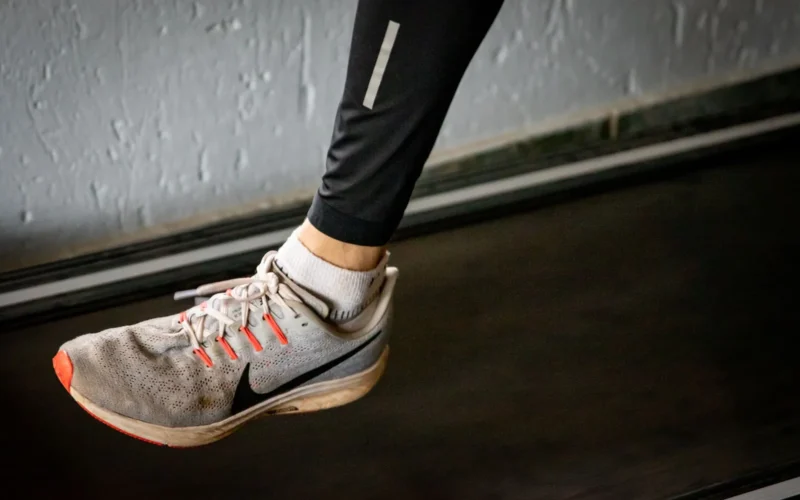
This is the one gear item worth spending on. Visit a specialty running store for a gait analysis—staff watch you run and match shoes to your foot strike (heel, midfoot, or forefoot). Budget $100–$150. See our guide to best running shoes for beginners for specific picks by foot type.
Clothing and Accessories
Moisture-wicking socks (wool or synthetic—cotton blisters fast), non-chafing shorts or tights, and a sports bra if applicable. For tracking intervals, the free Couch to 5K app, Nike Run Club, or Strava all cue walk-run transitions automatically. Cost: $0–$5/month.
Route Planning
Pick a flat, familiar loop—a park, neighborhood block, or 400m track. Familiar terrain keeps your attention on effort, not navigation. A 1-mile loop is practical: easy to repeat, easy to measure progress week over week.

Pacing and Effort Level
Run at a conversational pace—short sentences out loud, no gasping. Most C25K beginners land between 5.5 and 6.5 mph (9–11 minute miles), but your number depends on age, weight, and baseline fitness. Don’t chase a pace target in the first six weeks.
If a week feels brutal, repeat it. Some runners need 10–12 weeks to finish the program, and that’s a smarter outcome than pushing through pain and stopping at week 7 with shin splints. Progression depends on how your body responds, not the calendar.
Common Mistakes to Avoid
Going Too Fast
The single most common error. Beginners sprint the jogging intervals, burn out by round 4, and convince themselves they’re not runners. Drop to 50–60% of max effort—you should feel like you could continue, not like you’re emptying the tank.
Skipping Rest Days
Running four or five days a week as a beginner overloads tendons and joints before they’ve adapted. Three days is the ceiling, not a suggestion.
Ignoring Pain
Muscle soreness peaking 24–48 hours after a run is normal. Sharp joint pain, shin splints that worsen mid-run, or aches that don’t ease after 3–5 rest days are not. See how to prevent common running injuries for warning signs. If pain persists beyond five days of rest, see a doctor—this isn’t medical advice, it’s common sense.
Jumping Ahead
Week 3 feeling easy doesn’t mean you’re ready for week 5. The program’s gradual load increase protects tendons, which take 6–8 weeks to adapt to new stress—longer than your lungs do. Skipping weeks shortcuts that process.
Nutrition and Hydration
Sessions run 20–30 minutes. You don’t need gels, sports drinks, or special fueling. Eat normally. If you run first thing in the morning and feel sluggish, a banana or slice of toast 15–20 minutes before solves it. Within an hour after running, eat protein and carbs—eggs on toast, Greek yogurt with granola, or a protein shake all work.
Drink water throughout the day and sip before your run. Sessions under 45 minutes don’t require mid-run hydration. Save the electrolyte drinks for when you’re running 10K+.
What Happens After Week 9
You’ve run 5K. Pick a direction:
- Improve speed: Add weekly interval sessions—alternate 1-minute hard efforts with 2-minute easy jogs, 6–8 rounds.
- Build distance: Extend one weekly run by 10% every two weeks toward a 10K.
- Maintain fitness: Three runs per week at current pace is a legitimate long-term goal, not a consolation prize.
- Cross-train: Swap one run for cycling or swimming to cut injury risk and break monotony.
Frequently Asked Questions
Can I do Couch to 5K if I’m overweight or have been sedentary for years?
Yes. The walk-run structure is designed for deconditioned bodies. If the standard timeline feels too aggressive, stretch it to 12–14 weeks by repeating hard weeks. Talk to your doctor first if you have heart disease, diabetes, or joint problems.
What if I miss a week or fall behind?
Pick up where you left off. A one-week gap won’t reset your fitness. Two or more weeks off? Repeat the last week you completed before moving forward. Consistency over the full 9 weeks matters more than any single session.
Do I need a gym or treadmill?
No. Outdoor running is free and builds stronger stabilizer muscles than treadmill running. A treadmill is a solid backup for bad weather or safety concerns—not a requirement.
How do I know if I’m running at the right pace?
Use the talk test: 4–5 word sentences spoken comfortably means you’re in the right zone. Can’t speak at all—slow down. Could hold a phone conversation without effort—speed up slightly. A running watch is useful later; in weeks 1–5, perceived effort is more reliable than pace data.
Can I run with a friend?
Yes, and accountability helps—runners with a regular partner are more likely to complete programs than solo runners. Match up with someone at a similar fitness level. If your paces diverge, run together on easy days and split up on harder sessions. Walking together on rest days counts as active recovery.

Casey is a certified strength coach and trail runner who tests gear by breaking it.