This article may contain affiliate links. If you buy through them we may earn a commission at no extra cost to you.
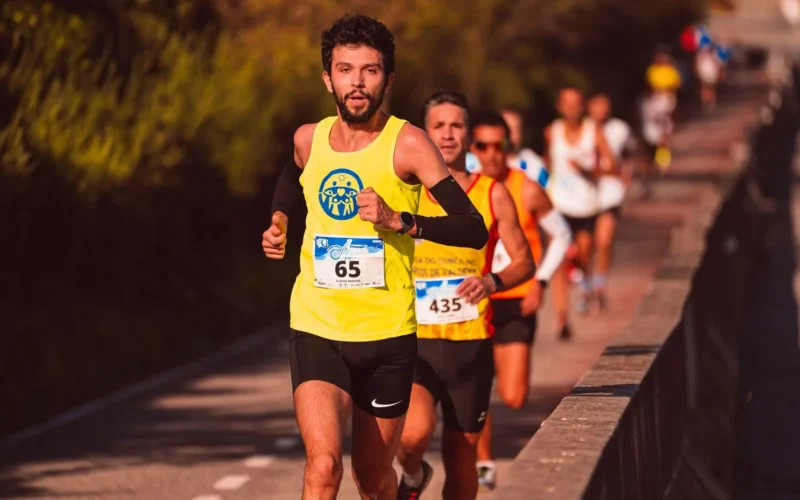
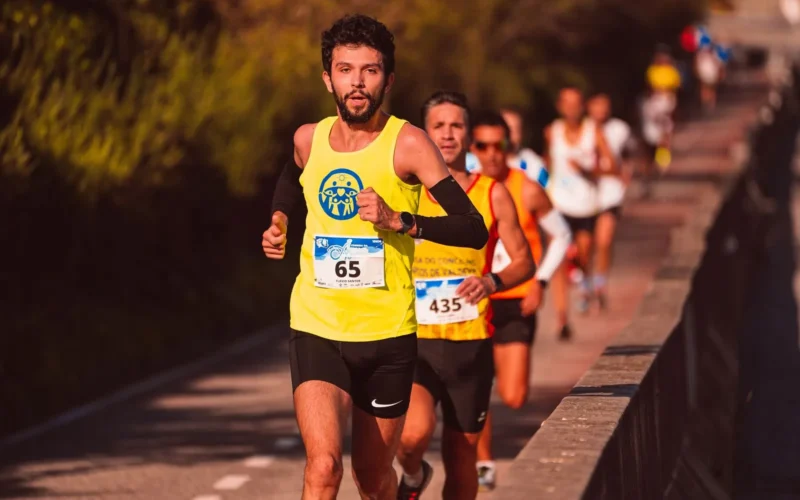
This 8-week plan mixes running intervals with walking recovery, builds from 2.5 miles per session to a 4-mile long run, then tapers you into race day. You don’t need to run the full 5K in training—consistent progression beats heroic single efforts every time.
If you’re starting from zero running, try our Couch to 5K Training Plan Guide first—it adds 4 weeks of walk-run fundamentals before you hit the structure below.
Why 8 Weeks
Your aerobic system adapts fastest between weeks 3 and 6. Injury risk spikes when you jump volume in weeks 1–2 or skip rest days entirely. Eight weeks also fits most local race calendars and delivers visible progress every two weeks—enough to keep motivation from stalling.
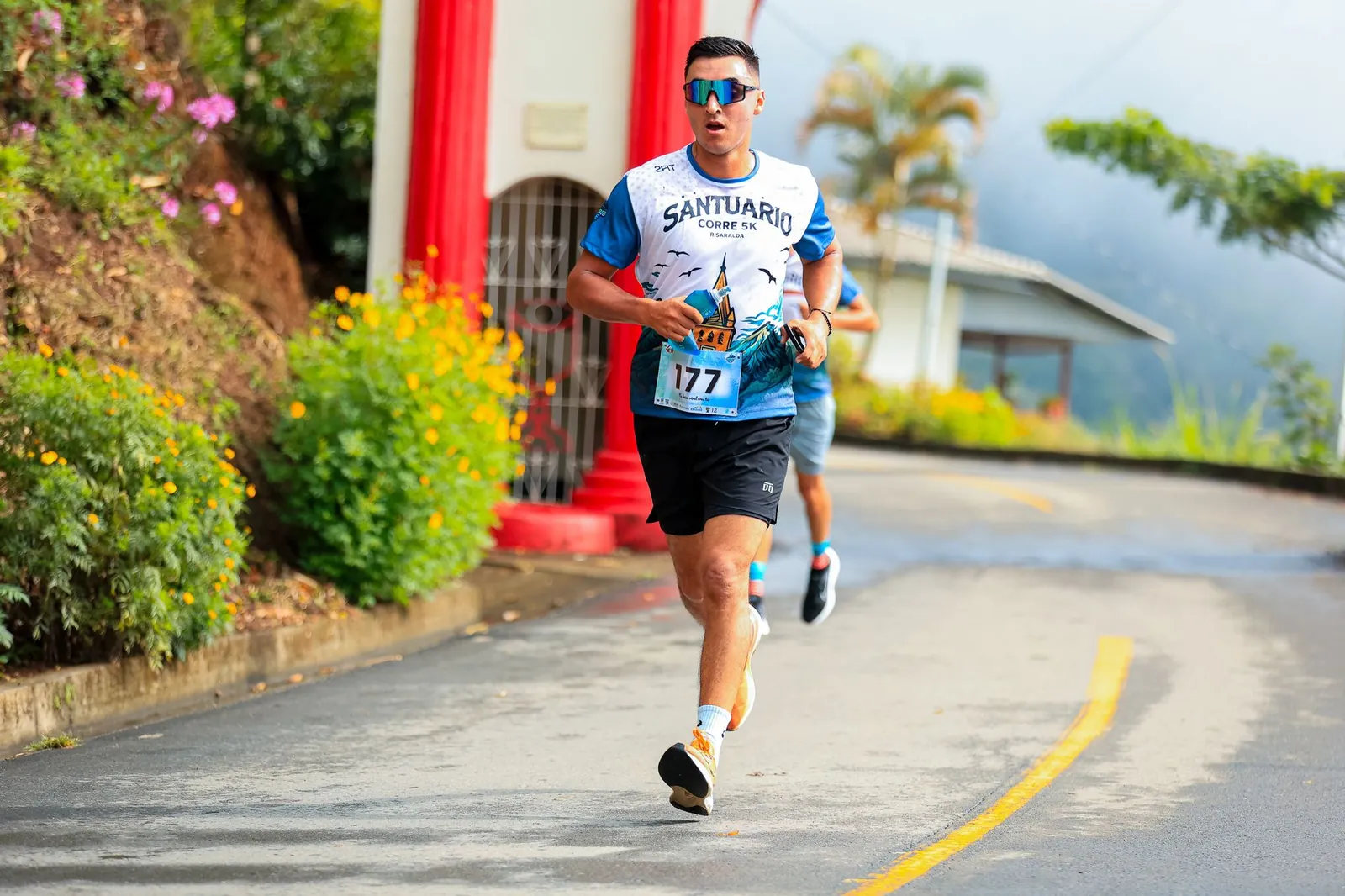
The Weekly Structure: 4 Sessions, Real Rest
Monday: Easy Run (2.5–3.5 miles or 25–30 minutes)
Slow enough to speak in full sentences. Target 60–70% of max heart rate—roughly 12–13 breaths per minute. Most beginners run this 45–60 seconds per mile too fast; dial it back even if it feels embarrassingly slow.
Wednesday: Interval Work (20–25 minutes total)
Warm up 5 minutes easy. Then alternate hard efforts at race pace with recovery jogs—sets and durations build week by week per the table below. This trains your lactate threshold and teaches your legs what 5K pace actually feels like before race day.
Friday: Medium Run (2.5–3.5 miles or 25–30 minutes)
Slightly faster than Monday, nowhere near Wednesday’s effort. It bridges easy and hard work and builds the mental stamina you’ll need in miles 2–3 of the race.
Saturday or Sunday: Long Run (2 miles → 4 miles over 8 weeks)
Run 90 seconds per mile slower than your goal 5K pace. Week 1: 2 miles. Week 4: 3 miles. Week 7: 3.75 miles. This is where aerobic capacity compounds.
Rest Days (Tuesday, Thursday, one weekend day)
Walk, swim, or do yoga. Do not run. Adaptation happens during recovery, not during the run itself.
Beginners improve fastest by running easy days easier and hard days only slightly harder—not by making every run medium-hard.
8-Week Training Progression
| Week | Monday (Easy) | Wednesday (Intervals) | Friday (Medium) | Sat/Sun (Long) |
|---|---|---|---|---|
| 1 | 2.5 mi | 4 × 2 min hard, 1 min easy | 2.5 mi | 2 mi |
| 2 | 2.75 mi | 5 × 2 min hard, 1 min easy | 2.75 mi | 2.25 mi |
| 3 | 3 mi | 4 × 3 min hard, 1.5 min easy | 3 mi | 2.5 mi |
| 4 | 3 mi | 3 × 4 min hard, 2 min easy | 3 mi | 3 mi |
| 5 | 3.25 mi | 3 × 5 min hard, 2 min easy | 3.25 mi | 3.25 mi |
| 6 | 3.5 mi | 2 × 6 min hard, 2 min easy | 3.5 mi | 3.5 mi |
| 7 | 3 mi | 1 × 8 min hard, 2 min easy, 1 × 5 min hard | 3 mi | 3.75 mi |
| 8 | 2 mi easy | Rest or 15 min easy shakeout | Rest | 5K Race |
Pacing: The Biggest Beginner Mistake
Running every session at the same medium-hard effort is the fastest route to burnout and injury. Here’s a four-step method to set your actual targets:
- Run 1 mile as fast as you can while still recovering within 10 minutes.
- Multiply that pace by 1.07. That’s your 5K pace target.
- Easy runs: 60–90 seconds per mile slower than that target.
- Hard intervals: 15–30 seconds per mile faster than that target.
Concrete example: a 10:00 one-mile test gives you a 5K target of roughly 10:42/mile. Easy runs land at 11:45–12:15/mile. Hard intervals hit 10:12–10:27/mile.
Gear You Actually Need
Running Shoes — Best for: injury prevention
Get fitted at a specialty running store; staff will watch your gait and match the shoe to your foot strike. Budget $100–150. Replace at 300–500 miles—for this plan, that’s around month 4 or 5 of consistent training. See our Best Running Shoes for Beginners guide for specific models.
Socks — Best for: blister prevention
Merino wool (Smartwool) or synthetic blends (Darn Tough) only. Cotton holds moisture and causes blisters within 3–4 miles. Expect to spend $12–18 per pair; they last years.
Watch or App — Best for: pace discipline
A basic GPS watch ($50–150) or free Strava tracks pace and splits in real time. Without it, easy runs drift fast and intervals drift slow—both undermine the plan.

Injury Prevention
The three most common beginner injuries are runner’s knee, shin splints, and IT band tightness. All three trace back to the same causes: volume jumping too fast, weak hips, or skipped recovery.
Stop running if you notice:
- Sharp pain during or after a run that worsens over consecutive days.
- A change in your gait to avoid pain.
- Discomfort that doesn’t ease after 2 full days off.
Any of those red flags: take 3–5 days off and see a physical therapist or sports doctor. Pushing through costs you 2–4 weeks of training, not 2–3 days.
Weekly prevention habits:
- Cap weekly mileage increases at 10%.
- 2–3 minutes of dynamic warm-up before every run: leg swings, walking lunges.
- 5 minutes of static stretching and foam rolling after every run.
- Hip and glute work twice a week—clamshells, side-lying leg lifts, single-leg squats—on rest days or after easy runs.
The Final 2 Weeks: Taper and Race Prep
Week 7 drops total volume 20–30%. You’re preserving fitness while clearing accumulated fatigue. Week 8 cuts further: short easy runs only, no hard efforts. Nervous energy peaks here—that’s your body priming itself, not a sign something’s wrong.
Race week checklist:
- Preview the course or run similar terrain once.
- Test your race outfit in a training run first—no new gear on race day.
- Start 10–15 seconds slower than goal pace, settle in by mile 1.5, push the final 0.5 miles if you have legs.
- Eat familiar foods for 3 days before the race; avoid high-fiber and high-fat meals the night before.
- Arrive 30 minutes early: bathroom, warm-up, settle in.
Frequently Asked Questions
Can I skip rest days if I feel good?
No. Muscles repair and adapt on rest days, not during runs. Skipping them raises injury risk significantly and degrades performance within 1–2 weeks. Feeling good is the plan working—protect it.
What if I miss a week of training?
One missed week: drop back one week in the plan and rebuild. Two or more weeks off: restart at week 1 or 2. Do not double volume to catch up—that’s the most reliable way to get injured before race day.
Do I need to run 5K in training before race day?
No. Your long run reaches 3.75 miles by week 7. Race-day adrenaline, crowd energy, and the fitness you’ve built carry you the final quarter mile. Running the full distance in training adds stress without meaningful benefit at this stage.
What’s a realistic goal time for my first 5K?
It depends on your starting fitness, age, and how consistently you hit the plan—but most beginners who complete these 8 weeks finish between 28 and 35 minutes. For your first race, crossing the line and learning your baseline matters more than the clock.
Should I do strength training alongside this plan?
Yes. Two sessions per week of 20–30 minutes—bodyweight or light weights, focused on legs, glutes, and core—cuts injury risk and improves running economy. Schedule it on rest days or after easy runs, never before a hard workout.

Casey is a certified strength coach and trail runner who tests gear by breaking it.